The Ink of Human Kindness
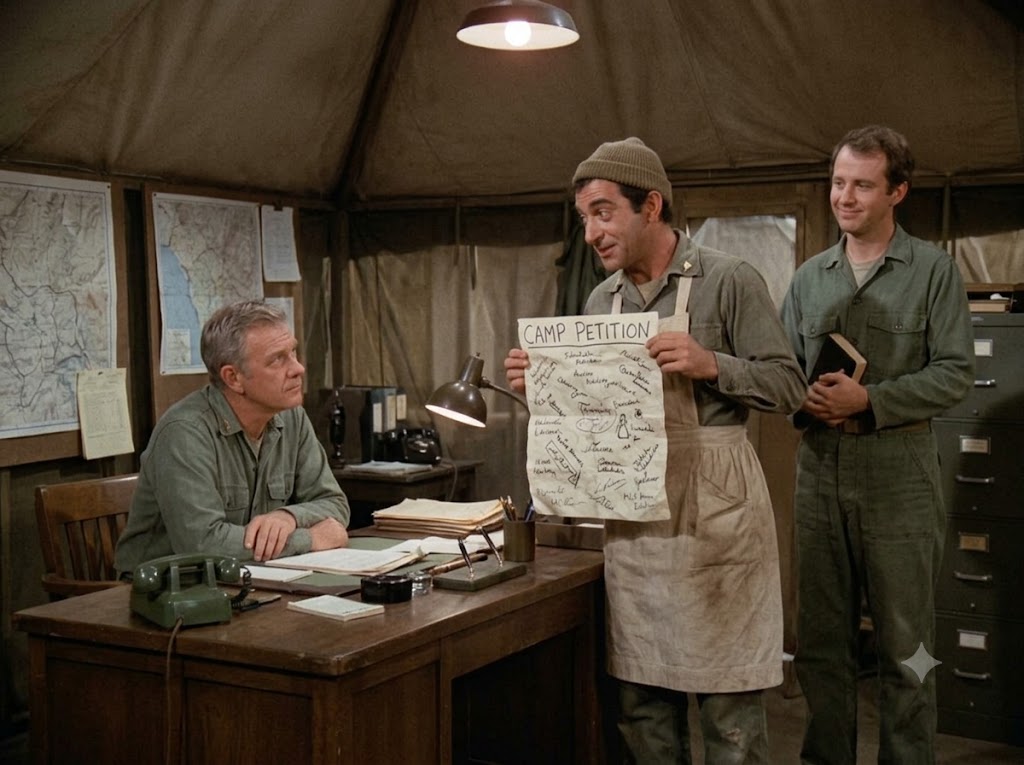
The mud outside Colonel Potter’s office was the color of a wet army blanket, but inside, the air was thick with the scent of old paper, cold coffee, and the heavy, invisible weight of another long week.
Potter sat behind his desk, his glasses perched precariously on the bridge of his nose, staring down a stack of supply requisitions that never seemed to get any shorter.
Every tick of the wall clock felt like a small hammer blow against the collective fatigue of the 4077th.
The door creaked open, not with the usual frantic burst of Radar bringing bad news from the radio room, but with a slow, hesitant reverence.
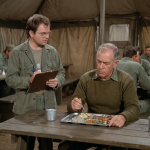
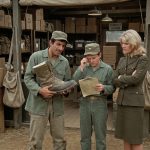
In walked Igor, wearing his grease-stained kitchen apron and a olive-drab knit cap pulled tight over his ears, holding a large, crumpled piece of butcher paper with both hands.
Behind him, standing like a quiet guardian angel with a worn Bible tucked under his arm, was Father Mulcahy, a gentle, encouraging smile playing on his lips.
Potter looked up, his sharp eyes narrowing as he took in the sight of his cook holding a document that looked like it had survived a mortar attack.
“Alright, Igor,” Potter sighed, taking off his glasses and rubbing the bridge of his nose. “What’s the crisis now? Did the creamed chipped beef finally stage a mutiny, or are we out of powdered eggs again?”
Igor cleared his throat, lifting the paper high so the Colonel could see the bold, hand-drawn letters at the top.
It read, in jagged black marker: CAMP PETITION.
Below the heading, the paper was absolutely covered in a chaotic web of signatures, crosses, and thumbprints, sprawling in every direction like vines on a tent wall.
“Sir,” Igor said, his voice carrying that unique mix of nervous respect and stubborn determination. “It’s not about the food this time. Well, not entirely. It’s about the whole camp.”
Potter leaned back in his squeaking wooden chair, folding his hands over his stomach. “A petition, Igor? You know the army doesn’t run on democracy. If the brass saw this, they’d have you peeling potatoes until the next century.”
“I know, Colonel,” Igor said, taking a step closer to the desk, his eyes wide and earnest. “But we had to do it. It’s for the nurses, the corpsmen, the drivers—everyone.”
Father Mulcahy stepped forward, his voice a soft, calming presence in the cramped room. “He speaks the truth, Colonel. I watched them sign it. Even Captain Pierce put his name down, right between a joke and a coffee stain.”
Potter looked from the priest to the cook, his dry exterior cracking just a fraction to reveal the deeply fatherly concern beneath. “What are you folks demanding? A three-day pass to Seoul? A moratorium on night shift OR?”
“No, sir,” Igor said, his hands trembling slightly as he held the paper out further. “It’s about Sergeant Rizzo’s jeep engine. It died three days ago, and the supply lines won’t give us a replacement block. Without it, we can’t haul the fresh water from the river without three trips in the small truck.”
“We know the supply lines are choked, Igor,” Potter said gently. “I’ve sent three cables myself. There’s nothing more we can do but wait.”
“But there is, Colonel,” Igor countered, his jaw setting. “We found an old generator engine behind the supply tent. It’s rusted, it’s ugly, and it takes four men just to crank the flywheel. But it works.”
Potter raised an eyebrow. “And why do I need a petition for a piece of salvaged junk?”
Igor looked down at the paper, then back at Potter, his eyes shiny with an emotion he was trying hard to hide behind his usual kitchen-hand bravado.
“Because, sir… to make it fit Rizzo’s jeep, we have to cut up the old metal dining table from the mess hall to use as mounting brackets. The one the night-shift nurses use to sit around and write letters home.”
The room went entirely silent, save for the ticking clock.
Potter stared at the paper, his gaze drifting over the dozens of names—Hawkeye, B.J., Margaret, Radar, Klinger, every single nurse, every orderly. They had all signed away their only comfortable spot in the camp just to ensure the water truck could keep running for the collective good.
“Colonel,” Igor whispered, the dramatic high point of the afternoon hanging in the balance, “they didn’t hesitate. Not one of them.”
Potter looked at the names again, his eyes tracking the loops and lines of his people’s handwriting.
He could see Hawkeye’s signature, large and defiant, taking up twice as much space as anyone else’s.
Next to it was B.J. Hunnicutt’s neat, steady hand, a little anchor of calm on the messy page.
Even Major Houlihan had signed, her signature crisp, proper, and perfectly aligned, despite being squeezed into a corner near a grease smudge.
“They signed it,” Potter murmured, his voice dropping to that quiet, gravelly register he used when he was deeply moved. “Every single one of them gave up their table.”
“Yes, sir,” Father Mulcahy said, stepping closer to the desk. “Margaret was actually the first to sign after Igor brought it out. She said a cold bench was a small price to pay to make sure her nurses had clean water to wash the triage dust from their faces.”
Potter stood up slowly, his joints popping slightly in the quiet office. He walked around the desk, his boots clicking on the floorboards, and stood directly in front of Igor.
He reached out and took the corner of the butcher paper, looking closely at the bottom.
There, in the very center of the remaining white space, was a tiny, neat signature that could only belong to Radar O’Reilly, accompanied by a small smudge of purple ink from his stamp pad.
“You’re a stubborn man, Igor,” Potter said, a slow, warm smile finally breaking through his weathered features. “And a terrible cook. But you’ve got a remarkable sense of timing.”
Igor grinned, the tension draining from his shoulders like water through a sieve. “Thank you, sir. I try to keep the meat mystery to a minimum when I’m asking for favors.”
“Don’t push your luck,” Potter chuckled, tapping the paper with his index finger. “Now, what about Winchester? Don’t tell me Charles signed this. He loves that mess hall table. He uses it to sort his classical records.”
Father Mulcahy let out a soft, musical laugh. “Ah, Major Winchester did refuse at first, Colonel. He gave quite a speech about the degradation of communal property and the rise of mob rule.”
“So how did you get his name?” Potter asked, amused.
“Well,” Igor said, leaning in confidentially, “Captain Pierce told him that if the water truck didn’t run, we’d have to ration the water for the laundry. And that meant the Major’s silk sheets wouldn’t see a washing machine until August.”
Potter burst into a short, barking laugh, the sound echoing through the canvas walls of the administrative tent. “Incentive. The ultimate military strategist. Good old Hawkeye.”
He walked back to his desk, picked up his heavy fountain pen, and unscrewed the cap with a deliberate, satisfying click.
He didn’t look at Igor or the Father as he dipped the nib into the inkwell, but his hands were entirely steady.
“Bring the paper here, Igor,” Potter commanded softly.
Igor quickly laid the large sheet of butcher paper flat across the Colonel’s desk, smoothing out the wrinkles with his palms.
Potter leaned over, finding a small, empty patch of white right at the bottom, just beneath Radar’s purple ink smudge.
With a practiced, elegant flourish, he wrote: *Sherman T. Potter, Col. MC.*
He blew gently on the wet ink to dry it, then looked up at the two men standing before him.
“Rizzo has twenty-four hours to cut that table up and get that jeep running,” Potter said, his voice returning to its firm, commanding tone, though his eyes remained bright. “If I see that generator engine sitting idle by tomorrow evening, I’m assigning both of you to help Igor chop onions for a week.”
“Understood, Colonel!” Igor said, giving a sharp, proud salute that was only slightly ruined by the apron strings swinging against his knees.
“Thank you, Sherman,” Father Mulcahy said quietly, using the Colonel’s first name in that rare, intimate way that reminded them both they were men of peace caught in a world of war.
They turned and walked out of the tent, leaving the door swaying slightly in the breeze.
Potter sat back down in his chair, putting his glasses back on. The stack of supply forms was still there, waiting for his signature, but the room felt different now. It felt lighter.
He looked out the small screen window, watching Igor and the Father walk briskly across the muddy compound toward the mess hall, holding the petition between them like a trophy.
Out here, in the middle of a forgotten valley, surrounded by mountains and misery, they had built something that couldn’t be broken by supply shortages or mortar fire.
They had built a home out of canvas, scrap metal, and each other.
Potter picked up his pen and went back to work, a quiet comfort settling over him as the afternoon sun began to dip below the Korean hills.
In the valley of the 4077th, the greatest repairs were never made to the machines, but to the human spirit.