The Coldest Night in the 4077th
The winter wind didn’t just blow through the 4077th; it hunted. It found every crack in the canvas, every thin spot in a parka, and every weary bone of the men and women trying to sleep under the oppressive weight of another long night in Korea.
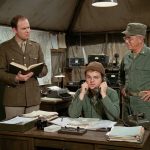
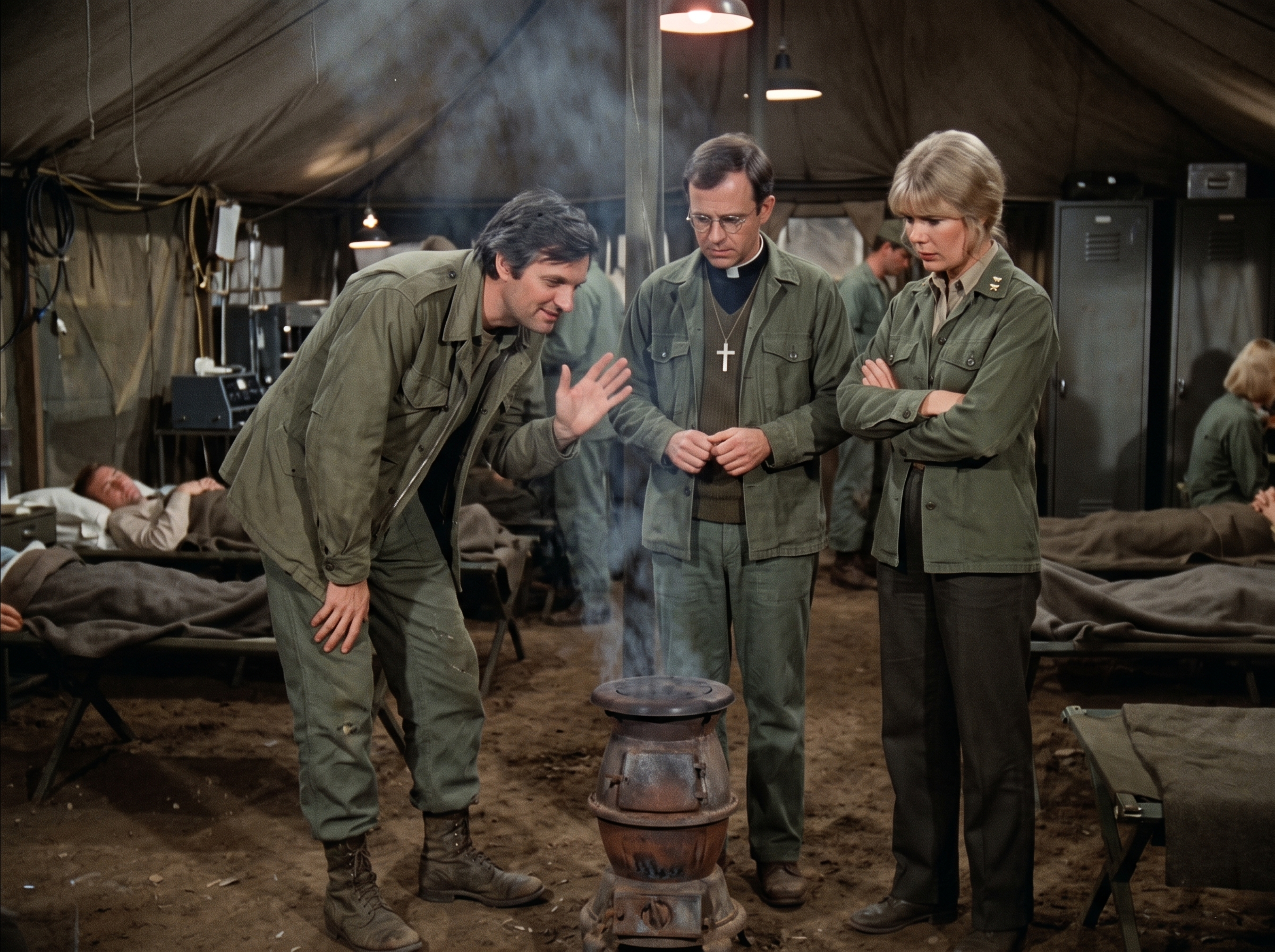
Inside the tent, the air was thick with the scent of damp wool, drying mud, and the sharp, metallic tang of misery. It was 3:00 AM, the hour when the mind plays tricks on you. Hawkeye Pierce stood before the potbellied stove, his hands hovering over the cast iron like a desperate man praying for a miracle.
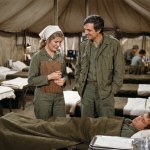
Father Mulcahy stood beside him, his spectacles fogged from the sudden temperature difference, his hands tucked deep into the pockets of his olive-drab jacket. Margaret Houlihan was only a few feet away, her arms tightly crossed, her expression a mix of professional annoyance and bone-deep exhaustion. They were all waiting.
The stove, an antique piece of junk that had probably been forged in the last century, was behaving with its usual infuriating stubbornness. It was smoking—not warming, just smoking—sending a thin, wispy column of grey haze spiraling up toward the canvas roof like a tired ghost.
“It’s a philosophical question, Father,” Hawkeye murmured, gesturing to the useless iron contraption with a graceful, dramatic wave of his hand. “Is this stove actually providing heat, or is it simply testing our collective ability to remain sane in the face of absolute thermodynamic failure?”
Margaret sighed, the sound sharp enough to cut through the stillness. “Pierce, if you’re going to lecture, do it somewhere else. I’m cold, I’m tired, and I’m pretty sure my toes have officially declared independence from my body.”
Hawkeye looked at her, his eyes softening despite the smirk on his lips. He knew that look. It wasn’t just the cold; it was the weight of the last twelve hours of surgery pressing down on her shoulders. He opened his mouth to deliver a classic jab, a joke to cut the tension that was tightening in the room, but the stove suddenly groaned.
A plume of blacker, thicker smoke belched from the rim, curling directly into their faces. Hawkeye winced, his hand freezing in mid-air as he realized the smoke wasn’t dissipating. It was swirling around them, choking the small space, and for a split second, the reality of where they were—the isolation, the endless war, the sheer fragility of their existence—hit them with the force of a physical blow.
Hawkeye felt the laughter die in his throat, replaced by a sudden, jagged lump of fear. This wasn’t just a stove acting up; it was the thin line between them and the freezing dark outside starting to fray.
“Don’t breathe it in,” Mulcahy said, his voice calm but urgent, stepping forward to nudge the damper with a pair of rusted tongs.
Margaret didn’t move away. Instead, she leaned in, her eyes watering, her jaw set with that stubborn, steel-spined resolve that made her the best head nurse the Army ever had. The smoke began to dissipate, replaced by a faint, warm orange glow finally catching hold of the coal inside. The iron started to tick and pop as the metal expanded under the long-awaited heat.
The immediate panic subsided, replaced by a heavy, resonant silence. They stood there, the three of them, captive to the small warmth of the stove.
Hawkeye looked at Mulcahy, who was watching the fire with a soft, beatific smile. Then he looked at Margaret. The frost had melted from her eyelashes, but the weariness remained. He realized then that they weren’t just huddled around a heater. They were huddled around a beacon. In the middle of a war zone, in a drafty tent, they were just three people who had spent their day stitching lives back together, and now, they were trying to stitch their own spirits together with nothing but a bit of fire and shared silence.
“I suppose,” Margaret whispered, her voice uncharacteristically small, “that it’s better than nothing.”
“It’s a start, Major,” Hawkeye said, his voice stripped of the sarcasm that usually acted as his armor. He shifted his weight, his fatigue suddenly catching up to him, making his knees ache. He leaned back against a wooden post, watching the way the dim light played across their faces.
Mulcahy looked up, his gentle, observant eyes taking in both of them. “You know,” the priest said softly, “there is a certain grace in the endurance. Not just in the big things, but in the small, stubborn attempts to stay warm when the world is trying its best to freeze you out.”
Margaret let out a long, shuddering breath, her arms finally dropping to her sides. She didn’t look like a high-ranking officer in that moment; she looked like a tired woman who was finally allowed to be human. She leaned slightly toward the stove, the warmth finally seeping into the wool of her coat.
For a long time, nobody said a word. There were no jokes to make, no orders to bark, and no prayers to recite. They just stood there, letting the heat grow, listening to the crackle of the coals and the distant, muffled sound of the camp settling down for a few hours of uneasy rest.
It wasn’t much—a temperamental stove in a tent that leaked—but for those few minutes, it was the only home they had. And as the heat pushed back the shadows, Hawkeye realized that this was why they stayed. It wasn’t for the war, and it wasn’t for the glory. It was for the moments when the fire caught, when the cold retreated, and when you looked up to find that you weren’t standing in the dark alone.
He looked at his friends, really looked at them, and found that his own hands weren’t shaking anymore.
Some fires don’t just warm your hands; they keep the world from going completely dark.