The Mystery of the Mess Tent Charcoal
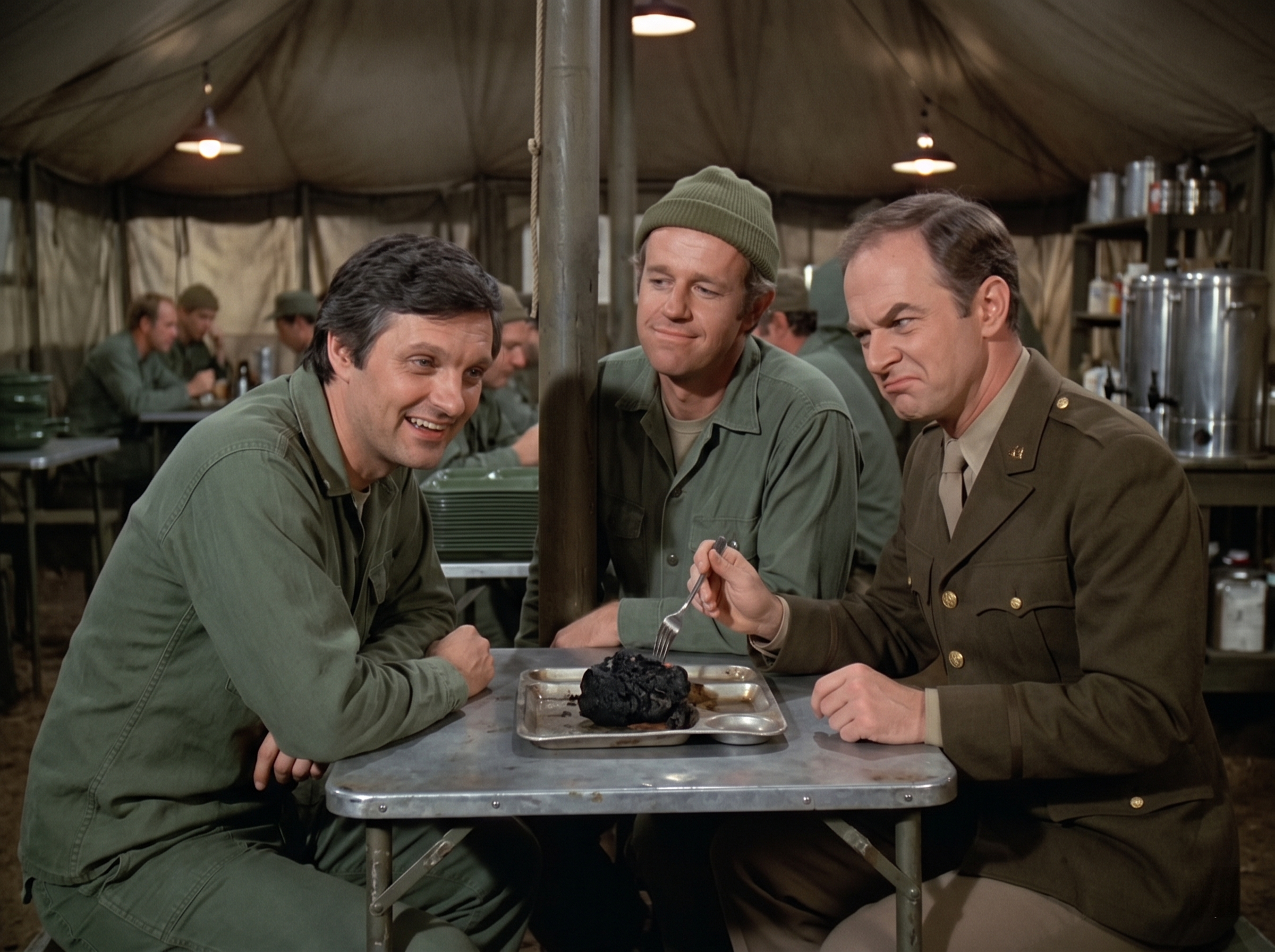
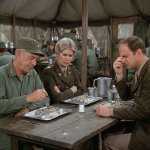
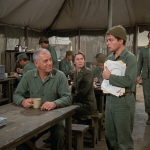
The dinner bell had rung with its usual lack of enthusiasm, a metallic clang that signaled another night of mystery meat at the 4077th. Hawkeye Pierce slid onto the bench, his fatigue radiating off him like heat from a radiator, while B.J. Hunnicutt settled in beside him, his face carrying that familiar, gentle weariness that only a twelve-hour shift in surgery could produce. Across from them sat Major Charles Emerson Winchester III, who had already donned his mess-kit armor, looking at the tray in the center of the table with the sort of disdain usually reserved for a peasant uprising.
Sitting between them was a blackened, unrecognizable lump that resembled a meteorite, or perhaps a particularly unfortunate piece of coal that had wandered off a steam train. Hawkeye leaned forward, poking at the charred mass with his fork; it didn’t budge. He looked at B.J., his eyebrows arching in a silent query that perfectly captured the absurdity of their existence.
“I’ve seen better specimens in the pathology lab, Charles,” Hawkeye remarked, his voice dry and laced with that familiar, frantic humor that kept them all from unraveling. “Are we eating dinner, or are we being asked to perform an autopsy on a piece of charcoal?”
Winchester stiffened, his jaw working as he stared down at the burnt offering with a look of profound, aristocratic offense. He lifted his fork, held it with the delicate precision of a surgeon, and poked the object, which emitted a hollow, ominous thud. The sheer silence of the tent around them seemed to thicken, the distant murmur of other soldiers and the clatter of trays fading away as the three men focused entirely on the culinary disaster in front of them.
“This,” Charles announced, his voice tight and trembling with suppressed indignation, “is an affront to the very concept of gastronomy. It is not merely burnt; it has been incinerated, calcified, and abandoned by God.”
Hawkeye let out a soft, jagged laugh, but B.J. didn’t join in. Instead, B.J. reached out and rested a hand near the edge of the tray, his expression softening into something far more tender. “You know, guys,” B.J. murmured, his voice dropping into that grounded, steady tone that always managed to reach Hawkeye, “I think we all know who made this.”
Hawkeye froze, the sarcastic retort dying on his lips. They all looked up, their eyes scanning the room, catching sight of the person standing just a few feet away, clutching a ladle like a defensive weapon. The air in the mess tent shifted instantly from comedy to a sharp, painful kind of vulnerability, and for a moment, nobody knew how to handle the sudden, crushing weight of the truth.
The person standing there wasn’t a cook, but a young, terrified corpsman who had volunteered for mess duty, his eyes wide and brimming with unshed tears. He had clearly tried his best, and the result was this obsidian slab that now sat between the three veterans. The humor evaporated, replaced by the heavy, familiar ache of recognizing a person who was trying to find a way to serve in a place that offered nothing but ways to break.
Hawkeye looked from the charcoal lump to the boy, then back to the plate. The sarcasm that usually acted as his armor felt thin and useless. He picked up his knife, scraped at the burnt exterior with a surprisingly gentle hand, and took a bite of a slightly less ruined piece from the corner. It was dry, flavorless, and nearly impossible to swallow, but he chewed it with solemn, deliberate focus.
“You know,” Hawkeye said, his voice unusually soft, “my father always said that the secret to a good steak is knowing when to take it off the fire. But the secret to a great dinner is the company you keep.” He looked at the boy and offered a small, tired, but genuine smile. “This… this is an experimental dish. ‘Carbonized surprise.’ Very avant-garde.”
B.J. caught the cue instantly, grabbing his fork and digging into the meal with exaggerated enthusiasm. “He’s right, kid,” B.J. added, his voice warm and inviting. “I was just telling Hawkeye that I haven’t had a good, solid piece of protein in days. This is exactly what I needed to keep my strength up.”
Even Charles, after a long, stiff moment of internal struggle, sighed and set his fork down with a resigned click. He looked at the boy, his stern expression flickering into something that wasn’t quite a smile, but was certainly a truce. “While I find the preparation to be catastrophic,” Charles conceded, his voice losing its sharp edge, “there is a certain rustic charm to the effort. Please, fetch us some of that powdered coffee to wash it down. It’s the only thing in this camp that matches the complexity of this… steak.”
The boy’s shoulders dropped, the tension leaving his frame as he realized he wasn’t going to be laughed at. He nodded, gave a tiny, relieved smile, and hurried off toward the coffee urn.
The three men sat in silence for a long moment, the exhaustion of the day pressing down on them. They were tired, they were dirty, and they were a thousand miles away from anything resembling a normal life, but in that small corner of the mess tent, the world felt a little less cold. They shared a look—a quiet, unspoken recognition that they were all just trying to make it to the next morning, one burnt meal at a time.
It wasn’t a dinner they would ever choose again, but as they sat there, talking in low, easy tones about things that had nothing to do with surgery or the war, it felt like home. They looked out at the familiar faces of their comrades, the flickering lights of the mess tent casting long shadows against the canvas walls, and for a few minutes, the war felt like a distant, muted hum.
They were tired, their hearts were weary, but they were together, and in the 4077th, that was always enough.
Sometimes, it’s not about the meal, but the people who help you swallow it.