The Letter-Writer’s War
If the dust and heat of Korea didn’t make you question your sanity, the simple act of trying to explain it to someone back home usually did.
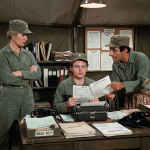
Some, like Colonel Potter, treated letter-writing like a military campaign: brief, precise, and signed with authority before the next problem arose.
Others, like Klinger, just lived it out loud, as evidenced by his latest arrival at the office.
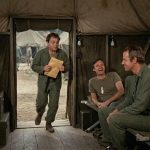
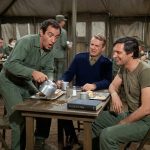
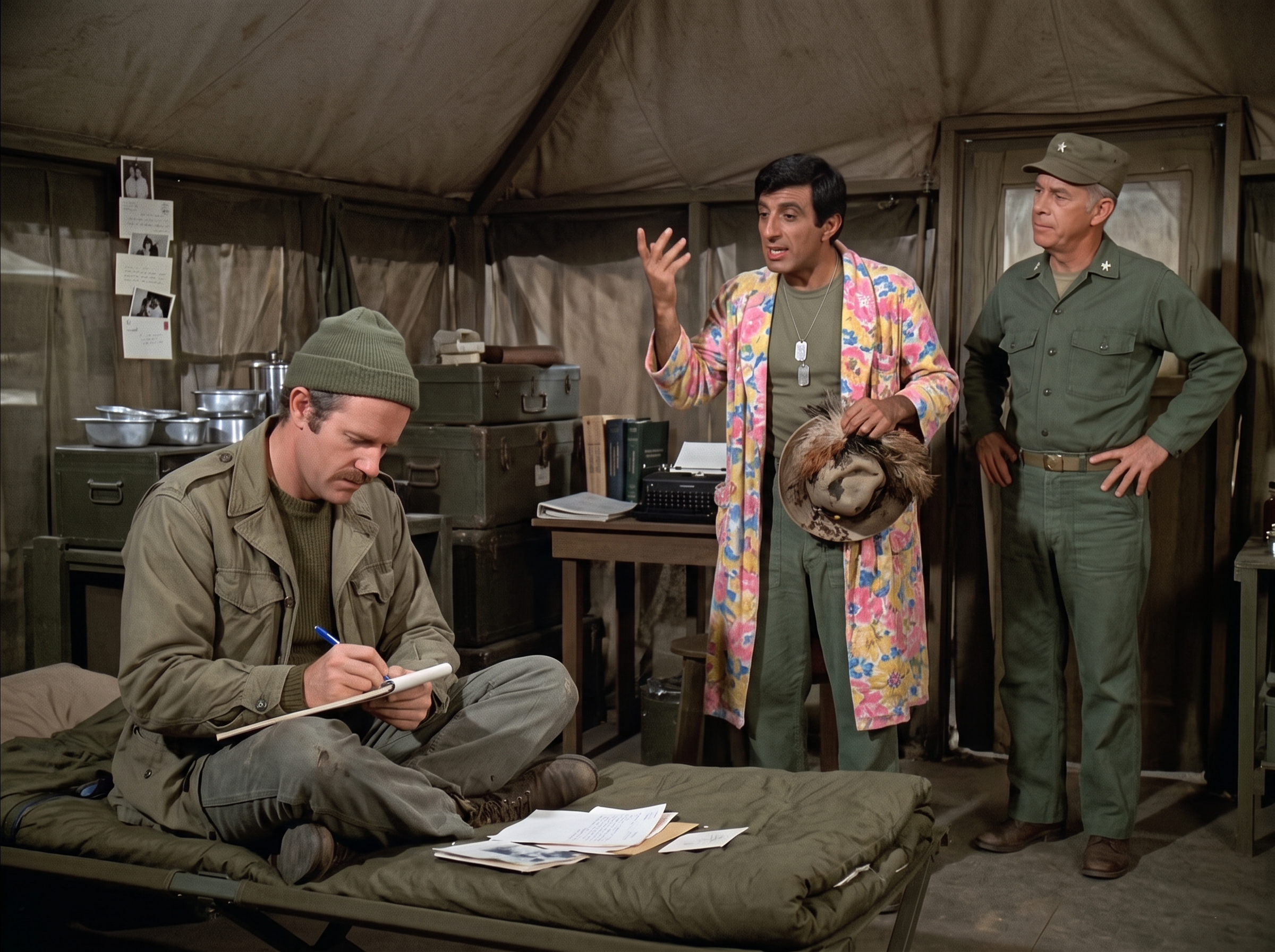
He burst into the clerical tent, a whirlwind of patterned silk and feathered frustration, wearing that unforgettable pink and yellow floral robe over his standard fatigues. In his hand, clutched like a trophy or a grievance, was his feathered cap. He threw his hand up in that expressive, dramatic way only he could pull off.
“Sir!” Klinger exclaimed, directing his performance at Colonel Potter, who was standing steadfastly behind him, observing with characteristic, slightly tired stoicism. “They sent me… well, look at it! It’s the color of a mild jaundice!”
Potter offered a dry, sympathetic sigh. “It’s standard supply, Klinger. I doubt General Eisenhower picked the color palette personally.”
Unphased, Klinger’s performance continued, his hand frozen in mid-protest, gesturing to the entire beige world. “Standard? If this is standard, Sir, then standard stinks!”
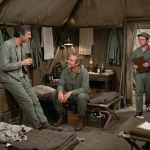
Behind them all, sitting quietly on his green cot amidst a stack of footlockers and mess kits, was BJ Hunnicutt.
He was oblivious to the drama. He was in a different world, centered entirely on a small notebook resting on his knee. He wore his thick green knit cap and his dusty field jacket. His pen hovered, poised, searching for the perfect word to bridge the impossible gap between the 4077th and Mill Valley.
His brow was furrowed, the lines of exhaustion etching deeper as he stared at the blank page. The tent was a canvas of clutter and organized chaos, and yet BJ was alone in his own quiet battle: trying to find words for Peggy that weren’t too sad, too graphic, or just too much.
Potter, seeing that Klinger wasn’t about to stand down, placed a calming hand near his own belt buckle. “Corporal, if your complaints about the uniform code exceed five minutes, you will be performing KP *while* wearing that very robe. I expect that cap on your head, not being waved around like a white flag.”
Klinger blinked, the dramatic pose freezing. A quick look at the Colonel’s firm expression showed him the comedy show was over. Slowly, the theatrical energy drained away. His hand came down. The feathered cap was placed back on his head with a quiet, efficient adjustment.
He stepped back and looked toward BJ, noticing the concentration on his face. Klinger’s voice softened instantly. “Sorry, Doc. I know you’re trying to connect with home.”
BJ didn’t look up immediately. His pen finally moved, making three quick loops. “Hmm? Oh, don’t worry, Klinger. I always find a little bit of your drama makes the letters sound less believable, which is exactly how I feel writing them.” He smiled faintly, still focused on his page.
Klinger’s eyes went soft. He was never one to back down, but he respected the quiet battles. He glanced at Potter, who gave a small, approving nod, signaling Klinger was free to go.
Quietly, Klinger exited the tent. The flamboyant floral pattern disappeared, leaving the beige world just a little bit more, well, standard.
Potter remained standing, watching BJ from behind. He saw the way the younger man gripped the pen, how his posture sagged with the invisible weight of the distance. For a few more minutes, only the sound of BJ’s pen scratching against the paper filled the tent.
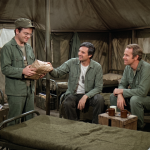
Finally, the Colonel walked over to the cot. He placed a steady hand on BJ’s shoulder.
BJ startled slightly, but relaxed as soon as he realized who it was. He looked up, his face tired but present.
“Write a good one, Hunnicutt,” Potter said, his voice quiet, fatherly, and heavy with years of shared experience. “They need to know you’re still you, and you need to remember it, too.”
BJ looked down at his unfinished page. The words didn’t say much yet, just small things about the food and the odd weather and Klinger’s new hat. But as he gripped his pen again, he felt the profound weight of that simple, enduring connection.
“Yeah,” BJ whispered, meeting Potter’s eyes. “I know, Sir. That’s why it’s so hard.”
Some wars were won with scalpels and stitches; others were fought one word at a time, on a creaky cot, trying to stay whole.