The Weight of a Scrap of Paper
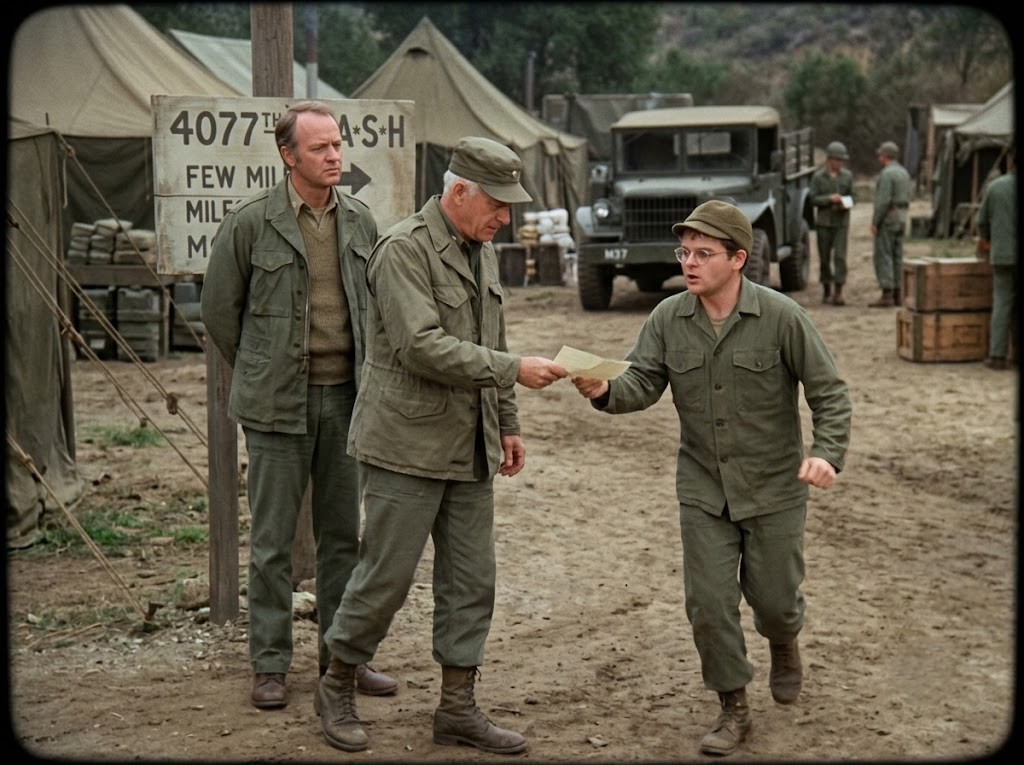
The mud of the 4077th had a way of clinging to everything, from the soles of your combat boots to the deepest corners of your mind. It was a grey, sluggish afternoon, the kind where the humidity hangs like a damp wool blanket over the tents, and the smell of visual anesthetic seems to linger in the air long after the last patient has been wheeled to post-op.
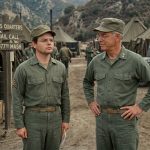
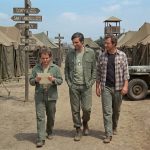
Colonel Potter stood near the main crossroad of the camp, his shoulders slightly stooped under the weight of a twelve-hour session in the Operating Room. Beside him, the camp’s senior staff stood in quiet, weary companionship, looking out over the olive-drab canvas tents that had become their entire world. The signpost behind them pointed toward places that felt like distant myths—Seoul, Tokyo, Crabapple Cove—but right here, the only reality was the dirt beneath their feet and the slow, steady hum of the generator.
They were just catching their breath, trading the kind of silence that only exists between people who have seen too much together, when the stillness was broken.
From around the corner of the supply truck, a familiar figure came bursting into the clearing.
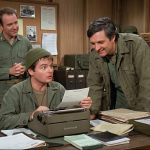
It was Radar, his oversized cap pushed back on his head, his spectacles sliding precariously down his nose. His breath came in ragged, audible gasps, his small frame moving with an urgency that instantly made the air in the compound grow heavy. In his right hand, he clutched a small, yellowed slip of paper, holding it out like it was both a lifeline and a live grenade.
“Colonel! Colonel Potter, sir!” Radar gasped, his boots skittering in the loose dirt as he tried to slow his momentum.
The Colonel didn’t move, but his jaw tightened, his eyes narrowing as he watched his young clerk approach. Beside him, the other officer shifted his weight, his arms crossed over his chest, his expression hardening into a look of quiet, guarded apprehension. In a place like this, a boy running with a piece of paper rarely meant good news.
Radar stopped just inches away, his arm extended, his chest heaving as he thrust the paper into the Colonel’s waiting hand.
Potter took the paper slowly, his fingers steady but his eyes locked on the boy’s pale, anxious face. The silence that fell over the three men was absolute, louder than the roar of any incoming chopper.
As the Colonel unfolded the small sheet and began to read, the faint color left his cheeks, and his eyes remained fixed on the first few words, completely frozen.
The silence stretched on for what felt like an eternity, the kind of moment where even the wind seems to stop moving through the canvas.
Radar stood completely still, his hands dropping to his sides, his eyes darting between the Colonel and the ground as he waited for a reaction. The officer on the left stepped closer, his stoic facade slipping for just a fraction of a second, his eyes searching Potter’s face for any clue, any sign of what the world had decided to throw at them today.
“Is it from the general’s office, Sherman?” the officer asked quietly, his voice devoid of its usual sharpness, replaced instead by the raw fatigue of a man who had reached his limit.
Colonel Potter didn’t answer right away. He slowly lowered the paper, his gaze drifting past the tents, past the hills, looking at something miles and years away.
Then, a subtle change crept over his weathered face. The hard lines around his mouth didn’t deepen in anger; instead, they began to soften, and a faint, incredulous moisture appeared at the corners of his eyes.
“It’s not an order,” Potter said, his voice low and gravelly, carrying the thick warmth of a father who had just received the best possible news. “It’s from the evacuation hospital down in Seoul.”
He looked at the paper again, a small, tired smile finally breaking through his gruff exterior.
“It’s about the kid from Iowa,” the Colonel continued, looking up at his officers. “The corporal with the shrapnel near the hepatic artery. The one we spent four hours patching up yesterday while the shells were shaking the light fixtures.”
The officer on the left let out a long, slow breath, his shoulders visibly dropping an inch as the tension drained from his posture. “The boy we thought wouldn’t survive the ambulance ride?”
“He didn’t just survive,” Potter said, tapping the paper with a thick finger. “He woke up two hours ago. They say he’s sitting up, eating broth, and complaining about the cooking. He told the nurse to send a wire to the 4077th to tell the old guy with the gray hair that his stitching held up just fine.”
A soft, breathless laugh escaped Radar’s lips, his shoulders relaxing as he pushed his glasses back up to the bridge of his nose. He nodded eagerly, a bright, boyish grin completely transforming his tired face.
The other officer turned his head away slightly, pretending to inspect the tires of the M37 truck nearby, but the small, unmistakable twitch of a smile played on his lips, a rare moment of unshielded relief breaking through his usual rigid demeanor.
In the grand scheme of the war, a single corporal recovering in Seoul changed absolutely nothing. The front lines would still shift, the choppers would still bring more wounded tomorrow, and the mud would still be there when they woke up.
But in that tiny square of dirt, next to a weathered wooden signpost, three tired men stood a little straighter, reminded once again of why they kept fighting the exhaustion every single day.
Potter carefully folded the slip of paper and slid it into his breast pocket, right over his heart, before clamping a heavy, reassuring hand on Radar’s shoulder.
“Good work, Radar,” the Colonel murmured softly, turning back toward the camp. “Come on. Let’s go tell the rest of the kids that we won one today.”
Sometimes, the smallest pieces of paper carried the heaviest amounts of hope.