The Weight of a Small Promise
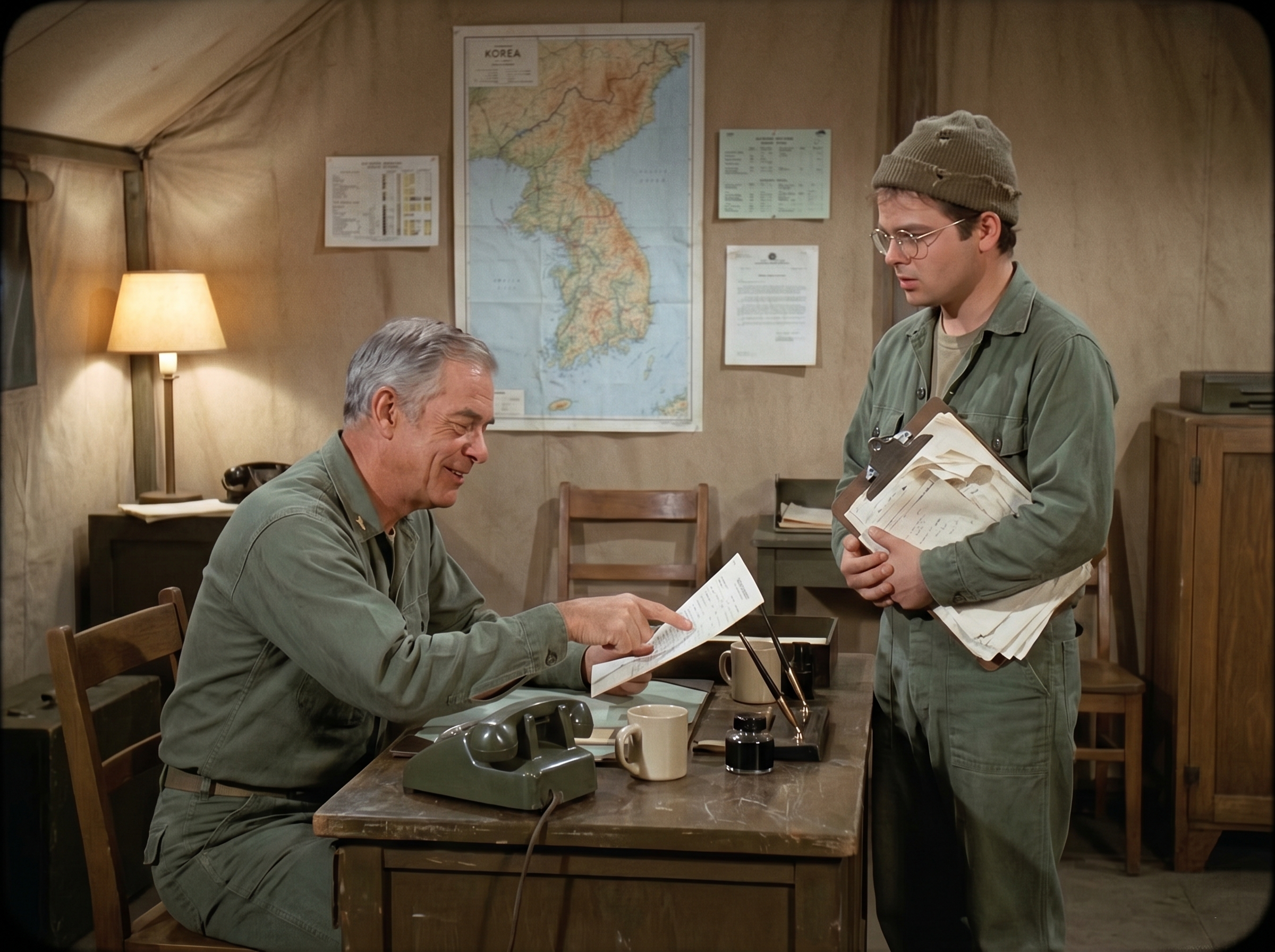
The canvas walls of Colonel Potter’s office seemed to hold the heat of the Korean sun, trapping the smell of stale coffee and old paper inside like a time capsule. Outside, the world was a cacophony of choppers and shouting, but in here, the air was thick with a different kind of pressure.
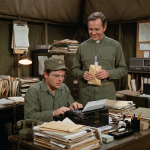
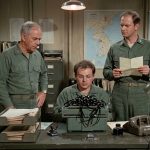
Radar stood stiffly by the desk, his knuckles white as he clutched a stack of requisition forms that seemed to have a life of their own. His signature knit cap was pulled low, a silent testament to the sleepless hours he’d logged in the comm shack.
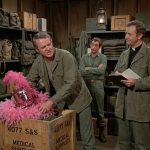
Colonel Potter peered over his glasses, his finger tapping firmly against a specific line on a document. It was a requisition for extra medical supplies—not for the hospital, but for the local orphanage down the road.
“Radar,” the Colonel sighed, his voice raspy with the exhaustion that never quite left his eyes. “We’ve been over this. The supply sergeant in Seoul thinks I’m running a luxury resort with the amount of penicillin we’re burning through.”
Radar shifted, his face twisting into that familiar mask of nervous integrity. “I know, sir. But the kids… they don’t have the luxury of waiting for the paperwork to be processed in triplicate. If I don’t send this now, they’ll be out by Tuesday.”
The Colonel looked at the young man, really looked at him, seeing the genuine, quiet desperation in those wide eyes. Potter knew the risks, and he knew the reprimands that were likely coming his way if he signed off on another ‘clerical error.’
He held his fountain pen, hovering it inches above the paper. His hand trembled just a fraction, a rare crack in the armor of a man who usually commanded the chaos with iron-clad certainty.
“You know this is going to get me skinned alive, don’t you, son?” Potter asked quietly.
Radar didn’t blink. He just leaned in, his voice barely a whisper. “I’d rather be skinned by the Army than let those kids suffer on my watch, sir.”
The silence in the tent stretched, brittle and sharp, until the Colonel finally pressed the nib of the pen to the page.
—
The ink flowed, a dark, permanent scar on the crisp white paper. As the Colonel lifted his hand, the tension didn’t evaporate; it just shifted, settling into a heavy, mutual understanding between the two men.
Potter leaned back in his chair, the leather creaking in the stillness. He looked at the mountain of paperwork in Radar’s arms, then up at the map of Korea pinned to the wall behind him—a map that felt increasingly like a puzzle with missing pieces.
“Get this sent,” Potter said, his voice gruff but stripped of any real annoyance. “And Radar? If the supply sergeant asks, tell him I’m having vision problems. It’s the only way to explain how I missed such an obvious mistake.”
Radar let out a breath he seemed to have been holding for a week. A small, genuine smile tugged at the corners of his mouth. “Yes, sir. Right away, sir. And, uh, I’ll make sure the supply sergeant is too busy with his own coffee break to notice the signature.”
The Colonel chuckled, a dry, rasping sound that softened the lines of his face. He watched the boy turn to leave, his movements uncharacteristically light now that the burden was shared.
For a moment, Potter remained alone in the dim light of the lamp. He looked at the empty spot where Radar had stood, then at the mugs on his desk—one filled with cold coffee, the other empty.
He thought of the 4077th, this collection of misfits and geniuses and souls just trying to get through another day without losing themselves. They were all carrying invisible stacks of paperwork, all trying to find ways to mend a world that seemed determined to break itself.
The Colonel stood up and walked to the flap of the tent. He pulled it back just enough to watch Radar hurrying across the compound, dodging a passing jeep, clutching those papers to his chest like they were gold.
There were no fireworks, no grand speeches, and no medals for what they were doing. Just a tired Colonel and a nervous clerk making sure a few more children could sleep safely through the night.
It wasn’t a victory in the way the war books defined it, but in the heart of the 4077th, it was everything. Potter let the canvas flap fall back into place, the room dimming once more, but he didn’t feel the weight of the afternoon quite as heavily as he had before.
He picked up his mug, took a sip of the cold, bitter coffee, and sat back down to wait for the next crisis. It was a good life, even when it was the hardest life, and he wouldn’t have traded his tent, his people, or his burden for anything in the world.
In the middle of nowhere, the smallest acts of kindness are the ones that keep us human.