The Scarf That Made Us Stay
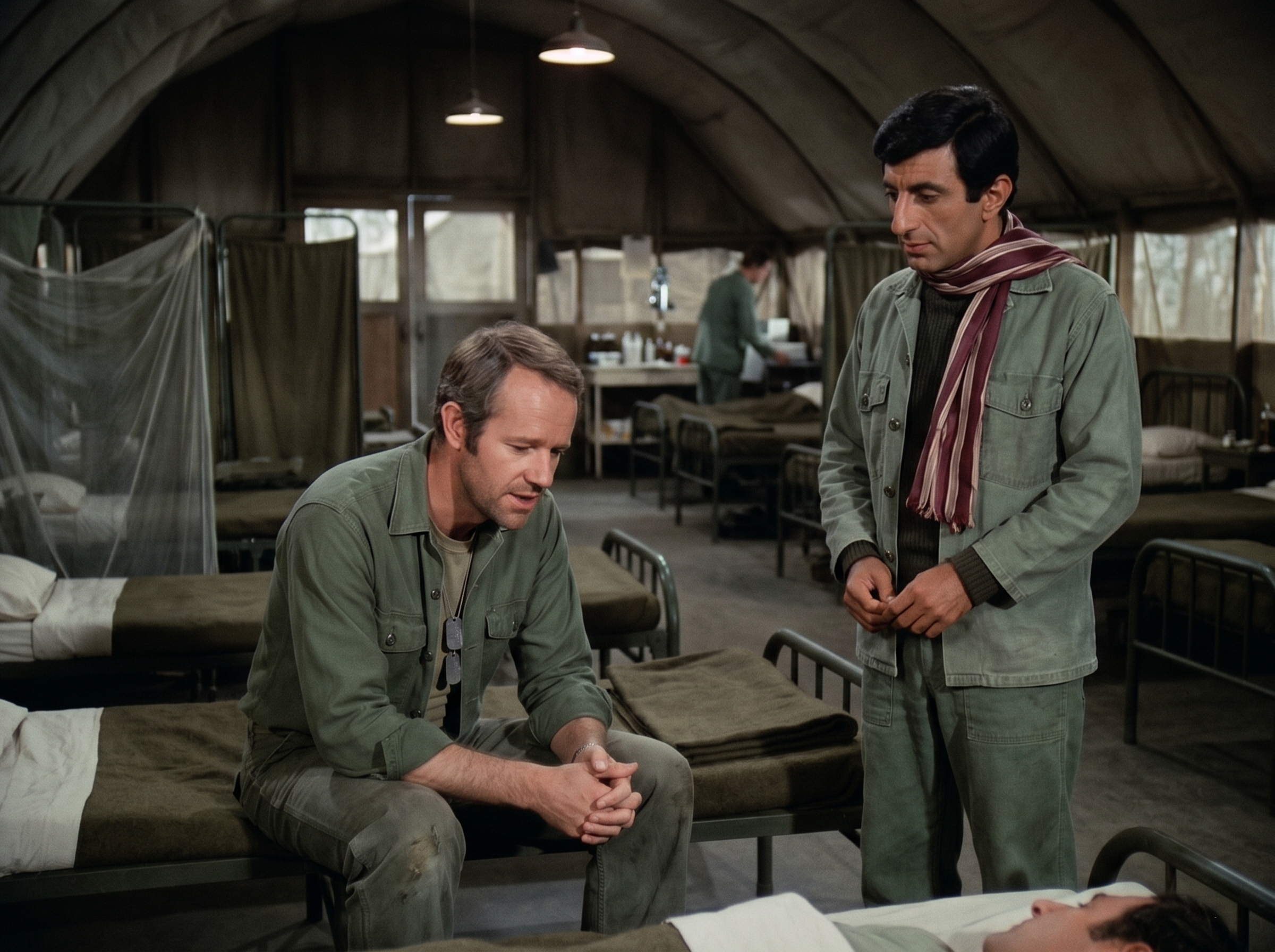
The cold in Korea did not just settle in your bones; it felt like it had been part of the landscape since before the war began. It seeped through the canvas and found you. It was a cold that seemed to amplify everything else, making the exhaust from the trucks feel thicker, the coffee taste worse, and the sound of helicopters louder.
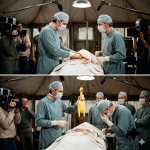
In the Post-Op tent, that cold was a constant presence. Klinger, wearing his striped scarf with a dignity that always seemed to impress and confuse, stood over a sleeping patient. The scarf was not just about the cold for Klinger; it was about style, about being seen in a world that often made you feel invisible.
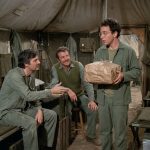
Next to him, sitting on the edge of the cot, was B.J. Hunnicutt. He had a look on his face that was becoming more common lately—a tired, silent weariness that went beyond physical exhaustion. It was the look of a man who missed his wife, his daughter, and the simple sanity of a world that didn’t involve patching people together.
“You okay, B.J.?” Klinger asked softly. The scarf fluttered slightly as he bent down.
B.J. didn’t answer at first. He just kept staring at his hands, his thumbs rubbing against each other as if he were trying to smooth out his own thoughts.
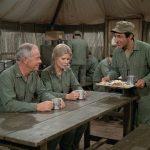
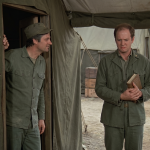
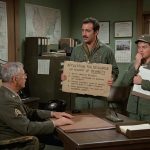
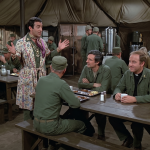
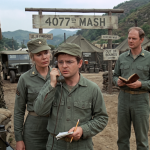
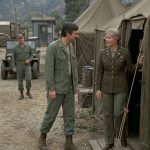
In the background, Hawkeye Pierce and Radar were busy with supplies. Hawkeye was making jokes that weren’t quite landing, and Radar was nodding politely, but both of them knew the silence in the tent was heavy. Even the Colonel and Major Houlihan had a slightly frayed look about them today. The latest wounded were arriving soon, and they all needed this one quiet moment before the chaos started again.
B.J. finally sighed. “I’m fine, Klinger. Just thinking.”
“About home?” Klinger pressed.
B.J. nodded slowly. “Every night I write to Peg. And every night I try to describe what it’s like. But how do you tell someone you love that you spend your days seeing things no one should ever see? How do you describe the cold?”
His voice was a low whisper, but in the small stillness of the tent, it carried. Everyone stopped for a beat, hearing the echo of his loneliness. For a second, the shared silence of the 4077th felt fragile, and the warmth they tried so hard to protect seemed like it might flicker out, just as the helicopters began to be heard in the distance.
Klinger didn’t say anything right away. He looked at B.J., then at the patient in the bed, then back at B.J. The clownish scarf, which often seemed so out of place, suddenly didn’t. It was the only flash of warm color in the green and olive drab.
“You describe the cold,” Klinger began, his voice surprisingly gentle, “by talking about the warmth.”
B.J. looked up, his eyes meeting Klinger’s. “Warmth? What warmth?”
“This,” Klinger said, gesturing with his hand. “You and me standing here. Colonel Potter checking on the nurses. Captain Pierce and Radar over there. Even Winchester trying to write a letter that doesn’t sound like he’s complaining. And the Major—don’t tell her I said this, but she cares, too.”
He paused, adjusting the scarf. “The cold is just part of being here. But what makes it… possible… are moments when we can stop. We can have a joke. We can worry about each other. It’s not much, but when you describe the 4077th, don’t just talk about the wounded. Talk about how we’re a family. A strange, loud, mostly crazy family.”
The helicopters were closer now. The sound was distinct. The silence was over.
Radar looked up from his clipboards. “They’re ten minutes out, Colonel.”
Potter straightened his cap. “Right, people. You know the drill. Let’s get moving.”
As the rest of the camp sprung into action, Klinger stayed put. He looked down at B.J., who was still sitting. Klinger pulled the scarf from his neck.
“You take it,” Klinger said. “For the next letter. Tell her a man wearing this scarf helped you remember the good.”
B.J. started to protest. “Klinger, I can’t. It’s freezing, and it’s your…”
“It’s just a scarf,” Klinger interrupted, with a rare, honest smile. “They can’t court-martial me for being warm. And maybe it’ll give you something to write about that isn’t green.”
Klinger didn’t wait for B.J. to accept it. He just turned and walked toward the entrance, ready for the triage. B.J. held the striped scarf in his hands, feeling the weight of the moment, the human kindness that defied the surroundings. He knew that tonight, the letter to Peg would be different.
As he finally stood to join the team, B.J. looked back one last time at the sleeping soldier. Then he walked out into the cold, the warm scarf now draped around his own neck, carrying a small piece of home with him.
The coldest places always found the warmest people.