The Quiet Symphony of the Post-Op Ward
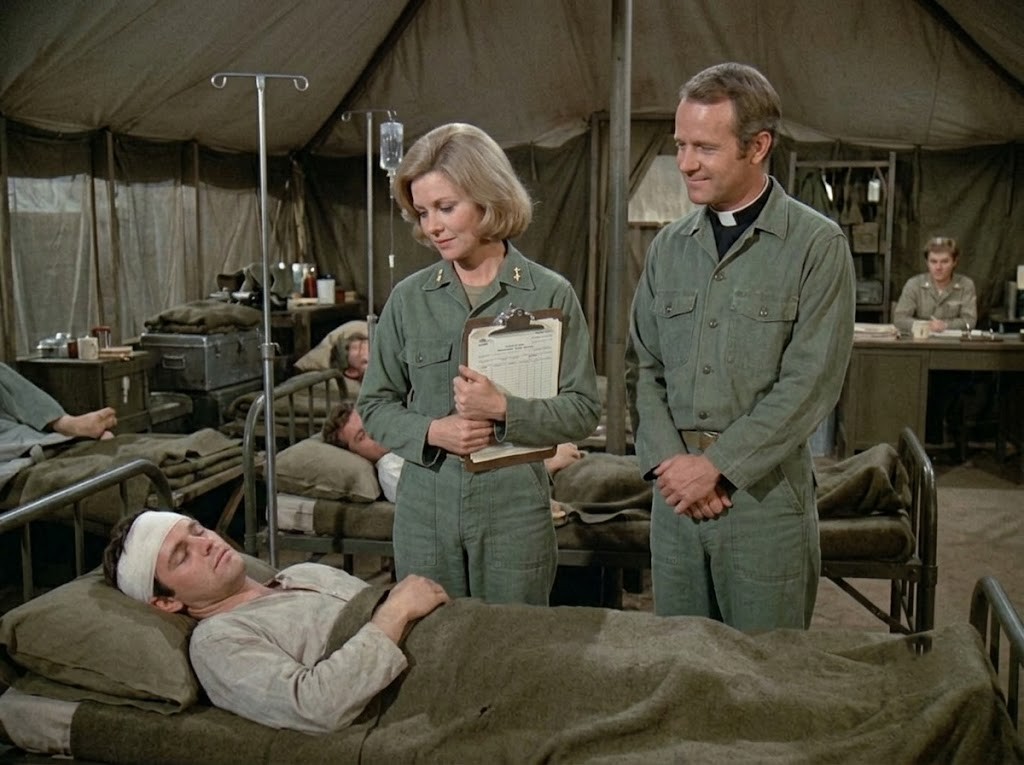
The mud outside the tents of the 4077th never truly dried, and the exhaustion never truly lifted. But inside the Post-Op ward, under the heavy canvas ceiling, the world shrank down to the steady rhythm of shallow breathing and the soft rustle of medical charts. After a grueling thirty-six-hour session in O.R., the frantic chaos of surgery had finally given way to a fragile, hard-won silence.
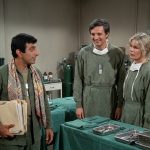
Major Margaret Houlihan stood by the bedside of a young corporal, her fingers tight around the wooden edges of her clipboard. To the rest of the camp, she was the strict, unyielding Chief Nurse, but here, in the dim light of the ward, her face held nothing but a deep, protective tenderness. She looked down at the boy, his head wrapped tightly in clean white gauze, his features finally relaxed after hours of fighting for his life.
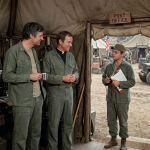
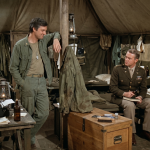
Beside her, Father Mulcahy stood with his hands loosely clasped, a gentle, comforting smile gracing his face. He had spent the last two hours moving from cot to cot, offering a kind word, a quiet prayer, or simply a reassuring presence to those waking up in a strange land. In the background, sitting at his small, makeshift desk, Radar O’Reilly quietly sorted through the latest intake papers, his oversized glasses reflecting the dull light of the tent, keeping his usual watchful eye on the heartbeat of the unit.
“His vitals are stabilizing, Father,” Margaret whispered, her voice uncharacteristically soft as she glanced at the chart. “Dr. Hunnicutt did a beautiful job with the sutures, and Pierce managed to stop the internal bleeding just in time. He’s tough.”
Father Mulcahy nodded, his eyes never leaving the sleeping soldier. “The Lord certainly had an eye on him today, Major. And so did our surgeons. It’s a miracle what a little skill and a lot of heart can do under these canvas roofs.”
The young corporal stirred slightly under his heavy brown army blanket, his hand twitching against the fabric. Margaret immediately leaned closer, her professional instincts blending seamlessly with a maternal warmth that she rarely allowed the officers’ mess to see. She reached down, checking the tension of the bandage around his temple.
Suddenly, the young boy’s chest heaved, and a ragged, strained gasp broke the quiet safety of the ward. His eyes remained closed, but his face contorted into a mask of sudden, overwhelming panic, his breathing spiking rapidly as he began to mumble incoherent words from a nightmare he couldn’t escape. Margaret froze, her fingers hovering over his brow as the quiet peace of the tent instantly shattered.
—
“Easy, son, easy now,” Father Mulcahy murmured, his gentle voice cutting through the boy’s rising panic like a calm breeze. He stepped closer, placing a warm, reassuring hand over the soldier’s trembling fingers.
Margaret didn’t hesitate. She immediately dropped her strict military posture, leaning over the cot to gently press her hand against the boy’s shoulder, anchoring him to the reality of the room. “Corporal, you are safe,” she said, her voice firm, steady, and filled with an absolute authority that commanded peace. “You are in the 4077th Post-Op. The surgery is over. You’re going to be just fine.”
From the back desk, Radar’s ears perked up, and he half-rose from his chair, his face filled with earnest concern, ready to run for Hawkeye or B.J. at a moment’s notice. But a quick, reassuring nod from Margaret told him to hold his position; they had this under control.
The young soldier’s eyes fluttered open, glassy and unfocused, staring up at the green canvas above him before settling on Margaret’s face. He didn’t see a major; he saw a comforting presence in a world that had temporarily lost its mind. “Am… am I home?” he whispered, his voice cracking with the raw vulnerability of a frightened kid from Ohio or Iowa.
Margaret looked at Father Mulcahy, a bittersweet ache tightening in her chest. It was the question they heard a hundred times a week, the universal longing of every boy shipped across the ocean to a forgotten peninsula.
“Not quite yet, soldier,” Margaret replied softly, offering him a rare, beautiful smile that smoothed away the lines of her own fatigue. “But you’re with people who care about you. And we’re going to make sure you get there.”
Father Mulcahy squeezed the boy’s hand gently. “You’ve crossed the hardest river, son. Now you just have to rest. The doctors have done their part, and the rest is in higher hands. You’re safe here.”
The tension slowly drained from the corporal’s face, his breathing slowing back into a steady, rhythmic pattern. The familiar, reassuring smells of antiseptic, old canvas, and the distant, comforting sound of Colonel Potter’s horse, Sophie, whinnying outside seemed to ground him. He closed his eyes again, this time slipping into a deep, natural sleep, his hand relaxing under the priest’s gentle touch.
Just then, the tent flap moved, and Hawkeye Pierce slipped inside, his scrub suit stained, a tired smirk playing on his face to mask the deep exhaustion in his eyes. He looked at Margaret, then at Mulcahy, and finally down at the sleeping boy.
“I see the dynamic duo has everything under control,” Hawkeye said quietly, leaning against an IV pole with a weary sigh. “I was going to offer my medical expertise, but it looks like you two have a better bedside manner than a couple of tired meatballs surgeons anyway.”
“He’s going to make it, Pierce,” Margaret said, her usual sharp tone returning just enough to let him know she was still the Chief Nurse, though her eyes remained soft. “No thanks to your terrible jokes.”
“Hey, my jokes are a vital part of the recovery process,” Hawkeye quipped softly, throwing a gentle wink at Radar, who was now smiling from his desk. “They give the patients a powerful urge to get better just so they can leave and escape the comedy.”
Father Mulcahy let out a soft, characteristic chuckle, adjusting his collar. “Well, whatever the medicine, Dr. Pierce, it seems to be working.”
As Hawkeye moved down the line of cots to check on the other patients, Margaret turned back to her clipboard, carefully noting the corporal’s stabilized condition. She looked at the boy one last time, pulling the heavy olive-drab blanket up to his chin to keep out the damp Korean chill.
In the quiet corners of the 4077th, far away from the headlines and the grand strategies of generals, the real victories were won in moments just like this—one heartbeat, one kind word, and one quiet night at a time.
Amidst the noise of a forgotten war, the quietest corners of the 4077th always held the greatest pieces of humanity.