The Paper That Changed Nothing, and Everything
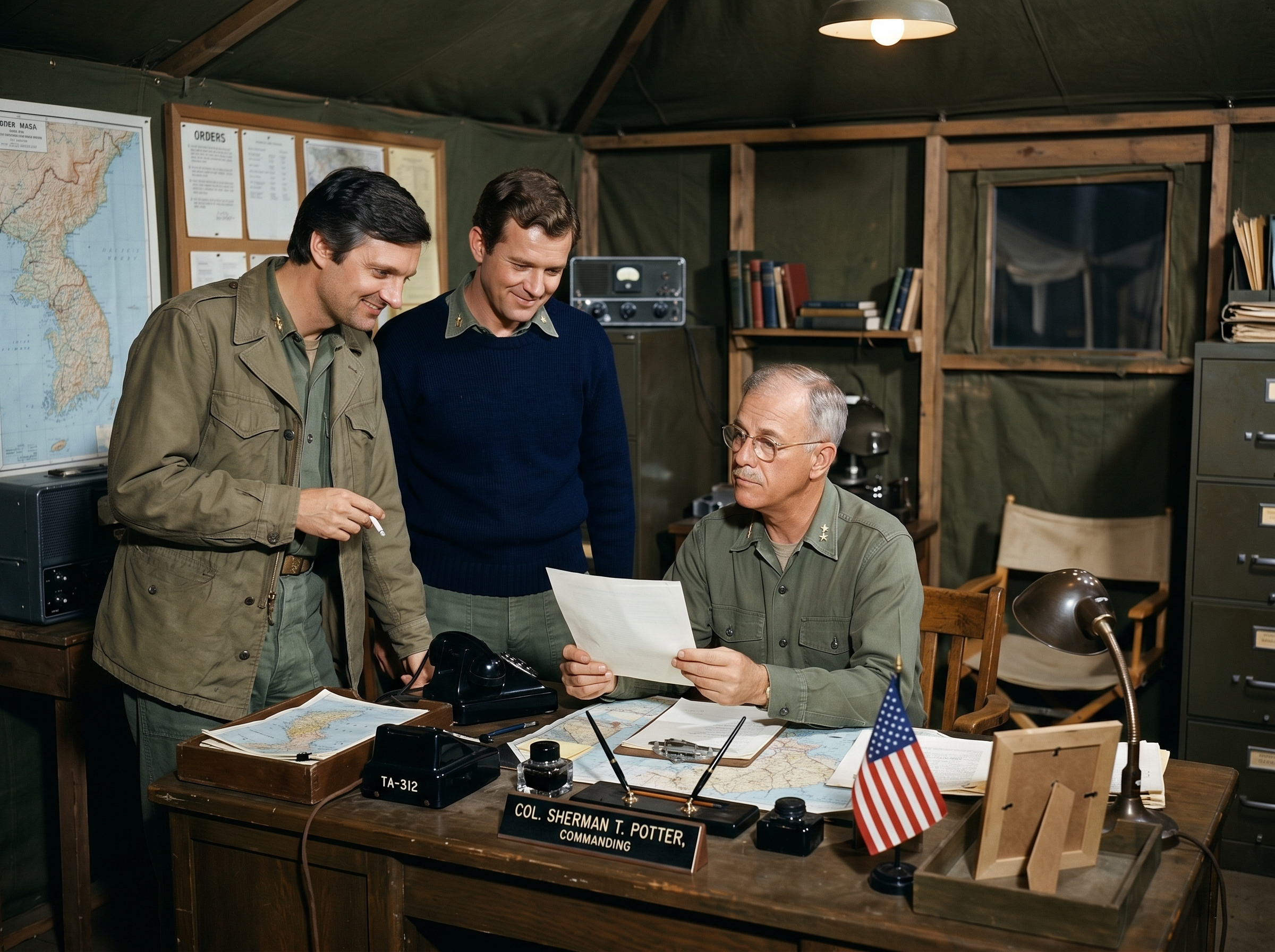
The air in the swamp was thick with the scent of damp canvas and stale coffee, but inside Colonel Potter’s office, it was just thick with the familiar, heavy stillness of a Tuesday afternoon.
Outside, the choppers had finally stopped their rhythmic thumping, leaving behind a silence so absolute it made your ears ache.
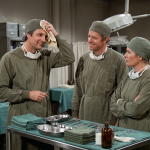
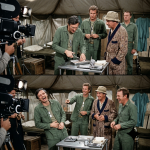
Hawkeye and B.J. had wandered in, their uniforms rumpled and eyes rimmed with the kind of red-streaked exhaustion that no amount of sleep could ever really touch.
They weren’t there for a lecture, and they certainly weren’t there for a reprimand.
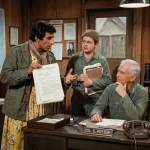
They were just standing there, leaning over the Colonel’s desk, watching as he held a single, crisp sheet of paper.
Colonel Potter peered at the document over his spectacles, his brow furrowed in a way that made the lines on his face look like a map of a very long, very complicated life.
“Well?” Hawkeye prompted, his usual razor-sharp wit softened by a genuine, quiet concern.
B.J. shifted his weight, his blue sweater pulled tight against his frame, his expression betraying a flicker of nervous anticipation.
Potter didn’t look up, his fingers tapping rhythmically against the edge of the desk near the American flag.
“It’s a directive, gentlemen,” the Colonel finally muttered, his voice gravelly and dry.
“From Seoul?” B.J. asked, his voice steady but low.
Potter turned the page, the paper crinkling in the quiet room like a gunshot.
He sighed, a long, rattling sound that seemed to pull the very air out of the tent.
“It isn’t from Seoul, and it isn’t from Tokyo, either,” Potter said, finally locking eyes with them.
The look on his face shifted—not into anger, but into a strange, defeated kind of wonder that hit them like a physical blow.
“It’s a request for a formal recommendation,” Potter said, “and it’s addressed to me, but it’s about both of you.”
Hawkeye froze, the cigarette in his hand forgotten, his smile vanishing as the weight of the moment hung suspended in the dim, golden light of the tent.
The silence that followed wasn’t the heavy, suffocating kind; it was the fragile, humming silence of a secret held too long.
Hawkeye slowly placed his cigarette in the tray, his gaze darting between the Colonel’s stern face and the mysterious paper.
“A recommendation?” Hawkeye repeated, his voice dropping into that rare, sincere register that he usually kept locked in a basement. “For what, Colonel? A commendation? A ticket home? Or just a polite request for us to be slightly less annoying for the duration of the war?”
Colonel Potter snorted, the sharp, familiar sound breaking the tension like a glass pane shattering.
“If I recommended you for being less annoying, Pierce, the paperwork would be rejected as a work of pure science fiction,” Potter chuckled, shaking his head.
He slid the paper across the desk, his hands resting heavily on the maps that covered his workspace.
It wasn’t a transfer, and it wasn’t a medal.
It was a request for the 4077th to submit a summary of their surgical successes—a cold, bureaucratic attempt to quantify the lives they’d saved in the mud.
“They want numbers,” Potter said, his voice quiet. “They want a tally of the miracles.”
B.J. reached out, his hand hovering over the paper before he pulled it back, looking down at the desk.
“We don’t count them,” B.J. said softly, his eyes reflecting the soft glow of the desk lamp. “If you start counting, you start realizing who didn’t make it to the count.”
Hawkeye looked at the Colonel, and for a moment, the age difference between them seemed to evaporate.
They were just three men standing in a canvas box, surrounded by war, trying to make sense of a world that refused to be measured.
“I’m not signing it,” Potter said, his voice firm, final, and entirely fatherly.
“Sir?” Hawkeye asked.
“I am not signing a document that tries to put a price tag on what you two do at those tables,” Potter said, standing up and walking around the desk to face them properly.
He looked tired, but his eyes were bright with a stubborn, fierce kind of pride.
“This desk is where we command,” Potter said, gesturing to the cramped, chaotic space around them, “but this tent is where we live. And we don’t live in numbers.”
He picked up the paper, tore it into small, neat strips, and dropped them into the wastebasket by the desk.
The tension, which had been coiled like a spring for twenty minutes, suddenly unspooled.
Hawkeye let out a long, ragged breath, his shoulders dropping two inches as the exhaustion finally caught up with him.
B.J. cracked a tired, lopsided grin, the kind that reminded everyone why they were still sane enough to keep showing up every morning.
“So, Colonel,” Hawkeye said, his voice returning to its familiar, bantering lilt, “does this mean we’re still the biggest headache you’ve ever had?”
Potter walked back to his chair, sat down with a groan of his joints, and picked up his pipe.
“Pierce,” Potter said, his voice dry as dust, “you’re not a headache. You’re a chronic condition. But I suppose I’ve grown fond of the symptoms.”
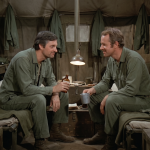
They stood there for a beat longer, the light from the desk lamp casting long shadows against the canvas walls, the world outside still holding its breath.
There were no medals, no grand speeches, and no changes to the war outside their door.
But as they turned to head back out into the cool evening air, the weight didn’t feel quite as heavy as it had an hour ago.
They had each other, they had a commander who knew the truth, and for one more night, that was enough.
In the heart of the 4077th, the greatest victories were never recorded in a ledger, just shared in the quiet moments between friends.