The Longest Distance Between Two Points
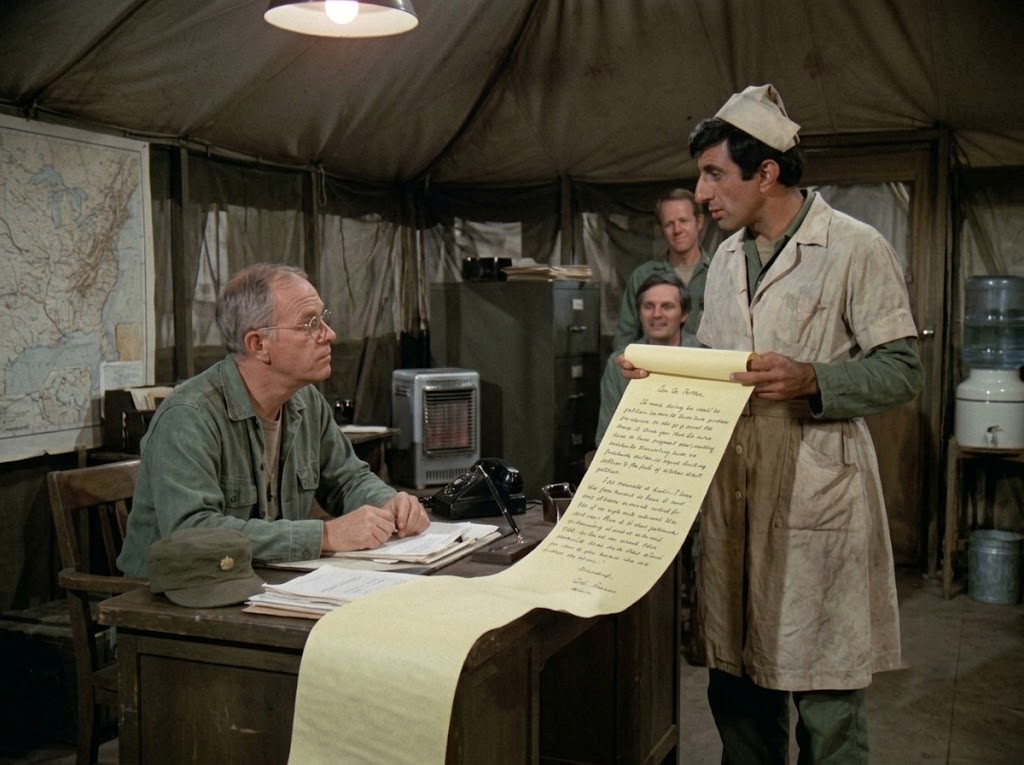
The mud outside the tents of the 4077th had a way of clinging to your boots, but it was nothing compared to how the exhaustion clung to your bones. After a seventy-two-hour shift in Post-Op, the world shrunk down to the size of a cot, a cold cup of army coffee, and the quiet breathing of people who had looked into the abyss and somehow made it back.
Colonel Sherman Potter sat at his desk, the weight of command resting heavily on his shoulders. His glasses were slid down the bridge of his nose, and his eyes burned from staring at supply manifests that never seemed to match the reality of a surgical tent in Korea. He wanted nothing more than to close his eyes for five minutes, to imagine the smell of the stables in Hannibal, Missouri, and the gentle nuzzle of his horse, Sophie.
Instead, the door to his office creaked open.
In walked Corporal Maxwell Klinger, wearing a stained white galley apron over his utilities and a chef’s hat perched precariously on his head. He didn’t look like a man trying to get a Section 8 discharge today; he looked like a man on a sacred, desperate mission.
In his hands, Klinger held a tightly rolled cylinder of yellow butcher paper. With a dramatic flick of his wrists, he let it unroll across the desk, cascading over the Colonel’s neat stacks of paperwork and trailing all the way down to the floorboards.
Potter didn’t flinch, but his eyebrows shot up toward his hairline. “Klinger,” he growled, his voice a dry rasp. “Unless that is a personalized, hand-signed apology from the entire North Korean infantry for making us work through the weekend, I suggest you roll it back up before I use it to light my pipe.”
“Colonel, with all due respect, this is much more important than an apology,” Klinger said, his voice entirely devoid of its usual theatrical whine. It was quiet, earnest, and laced with a strange kind of urgency. “This is a petition. A comprehensive, legally binding, deeply emotional appeal from the heart of the 4077th.”
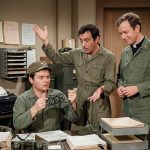
From the doorway, Captain B.J. Hunnicutt leaned against the tent pole, a soft, exhausted smile playing beneath his mustache. Behind him stood one of the corpsmen, both of them watching the scene unfold with the quiet reverence usually reserved for a church service or a particularly good poker hand. B.J. hadn’t changed out of his surgical scrubs yet, the fabric stiff with sweat and the faint, unmistakable smell of antiseptic.
Potter glanced at the scroll. The handwriting was meticulous, written in thick, dark ink. The top of the paper read, *Dear Col. Potter.*
“A petition for what?” Potter sighed, leaning back in his chair and rubbing his temples. “More silk dresses? A direct pipeline to Toledo for hot dogs? Klinger, I am too old, too tired, and too short on patience for another one of your stunts.”
Klinger didn’t back down. He stepped closer, holding the top of the scroll steady, his dark eyes fixed on the old cavalryman. “It’s not for me, Colonel. I swear on my mother’s honor. Just read the first paragraph. Please.”
Potter looked from Klinger to B.J., who gave a slow, encouraging nod from the back of the tent. The absolute silence in the room was heavier than the artillery rumbles in the distance.
Slowly, Potter adjusted his glasses, leaned over the desk, and began to read the handwritten lines. As his eyes scanned the first few sentences, the irritated scowl on his face suddenly froze, replaced by a sudden, sharp stillness that made Klinger hold his breath.
The words on the yellow paper didn’t ask for transfers, discharges, or better rations.
Instead, the petition detailed the exact number of hours Nurse Kellye had spent comforting a dying soldier from Ohio three nights ago. It listed the precise moment Father Mulcahy had given up his own blanket to a freezing orphan in the compound. It cataloged the quiet, unnoticed miracles that kept the 4077th from falling apart at the seams—the way Hawkeye had stayed up to hold a young private’s hand through the night, and how Radar always knew exactly which file to find when a grieving family needed answers.
It was a list of every uncredited act of kindness that had occurred in the unit over the last grueling month.
“We took a vote, Colonel,” Klinger said quietly, his voice losing its sharpness. “We know the brass in Seoul doesn’t give out medals for being human. We know they only look at the body counts and the surgical statistics. But we thought… well, we thought someone around here should keep track of the things that actually matter.”
Potter kept reading, his thumb tracing the edge of the butcher paper. His eyes traveled down the long, sweeping scroll. He saw the signatures at the bottom—dozens of them, scribbled in pencil, ink, and grease crayon. Doctors, nurses, corpsmen, cooks, and drivers. Every single person in the camp had signed their name to it.
B.J. finally stepped inside the tent, taking a seat on the edge of the wooden table near the map of the peninsula. “Klinger went around to every shift, Colonel. Even got Winchester to sign it, though Charles insisted on using his own fountain pen and complained that the paper was vulgar.”
A small, breathless chuckle escaped Potter’s lips, but his eyes remained fixed on the list. “And what exactly am I supposed to do with this, Corporal? Forward it to the Pentagon? They’d think we’ve all gone soft in the head.”
“No, sir,” Klinger said, adjusting his chef’s hat with a rare touch of humility. “We don’t want the Pentagon to see it. We wanted you to see it. We wanted to make sure that when you look at us, you don’t just see a bunch of tired, complaining misfits who can’t keep their uniforms clean. We wanted you to know we’re trying.”
Potter stood up slowly, the joints in his knees popping in the quiet tent. He walked around the desk, standing right in front of Klinger. For a long moment, the old officer just looked at the younger man—the kid from Toledo who wore satin gowns to escape a war, but who had spent his rare hours of sleep collecting the heartbeats of his comrades on a piece of kitchen paper.
“Corporal,” Potter said, his voice thick but steady. “In all my years in the United States Army, I have been handed a lot of official documents. I’ve received commendations, reprimands, orders of deployment, and letters of condolence.”
He reached out and gently tapped the yellow scroll.
“But this is the finest piece of paperwork I have ever had the honor of receiving.”
Klinger’s face broke into a wide, brilliant smile, his chest swelling with a pride that no fraudulent medical discharge could ever provide. “Thank you, Colonel.”
“Now, clear out of here, the lot of you,” Potter barked, though there was absolutely no bite left in his voice. “Before I find a reason to put you all on latrine duty for making an old man sentimental.”
B.J. smiled, clapping Klinger on the shoulder as they turned to leave the tent. The canvas flap dropped shut behind them, leaving the Colonel alone once more with the quiet hum of the space heater and the map of a divided country on his wall.
Sherman Potter walked back to his chair, sat down, and carefully began to roll the yellow paper back into a neat cylinder. He didn’t lock it away in the filing cabinet with the official records. Instead, he placed it gently on the top shelf of his desk, right next to the framed photograph of his wife, Mildred.
He knew the war would still be there tomorrow. The helicopters would come, the sirens would wail, and the blood would flow again. But looking at that shelf, he knew they would face it together.
Because in the mud of Korea, the only thing keeping them human was the love they refused to leave behind.