The Silence After the Storm
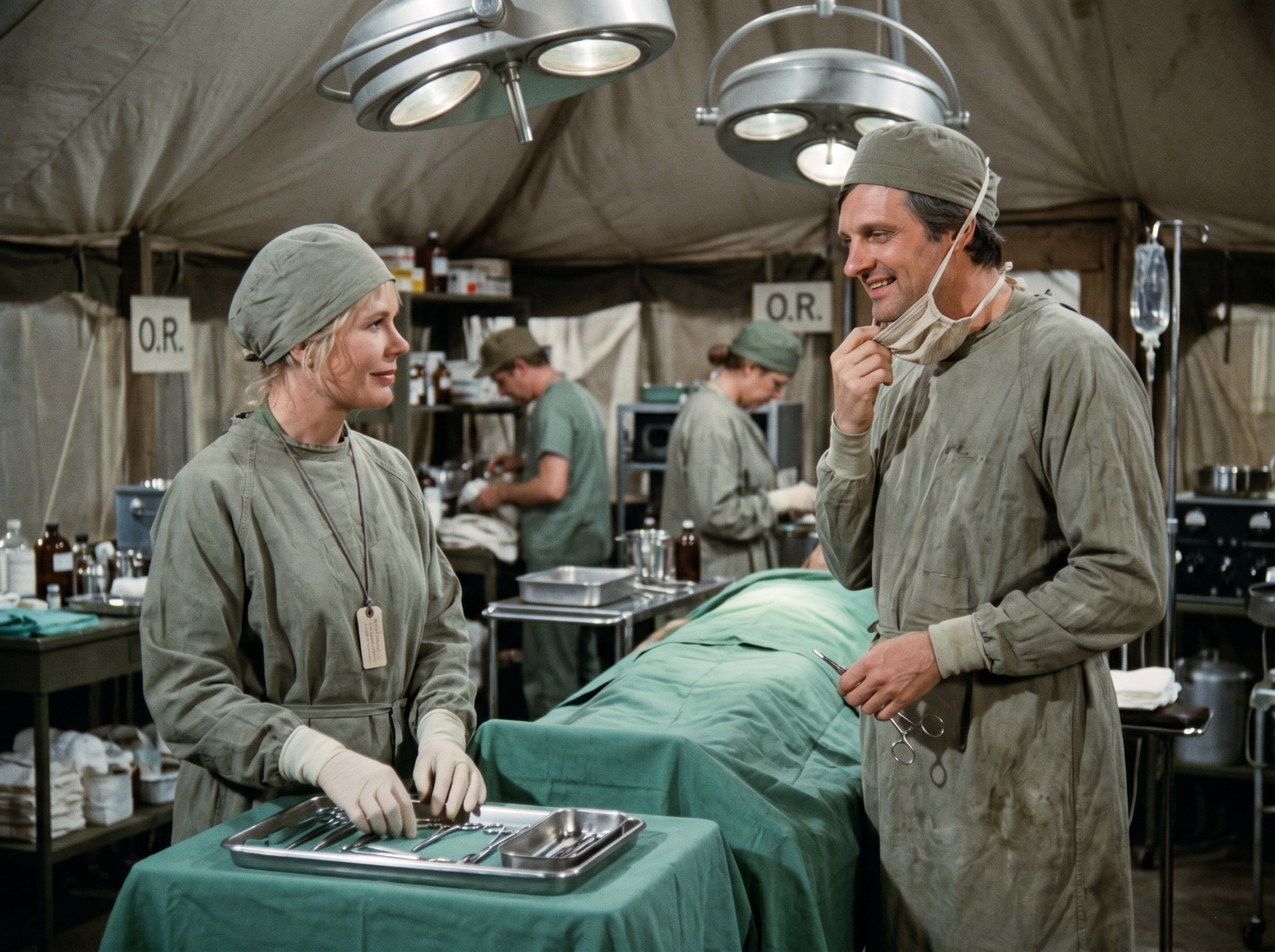
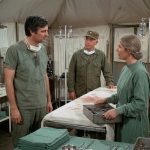
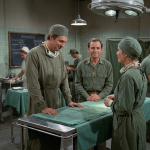
The O.R. tent was a cathedral of fading lights and exhausted hope. The air, heavy with the phantom scent of sterilizer and the copper smell of a long night, hung still, waiting for the latest surgical offensive to be cataloged. Inside, among the chrome trays, green sheets, and hanging bottles of plasma, the 4077th’s senior surgical staff was finally exhaling. The central operating table, shrouded in its surgical drapes (as seen in image_0.png), held the stillness of a battlefield after the guns went silent.
Major Margaret Houlihan and Captain Hawkeye Pierce stood facing each other, their bodies mirroring the sudden, fragile relief. They were in full surgical gear, the same green caps and gowns visible in the image, looking like two tired knights who had just survived the final charge. Hawkeye had finally pulled his mask down, his thumb hooking the strap as he did so, revealing a tired, wry smile that crinkled the skin around his eyes. Across from him, standing over a tray of instruments, Margaret was smiling too—a soft, knowing curve of her lips that she rarely permitted outside of the privacy of her own tent.
In the background (image_0.png), past the shelves of supplies and the large overhead surgical lights, B.J. was silhouetted against a rear table, his back to them, methodical in his cleaning of instruments, his shoulders slightly slumped. His steady routine was the heartbeat of the tent. Nearer the far O.R. sign, another surgical tech worked silently, the clinking of steel on glass the only percussion to their exhausted reprieve. Radar was nowhere to be seen, likely in his clerk’s corner, waiting for the inevitability of the next bus.
They were smiling, not at a joke, but at the sheer, miraculous survival of sanity. The tension, the focus, the visceral race against the clock—all of it had just fallen away, leaving this quiet, human connection hanging between them. Margaret, usually a fortress of discipline, let her guard slip for one vulnerable moment, accepting Hawkeye’s silent camaraderie. She knew exactly what his tired grin cost him; he used humor as armor, and she respected the strength it took to keep it polished. They were comrades-in-arms, bonded in blood and the desperate desire to fix what others had broken.
The smile held. The world was quiet. They were alive, and they had just pulled another soul back from the edge.
But then, across the quiet of the tent, the sharp, jarring ring of the telephone in the clerk’s corner sliced through the silence.
The single, metallic ring felt like a physical blow. Their shared smile, so warm and fragile just moments before, fractured instantly. Hawkeye’s expression shifted, the tiredness deepening into resignation as his hand froze on his mask. Margaret’s posture went rigid, the professional wall she had briefly abandoned instantly slamming back into place. B.J., in the background, stopped cleaning the instruments, his shoulders tensing as he looked over his shoulder.
For a long, agonizing second, no one moved. They all knew what that sound meant. The telephone in the O.R. rarely rang with good news.
Slowly, Hawkeye finished pulling his mask all the way down, the gesture feeling heavier than any surgical procedure. The quiet was now deafening, filled only by the expectation of the next emergency. Margaret took a deliberate breath, her eyes regaining their sharp focus, and turned her full attention back to the instrument tray, her hands beginning to reorganize the surgical tools with practiced precision.
“Radar,” Hawkeye said, his voice quiet, his usual wit replaced by the flat, serious tone he used when the humor ran out. “Check that, will you?”
Radar’s voice drifted in from his nook, sounding small and efficient. “Yes, sir. It was… it was Colonel Potter. A message.”
Margaret stopped her sorting and looked up, expecting the worst. B.J. turned fully.
“What is it, Radar?” Hawkeye asked, his gaze fixed on Margaret.
A beat of silence followed, the air in the tent once again thick with apprehension.
“He just wanted to say… that the last patient, Private Johnson? The one Major Houlihan didn’t give up on?” Radar’s voice cracked slightly with earnest relief. “The Colonel says he’s stabilized. His vitals are holding. Dr. Winchester says it’s a ‘significant positive development.'”
The tension that had built so rapidly simply dissolved. The release was different this time; it was warm, quiet, and deeply profound. Margaret’s shoulders dropped. A look of quiet satisfaction washed over her face, more genuine than the previous smile, fueled not just by relief but by a reaffirmation of their purpose.
Hawkeye looked at her, his expression a mix of tired admiration and profound respect. He didn’t crack a joke. He didn’t offer a flippant remark. He just held her gaze for a long moment, the shared human weight of the news pressing between them.
“You see,” Hawkeye said, his voice gentle and completely free of sarcasm. “Sometimes they listen to the loud Major.”
Margaret looked back at him, the corner of her mouth twitching in a genuine, if weary, smile that didn’t feel professional at all. “Once in a blue moon, Captain Pierce.”
In the background, B.J. let out a long breath and went back to cleaning instruments, a small, subtle smile touching his lips. He didn’t need to say anything; the quiet approval of their friend was enough. Colonel Potter’s wisdom, his dry paternal reassurance, had reached them through the wire, giving them the strength to push past the fatigue. For just a minute, the entire 4077th found a collective sanity in the survival of one soldier they had worked together to save.
Hawkeye and Margaret resumed their tasks, their movements now a little lighter, the fatigue less of a burden. The silence that followed was different: it wasn’t just a reprieve; it was a testament to hope. They would finish cleaning up, get some coffee, maybe sleep for an hour, and then the next bus would inevitably arrive. But for that precious, fleeting moment in the tired O.R. tent, among the stainless steel and the shadows, they were reminding themselves why they kept doing this.
They didn’t always win, but they always, always held onto the hope.