The Five-Minute Truce at the Mess Tent
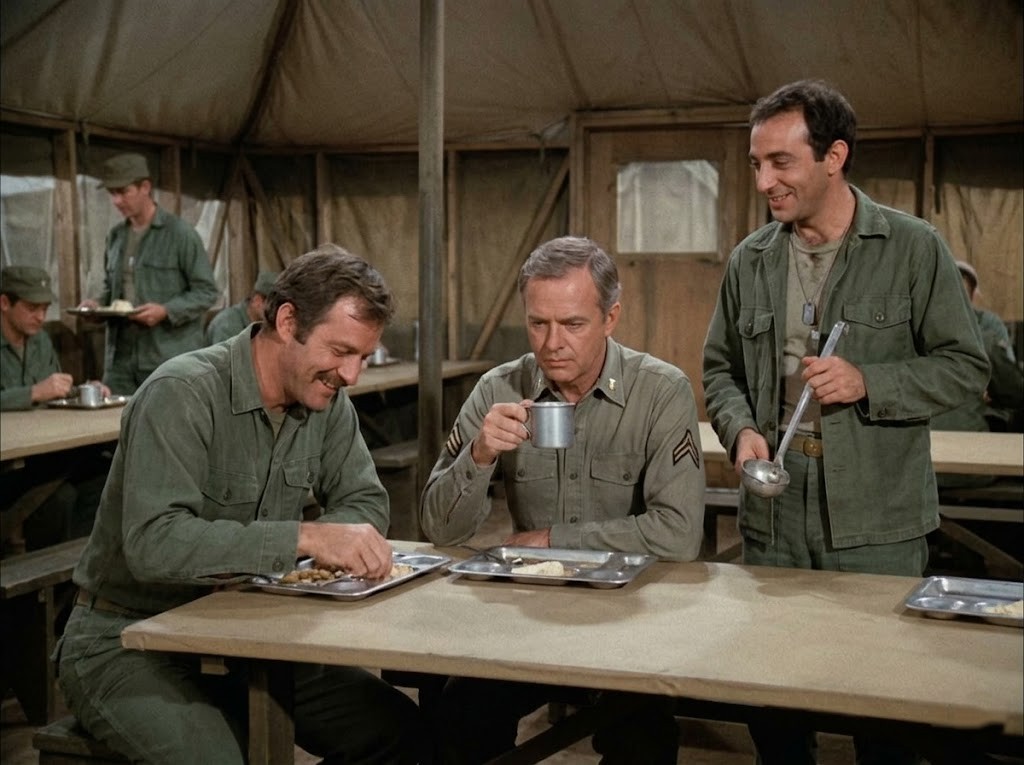
They say the army marches on its stomach, but at the 4077th, the stomach was usually trying to surrender.
After a grueling thirty-six-hour stretch in the operating room, the smell of cheap coffee and scorched mystery meat was the closest thing to heaven anyone could ask for.
The mess tent was unusually quiet, save for the low hum of the generator and the rhythmic *clack-clack* of a distant helicopter landing pad.
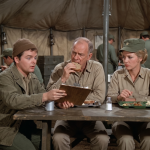
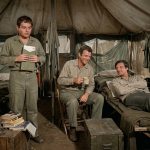
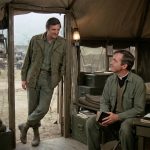
B.J. Hunnicutt sat at the worn wooden table, his shoulders slumped under a heavy layer of exhaustion that no amount of sleep could quite wash away.
With a tired but mischievous glint in his eye, he looked down at his metal tray, using his fingers to sort through a pile of what the kitchen staff claimed were roasted peanuts.
Beside him sat Colonel Potter, looking every bit the weary father figure of the outfit, his eyes fixed blankly ahead as he lifted a battered tin mug to his lips.
Potter took a slow sip of the lukewarm, battery-acid coffee, his face a mask of stoic endurance, though his brow furrowed with the weight of the casualties they had just processed.
Standing over them with a ladle held like a ceremonial scepter was Igor, a faint, almost guilty smirk playing on his lips as he hovered near the commanding officer.
In the background, a few other tired souls shuffled through the line, their green fatigues hanging loose, their spirits momentarily anchored by the simple act of sitting down.
“You know, Colonel,” B.J. muttered, casually tossing a peanut into his mouth, “I think Igor has finally done it. He’s managed to petrify the legumes.”
Potter didn’t look up from his mug, his voice a gravelly rumble. “Hunnicutt, at this point in the war, if it doesn’t crawl off the plate by itself, I count it as a victory.”
Igor cleared his throat, shifting his weight. “It’s a traditional recipe, sir. My grandmother used to make it back in Ohio. Though, admittedly, she had working teeth.”
“Your grandmother must have been in the artillery, Igor,” B.J. chuckled, nudging a particularly dark piece of food around his tray.
But beneath the light banter, the silence of the tent felt fragile, a thin bandage over a wound that everyone was trying hard not to touch.
Potter finally lowered his mug, his gaze shifting to the empty spaces at the long tables where so many shared jokes and complaints usually echoed.
The exhaustion wasn’t just physical; it was the kind of deep, marrow-deep fatigue that comes from holding a fractured world together with surgical thread and sheer stubbornness.
Just then, the distant sound of the siren began its low, ominous whine, signaling another incoming chopper, and the collective breath of the room caught in a single, agonizing moment.
The siren wailed once, a sharp reminder of the world outside the canvas walls, before fizzling out into a false alarm—just a supply transport passing close by.
A synchronized exhale passed through the mess tent, the tension breaking as quickly as it had built, leaving only the quiet comfort of their shared survival.
Colonel Potter set his mug down with a soft, deliberate thud, the momentary stiffness in his shoulders melting back into the familiar, steady posture of a leader.
“False alarm,” Potter murmured, looking directly at B.J. with a soft, paternal warmth returning to his eyes. “The universe is granting us another five minutes of bad coffee.”
B.J. smiled, a genuine, grounded expression that always seemed to remind everyone of home, of family, and of the lives waiting for them beyond the hills.
“I’ll take it,” B.J. said quietly, pushing the tray aside and leaning his elbows on the table. “Five minutes is long enough to remember what it feels like to just be human.”
Igor, sensing the shift in the room, lowered his ladle and offered a softer, more sincere expression, the defensive cook persona fading away.
“I can fetch some fresh toast, Colonel,” Igor offered softly, his voice devoid of his usual mess-hall sarcasm. “It might be a little burnt, but it’s warm.”
“Thank you, Igor,” Potter replied, his tone exceptionally gentle. “Warm is exactly what we need right now.”
In that tiny corner of a chaotic world, the three of them shared a quiet understanding that didn’t require long speeches or profound declarations.
It was the heartbeat of the 4077th—the ability to find a shred of grace in a tin cup, a moment of laughter in a plate of terrible food, and a family in the strangers wearing the same mud-stained green.
The light filtering through the tent canvas seemed a little softer now, casting long, peaceful shadows across the wooden benches and the empty metal trays.
They knew the peace wouldn’t last, that tomorrow would bring more casualties, more sweat, and more heartache to their small valley.
But for those next few minutes, under the canvas ceiling of a makeshift sanctuary, they were safe, they were together, and they were home.
Sometimes, the greatest medicine the 4077th ever offered was simply pulling up a chair and sharing the weight of the day.