The Bitter and the Sweet at the 4077th
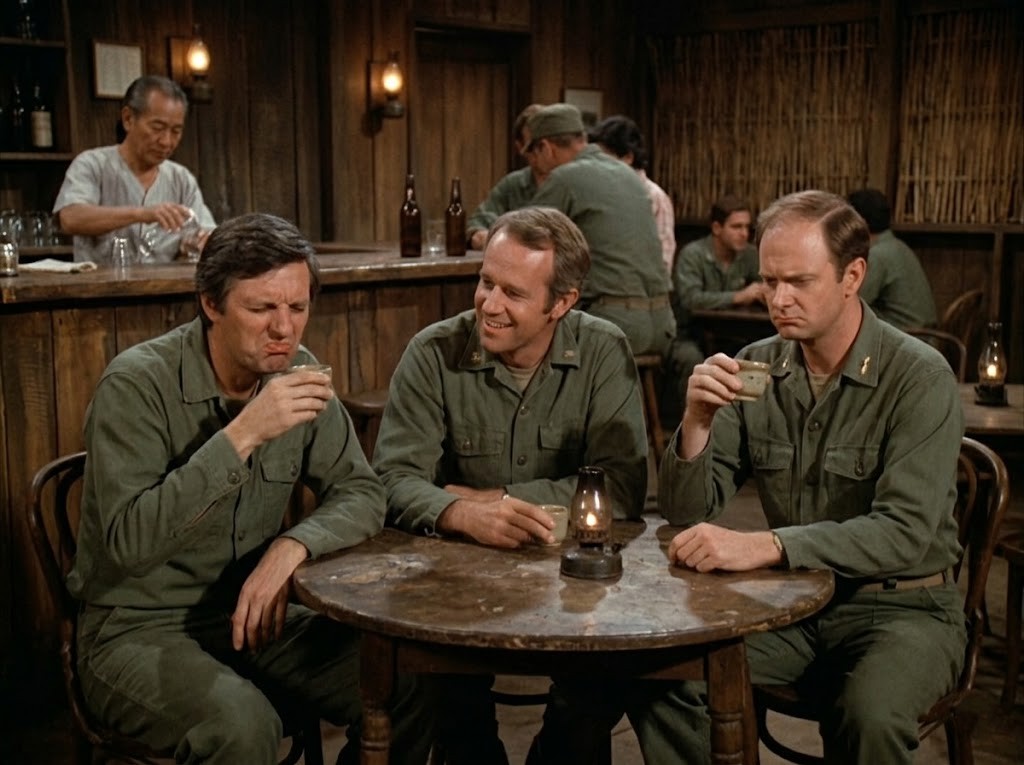
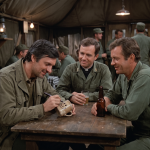
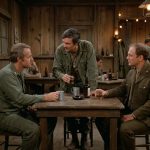
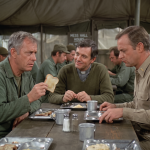
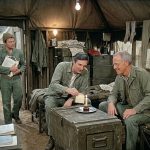
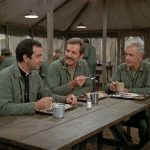
The mud outside may have been relentless, but inside the tent, the air was thick with the scent of unwashed canvas, stale tobacco, and the desperate, quiet need to simply be anywhere else. Hawkeye, B.J., and Winchester sat hunched around a small, circular wooden table, the dim light of a singular oil lamp casting long, flickering shadows across their weary faces.
It was one of those nights where the silence between them spoke louder than any argument.
Hawkeye, his face contorted into a mask of comedic agony, stared down at the small ceramic cup in his hand as if it were a live grenade. Beside him, B.J. wore a gentle, expectant smirk, his eyes dancing with the quiet mischief of a man who knew exactly what kind of catastrophe he had set in motion. Winchester, the picture of aristocratic composure, held his own cup with a rigid, suspicious delicacy, his brow furrowed in a deep, scholarly contemplation of the liquid within.
“Gentlemen,” Hawkeye croaked, finally breaking the silence, his voice tight with feigned bravado. “I have tasted many things in this God-forsaken war—from the dubious mysteries of the mess tent meatloaf to the metallic tang of fear—but this… this is a bold new frontier in liquid assault.”
B.J. simply chuckled, leaning back in his chair with an infuriatingly relaxed grace. “It’s an acquired taste, Hawk. You have to let it breathe. Like a fine, aged… well, a very, very angry foot.”
Winchester took a tentative, microscopic sip. His eyes immediately widened, his cheeks hollowed out, and a faint, strangled sound escaped his throat, as if he were trying to suppress a scream of culinary betrayal. He set the cup down with a sharp *clack*, his hand trembling slightly as he glared at the offending beverage.
“Honeycutt,” Winchester whispered, his voice trembling with a mix of genuine horror and profound indignation, “I believe you have successfully distilled the very essence of despair into a porcelain vessel.”
Hawkeye looked at the cup, then at B.J., then back at the cup, his expression shifting from humorous disdain to something much more guarded and hollow. The playfulness died in his eyes, replaced by a sudden, sharp reflection of the long, grueling shift they had just survived. The joke had landed, but the laughter felt suddenly brittle, like dried leaves caught in a winter wind, and for a heartbeat, the exhaustion of the war threatened to pull the table out from under them entirely.
The light of the oil lamp wavered, and for a moment, the three men seemed like ghosts in the dimness of the tent. B.J.’s smile didn’t vanish, but it softened into something far more tender. He reached out, his hand resting briefly on the table, not quite touching either of them, but bridging the distance between their separate, internal worlds.
“It’s not meant to be good, Winchester,” B.J. said quietly, his voice losing its mocking edge. “It’s just meant to be different. It’s meant to remind us that not everything around here has to taste like the war.”
Winchester stiffened, then slowly sighed, the tension in his shoulders dropping an inch. He looked at the cup again—this little, imperfect thing—and then he looked at his colleagues. He saw the dark circles under Hawkeye’s eyes and the way B.J.’s hands were still slightly stained, despite his best efforts at the basin. They were three men who had seen far too much, yet here they were, sitting in the dark, arguing over the quality of a drink that was, by all accounts, objectively terrible.
“A profound point, albeit articulated with your usual lack of refinement,” Winchester muttered, though the sting was gone from his tone. He picked up the cup again, this time with less suspicion and more resignation. “I suppose, in the grand, catastrophic scheme of things, suffering through this together is perhaps the only thing that keeps us from devolving into total madness.”
Hawkeye let out a ragged, genuine laugh, shaking his head. He lifted his cup in a mock salute. “To madness, then. And to the fact that, somehow, it tastes a little less like iron when you’ve got someone to share the misery with.”
B.J. raised his cup, his expression calm and steady, the anchor of the group. “To the 4077th. May we never get used to the good, and always appreciate the bad together.”
They drank. It was still bitter, still sharp, and still altogether unpleasant, but as the warmth of the liquid hit their chests, the crushing weight of the day seemed to lift, just a fraction. Around them, the tent was quiet, save for the low murmur of soldiers at the bar and the distant, rhythmic thrum of a helicopter miles away.
They sat there for a long time, not needing to fill the air with words. They were tired, they were far from home, and they were surrounded by a conflict they couldn’t control, but for this small pocket of time, they were simply three friends at a table. The shared indignity of the drink had become a tiny, private victory—a moment of humanity carved out of the chaos.
As the lamp flickered one last time before settling into a steady glow, they leaned in, the shadows pulling back just enough to let them see that, despite everything, they were still standing.
It’s the small, quiet moments that hold the heart together when the world is falling apart.