The Weight of a Single Stitch
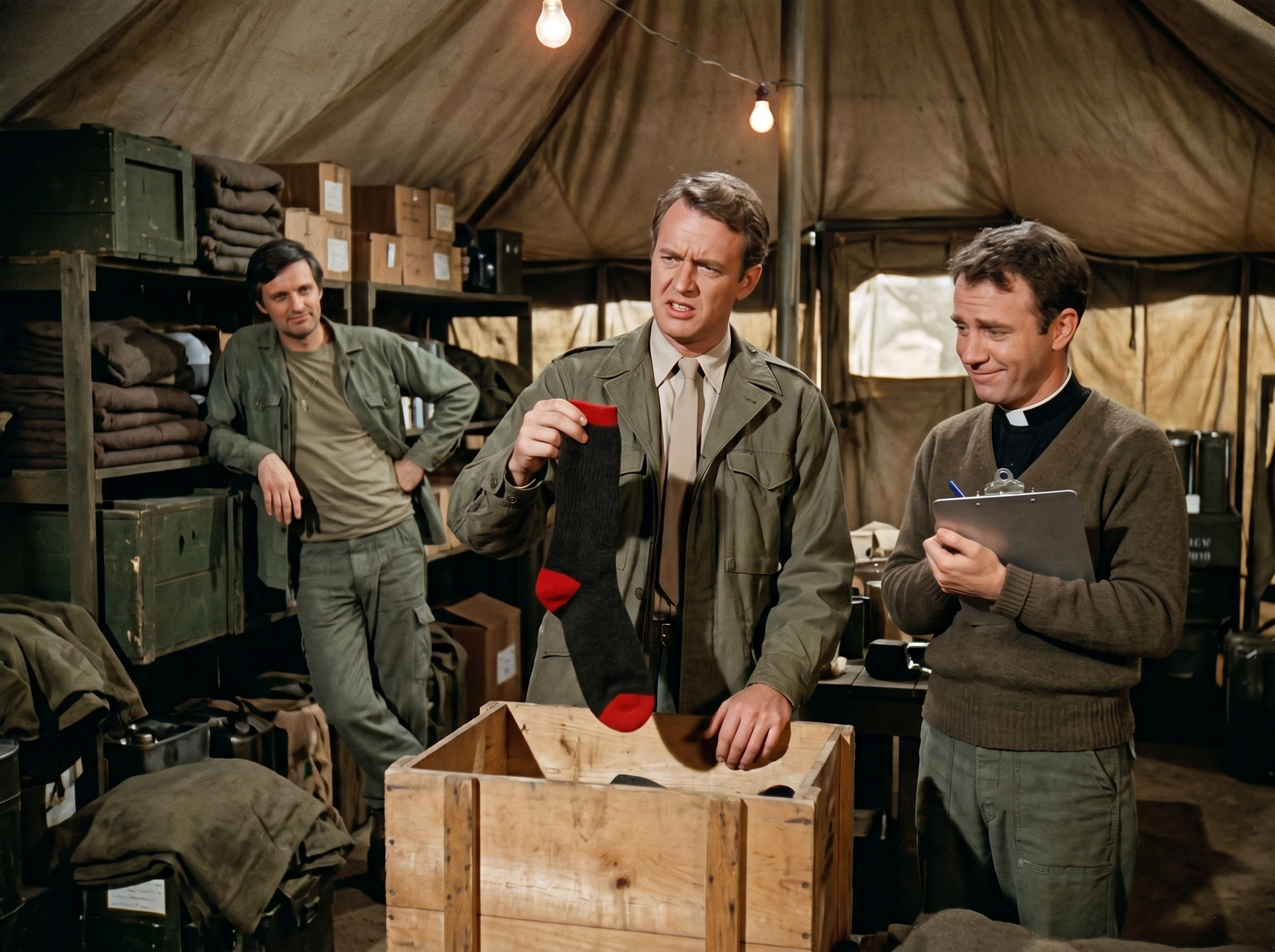
The mud outside the 4077th was a constant, living thing, but inside the supply tent, the air always smelled of dry canvas, stale coffee, and the quiet, desperate hope that tomorrow might be a little less loud than today.
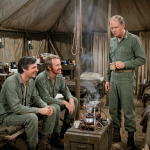
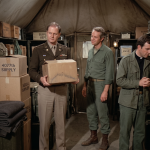
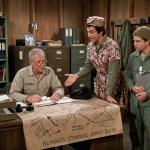
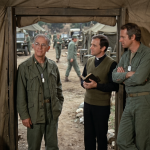
Hawkeye Pierce stood by the rough-hewn wooden crate, his brow furrowed in a display of exaggerated theatrical concern that didn’t quite reach his eyes. In his hand, he held a single sock—dark, heavy wool, with a vibrant, almost festive red toe and heel.
“Father,” Hawkeye said, his voice dripping with a practiced, dry sarcasm that served as his personal shield against the encroaching madness. “Tell me, in your vast theological training, is there a specific verse regarding the distribution of apparel that appears to have been knitted by someone suffering from a severe case of color-blindness?”
Father Mulcahy, standing nearby with his clipboard, offered a small, tentative smile that creased the corners of his eyes. He looked tired, his shoulders slumped under the weight of a long shift, yet he held his ground with that gentle, persistent dignity that had kept the camp sane for years.
“I believe, Hawkeye,” Mulcahy replied, his voice soft and thoughtful, “that the good Lord appreciates the warmth provided, regardless of the aesthetic choices of the Quartermaster Corps.”
In the corner, leaning effortlessly against the shelving unit, Trapper leaned back with a relaxed, almost lazy grin. He wasn’t involved in the inspection, but he was watching the exchange with the comfortable air of a man who knew exactly how ridiculous they all looked in the dim light of the hanging bulbs.
He didn’t say a word, just watched with a half-amused, half-tender expression, as if he knew that the argument wasn’t about the socks at all.
Hawkeye sighed, looking down at the red-heeled monstrosity in his hand, his grip tightening just a fraction. He looked at the crate, then back at the empty, looming space of the tent, and for a fleeting, terrifying second, the witty retort died on his lips.
The air in the tent suddenly shifted, the humor draining away to leave a raw, exposed silence that felt heavier than a dozen surgical shifts combined.
“Father,” Hawkeye whispered, his voice losing its sharp edge, his eyes scanning the contents of the crate with a sudden, haunting intensity. “Do you think it’s enough? Do you really think, in the grand scheme of everything we see, that a pair of socks—no matter how hideous—is actually going to change anything for the boys who need them?”
Father Mulcahy didn’t immediately answer. He looked at the clipboard, his pen hovering for a moment as he processed the question, sensing the cracks in Hawkeye’s legendary defense.
The silence hung in the tent, fragile and electric.
Then, Mulcahy stepped forward, placing a gentle, steadying hand on the edge of the wooden crate. “Hawkeye,” he said, his voice as quiet and firm as a prayer. “It isn’t about changing the world. It’s about the fact that right now, in this moment, you are holding something that is going to keep one man’s feet from freezing tonight. You are holding a tiny piece of comfort in a place that has very little of it to offer.”
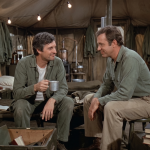
Trapper, who had been watching from the shadows of the shelves, finally pushed off the wood and walked over. He didn’t offer a joke. He just reached out, took the sock from Hawkeye’s hand, and felt the thick, scratchy wool between his fingers.
“It’s not about the color, Hawk,” Trapper said, his voice grounded and steady, devoid of his usual playful bite. “It’s about the fact that someone back home sat down, took the time, and made this. It’s a bridge. It’s a reminder that we aren’t just here to sew people back together and ship them off. We’re here to acknowledge that they’re human beings who deserve warmth.”
Hawkeye looked at his friends—at Mulcahy’s earnest, kind face and Trapper’s quiet, steady presence—and felt the tightness in his chest begin to dissipate.
He looked down at the crate again. It was just a box of supplies in a tent in the middle of nowhere, surrounded by chaos and exhaustion. But for a few minutes, it was the most important thing in the world.
He reached into the crate and pulled out a matching sock, holding the pair up like a trophy. A ghost of his usual smile returned, softer this time, more authentic.
“Well,” Hawkeye murmured, his voice thick with a sudden, quiet grace. “If we’re going to be the fashion capital of the Korean peninsula, I suppose we’d better make sure we’re handing these out in matching pairs.”
Mulcahy smiled, a genuine, radiant expression that lit up the dimly lit tent. He made a quick note on his clipboard, his movements rhythmic and purposeful.
“One pair for the surgical team, I think,” the Father said. “They’ve certainly earned a little bit of color in their lives.”
Trapper laughed, a low, rumbling sound that felt like home. He reached out and clapped a hand on Hawkeye’s shoulder, a firm, grounding gesture of friendship that spoke louder than any sermon.
They stood there for a long time, the three of them, huddled around a crate of wool socks in the dim light of the 4077th. The war was still raging outside, the sirens would likely wail before the night was through, and the exhaustion would be there waiting for them in the morning.
But in that small, quiet tent, with the smell of canvas and friendship hanging in the air, the world felt a little smaller, a little warmer, and significantly more manageable. They weren’t just soldiers or surgeons or chaplains; they were a family, finding the extraordinary in the mundane, one stitch at a time.
Sometimes the smallest things are the only things that keep the darkness at bay.