The Weight of an Envelope and the Lightness of a Laugh
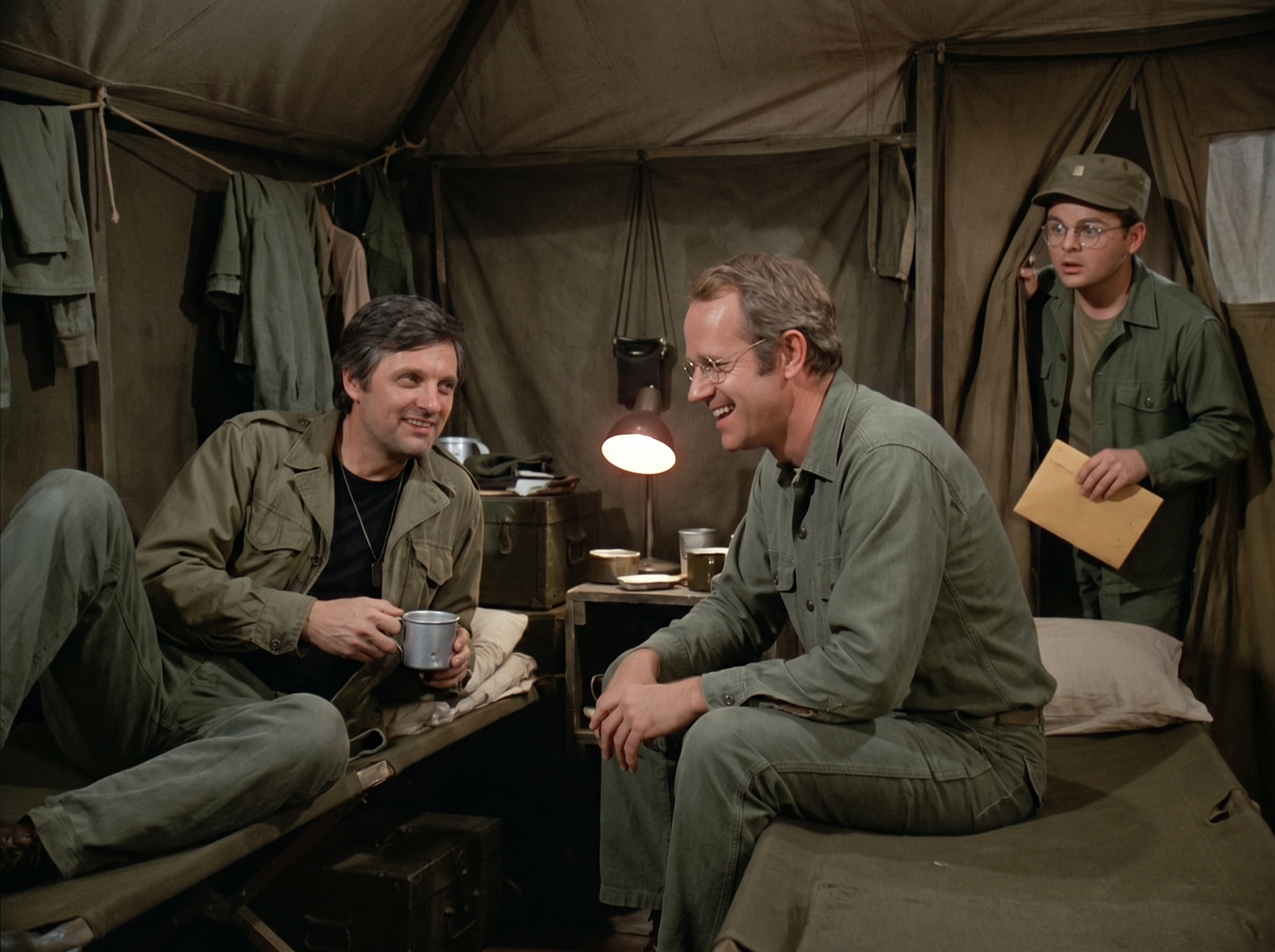
The mud outside the Swamp always smelled like rusted tin and rain that had given up halfway through falling. Inside, it smelled of stale gin, damp canvas, and the kind of exhaustion that settled so deep into your marrow it felt like a permanent resident.
We had just come off a thirty-six-hour marathon in the O.R., the kind where the steam from the sterilizer coats your glasses until you’re cutting by memory and pure faith. Your fingers get so stiff they feel like dry twigs, and your mind starts playing tricks on you, making you think the drone of the generator is actually a radio station back in Iowa playing a song you forgot the words to.
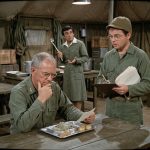
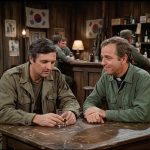
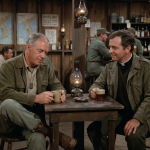
Hawkeye was stretched out on his cot, his boots dangling off the edge like two dead weights he couldn’t quite figure out how to unstrap. He was holding a battered aluminum mug, the gin inside it probably warm enough to strip paint, but to him, it was Holy Water.
Across from him, B.J. sat on the edge of his own mattress, his shoulders hunched under the heavy green fatigue shirt. He had his glasses pushed up on his nose, his face creased with that quiet, easy grin that always seemed to say, *We’re still here, Hawk. Somehow, we’re still here.*
They were laughing about something completely stupid—a joke Hawkeye had made during the third hour of surgery about a private from Toledo who claimed he’d been shot by a very aggressive pheasant. It wasn’t actually that funny, but when you haven’t slept in two days, a bad joke is a lifeline.
“I’m telling you, Beej,” Hawkeye muttered, his voice raspy from the dry air and the cheap smoke. “The pheasant had rank. I could tell by the trajectory of the buckshot. It was at least a major.”
B.J. let out a low, rumbling chuckle, his eyes crinkling at the corners. “A major pheasant, Hawk? That’s court-martial material right there. You can’t insult an officer of the flock.”
The laughter was thin, fragile, but it filled the small tent like a warm blanket, pushing back the shadows that always tried to creep in from the corners. For five minutes, the war didn’t exist; there were no incoming choppers, no smell of ether, no endless rows of olive-drab cots.
Then, the canvas flap of the door rustled.
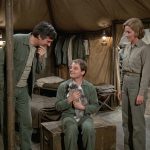
Radar peeked his head through the opening, his cap tilted forward and his oversized glasses reflecting the dull glow of the desk lamp. He looked like a startled rabbit that had stumbled into a clearing where the hounds were resting.
In his hand, gripped so tightly his knuckles were white, was a thick, official-looking manila envelope.
He didn’t move all the way into the tent; he just stood there, suspended between the cold damp of the camp outside and the fragile warmth of the Swamp. His eyes were wide, darting between the two doctors, and his mouth was slightly open, as if the words he wanted to say were too heavy to lift.
Hawkeye’s laugh died first, the mug freezing halfway to his lips. B.J.’s smile didn’t vanish entirely, but it turned brittle, his posture freezing as he looked at the expression on the young corporal’s face.
When Radar looked like that, it usually meant one of two things: either the payroll was late again, or someone’s world back home had just fallen apart.
“Sirs,” Radar whispered, his voice cracking slightly on the syllable. “I… I have something here. It just came in on the last jeep from Seoul.”
The silence that followed was heavy, the kind that feels like it’s pressing down on your chest. The small desk lamp cast a long, sharp shadow across the dirt floor, cutting right between Hawkeye and B.J. like a boundary line.
Hawkeye set his mug down on the wooden crate beside his bed, the metal clinking against the wood with a sound that felt entirely too loud. “Come on in, Radar. Don’t just hang there like a draft. What’s the damage? Did Klinger finally buy that silk dress from the black market, or is the Colonel banning jokes about the mess tent again?”
He was trying to keep it light, but his eyes were sharp, scanning Radar’s face for the real story. Hawkeye had a way of reading people like a chart; he could spot a hidden fracture in a man’s spirit just as easily as he could find a piece of shrapnel in a chest cavity.
Radar swallowed hard, stepping fully inside but keeping his back close to the canvas wall. He held the envelope against his chest like a shield. “It’s… it’s for Captain Hunnicutt, sir. Official correspondence from San Francisco. But it didn’t come through the regular mail channels. It was flagged.”
B.J.’s hand went still on his knee. The name *San Francisco* always brought a sudden, fierce flash of light into his eyes—images of Peg, of Erin’s first steps that he’d only seen in grainy photographs, of a life that felt like a movie he’d watched a long time ago. But the word *flagged* changed the temperature in the room instantly.
“Give it here, son,” B.J. said softly, his voice dropping an octave, completely stripped of the laughter from a moment before.
Radar crossed the tent with quick, hesitant steps, handed the envelope to B.J. as if it were a live grenade, and then immediately stepped back, his hands retreating into his pockets. He looked incredibly small in his oversized fatigues, a kid from Iowa carrying the weight of a hundred broken families in his mailbag every single day.
Hawkeye swung his legs over the side of the cot, his boots hitting the floor. He didn’t say anything. He just watched B.J.’s face as his friend slid his thumb under the heavy paper seal and tore it open.
Inside was a stack of official documents, stamped by the Department of the Army, along with a smaller, handwritten letter on pale blue stationery. B.J. ignored the official papers first; he went straight for the blue ink.
The Swamp was so quiet you could hear the slow, rhythmic *drip-drip* of water from a leak in the roof hitting an empty tin can near the door. Hawkeye watched B.J.’s eyes move across the page, left to right, left to right, his expression hardening, then softening, then settling into a mask of pure, unadulterated relief mixed with a strange kind of sorrow.
After what felt like an eternity, B.J. let out a long, ragged breath that sounded like it had been trapped in his lungs since 1950. He looked up at Hawkeye, then over at Radar, who was practically vibrating with anxiety.
“It’s not bad news,” B.J. said, and the relief in the tent was so sudden it felt like the sun coming out. “It’s… it’s from Peg’s father. He’s been working with a lawyer back home. Because of my prior residency status and the extension of my draft loop, there was a clerical error in my original deployment orders.”
Hawkeye leaned forward, his elbows on his knees. “A clerical error? Don’t tease a tired man, Beej. Are you telling me the Army actually admitted they made a mistake? That’s a historical landmark. We should put up a plaque.”
“They’re reviewing the rotation schedule,” B.J. explained, looking at the official papers now. “If the board approves the correction, my discharge date moves up. By six months, Hawk. I could be home before the winter sets in.”
Radar let out a small, ecstatic squeak. “Gee, Captain! That’s great! That’s just… wow!”
But Hawkeye didn’t cheer. He looked at B.J., and B.J. looked back at him, and in that split second, the reality of the 4077th asserted itself. Six months earlier for B.J. meant six months of Hawkeye being left behind with someone else—another roommate, another face across the Swamp, another person who didn’t know how he took his gin or how to talk him down when the nightmares started after a bad shift.
It was the bittersweet curse of the place. You prayed with every fiber of your being for your friends to get out, to survive, to go back to the world where people wore real shoes and ate real food. But every time one of them got closer to the door, the room felt a little colder, a little emptier.
B.J. saw it in Hawkeye’s eyes. The joy in his own heart didn’t fade, but it took on a quieter, heavier tone. He reached out, his hand briefly resting on Hawkeye’s shoulder. “It’s just a review, Hawk. You know the Army. It’ll probably take them three months just to find a pen to sign the order.”
Hawkeye looked down at his empty mug, then looked up, the familiar, defensive armor of his grin snapping back into place, though it didn’t quite reach his eyes.
“Six months early?” Hawkeye said, his voice light but thick. “Hunnicutt, you absolute parasite. Who’s going to help me keep Charles from playing Mozart at four in the morning? Who’s going to appreciate my pheasant jokes?”
He stood up, walked over to Radar, and pulled the kid into a sudden, clumsy one-armed hug that knocked Radar’s cap askew. “Radar, you’re a beautiful, beautiful man. Go to the mess tent and tell Klinger I said he can give you an extra powdered egg for breakfast. Tell him it’s a medical order.”
“Yes, sir! Thank you, sir!” Radar beamed, adjusting his glasses, his chest swelling with the joy of having brought happiness instead of heartbreak for once. He turned and slipped out the tent flap, disappearing into the gray Korean dusk.
The Swamp fell silent again, but it was a different kind of silence now. The laughter from before was gone, replaced by something deeper—the quiet, enduring reality of a friendship that knew its time was borrowed, but chose to cherish every single second of the loan.
Hawkeye picked up his mug, raised it toward B.J. in a silent toast, and took a sip of the warm, terrible gin.
“To San Francisco,” Hawkeye said quietly.
B.J. smiled, his eyes reflecting the soft light of the lamp. “To sticking it out together until then, Hawk.”
Because in the end, the only thing that kept the mud from swallowing the 4077th whole was the knowledge that someone, somewhere, was waiting for them to come home.