The Matinee Idol of the 4077th
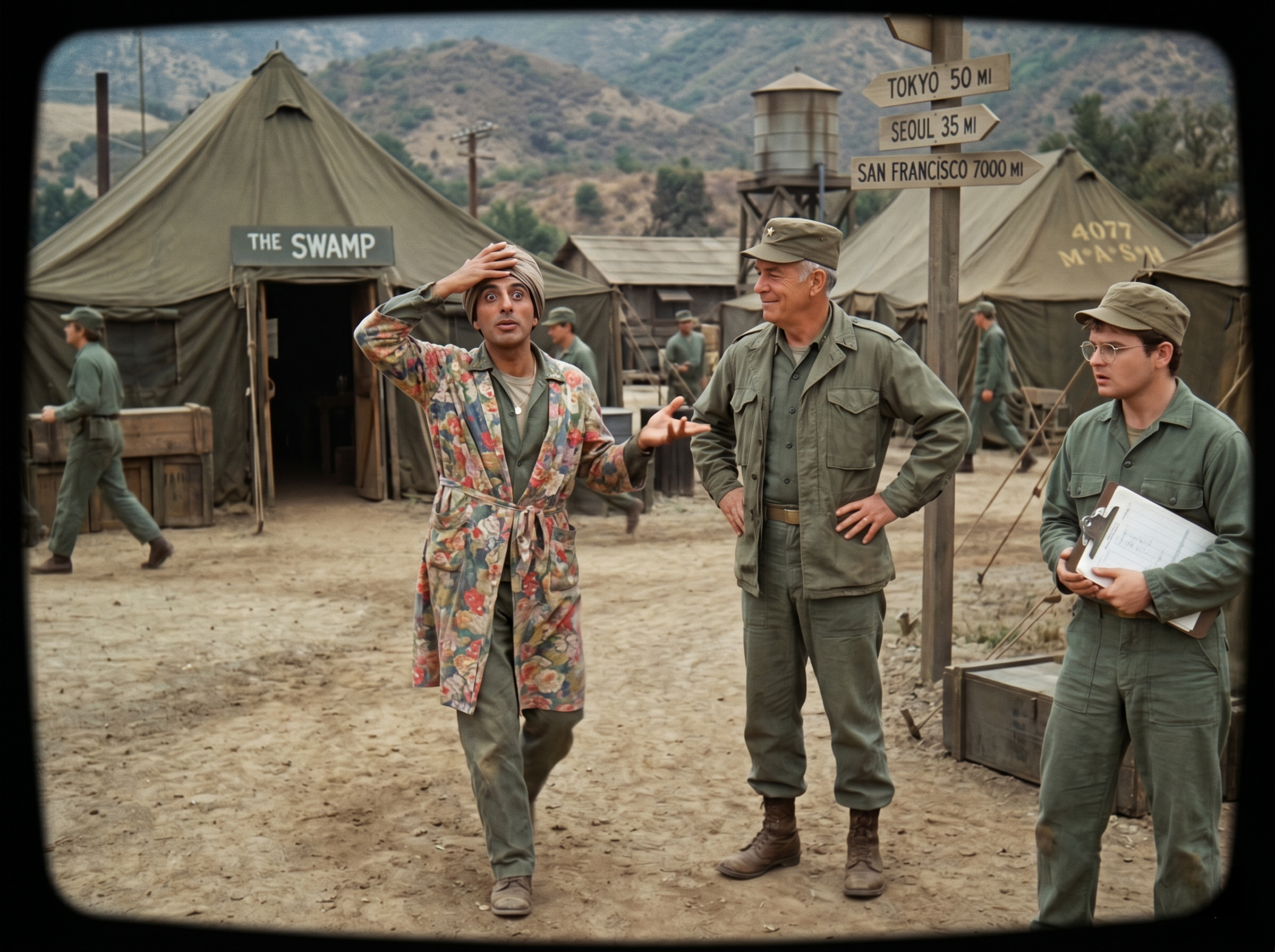
The afternoon sun baked the hard-packed dirt of the 4077th, settling over the compound like a heavy wool blanket. It was one of those rare, precious lulls between the choppers, where the only sound was the hot wind flapping the faded canvas of the mess tent.
Colonel Sherman T. Potter stood near the wooden directional signpost, savoring a momentary pocket of peace. He had his hands planted firmly on his hips, breathing in the dusty Korean air, letting the tension drain from his shoulders.
He was just about to head back into his office to tackle a mountain of requisition forms when a loud, theatrical gasp shattered the silence of the camp.
“Oh, the agony! The sheer, unadulterated torment!”
Potter didn’t even flinch. He just turned his head slowly, a dry, deeply amused smile tugging at the corners of his mouth.
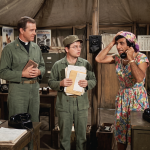
Striding into the clearing, right past the entrance to The Swamp, was Corporal Maxwell Q. Klinger. But he wasn’t in uniform. Instead, he was draped in a spectacularly loud floral robe, splashed with faded yellow and blue roses. On his head sat a tightly wound, makeshift turban that looked suspiciously like a stolen towel from the officers’ shower.
Klinger staggered forward, pressing the back of his hand to his forehead with the tragic, sweeping grace of a silent movie star. His other hand reached out toward Potter, trembling with practiced desperation.
“Colonel! Thank heavens I found you,” Klinger wailed, his dark eyes wide with mock terror. “It’s happening, sir. The final curtain is falling on this poor, broken corporal.”
Potter kept his hands on his hips, his posture as stable as a brick wall. “And what exactly is bringing the curtain down today, Klinger? The bubonic plague? Jungle rot? A sudden, tragic allergy to peeling potatoes?”
“Worse, sir!” Klinger cried, swaying dangerously on his feet. “It’s a rare, highly contagious case of ‘Toledo Fever’! It completely attacks the central nervous system when a delicate soul is exposed to extended periods of military discipline!”
Just then, the screen door of the clerk’s office banged open.
Corporal Walter “Radar” O’Reilly scurried out, clutching his ever-present clipboard tightly to his chest. He took three quick steps onto the dirt path before freezing in his tracks.
Radar stared at Klinger, his mouth falling slightly open. He blinked rapidly behind his round glasses. He looked from the floral robe to the turban, then up to Colonel Potter, his face a picture of pure, innocent confusion.
“Uh… Colonel?” Radar squeaked, clutching the clipboard tighter like a shield. “Did I… did I miss a memo about the dress code?”
“No, son,” Potter said gently, his eyes never leaving Klinger. “We’re just witnessing the afternoon matinee performance.”
Klinger gasped louder, leaning dramatically backward. “A performance? Sir, I am fading fast! If I don’t get a Section 8 and a direct flight back to Ohio by sunset, I may never walk again!”
He closed his eyes and began a slow, agonizing tilt toward the dirt, waiting for the Colonel to panic and rush to catch him.
Klinger held his dramatic lean for a long, painful moment. The dust swirled around his worn, scuffed army boots, which poked out comically from beneath the hem of his vibrant floral robe.
He waited for the sound of rushing footsteps, for the panicked shouts for a medic. Instead, he only heard the distant hum of a jeep engine and the quiet scratch of Radar’s pen on his clipboard.
Colonel Potter didn’t move an inch. He just stood there, his hands still planted securely on his hips, rocking back slightly on his heels.
“Well, Corporal,” Potter said, his voice dripping with dry affection. “If you’re going to hit the deck, try to aim for a soft patch of dirt. We’re dangerously low on iodine, and I do not want to explain a scraped knee to Major Houlihan.”
Klinger cracked one eye open, realizing the act wasn’t landing today. He sighed, deflating instantly. He stood back up, adjusting his makeshift turban with a frustrated muttering.
“You’re a hard man, Colonel,” Klinger grumbled, the tragic hero persona melting back into the weary company clerk. “A man pours his heart and soul into his dying breaths, and he doesn’t even get a sympathetic flinch.”
Potter chuckled, a low, rumbling sound deep in his chest. “It was a noble effort, son. The wardrobe is certainly a splash of color this drab little paradise desperately needs. But Toledo Fever? You’re losing your touch. Last week you had the ‘Lebanese Shakes,’ and that came with a much better dance routine.”
Radar, finally realizing that the medical emergency was just another Tuesday at the 4077th, stepped fully into the frame. He cautiously approached, holding out his clipboard.
“Sir,” Radar said, his voice still a bit shaky. “I have those requisition forms for the plasma and the extra penicillin. If you don’t sign them now, Supply says we’ll be waiting until Christmas.”
Potter reached into his fatigue jacket, pulling out his pen. “Never let it be said we missed a deadline with the army’s glorious bureaucracy, Radar.”
As Potter signed the papers, he glanced back up at Klinger. The young man from Toledo stood a little hunched now. The harsh afternoon sun caught the dark, heavy bags under his eyes.
Without the theatrical energy keeping him upright, Klinger just looked like what he truly was: a terrified, exhausted kid a million miles from home, wearing a dress because he didn’t know how else to cope with the madness around him.
The humor of the moment faded, replaced by that familiar, heavy ache that lived in the bones of everyone at the MAS*H unit.
Potter handed the clipboard back to Radar. “Good work, son. Run those over to Sparky before he changes his mind.”
“Yes, sir,” Radar said. He gave Klinger one last bewildered, nervous smile before scurrying off toward the communications tent, his boots kicking up little clouds of dust.
Potter turned his full attention back to Klinger. The dry, fatherly amusement in his eyes softened into genuine, quiet concern. He stepped closer, dropping his hands from his hips.
“You know, Max,” Potter said gently, using Klinger’s first name—a rare and deliberate choice. “That robe really is a fine piece of fabric. Looks exactly like the curtains my wife Mildred hung in our first apartment back in Hannibal.”
Klinger looked down at his floral sleeves, a sad, nostalgic smile touching his lips. “I got it from a catalog, sir. Cost me two months’ pay. I figured if I was going to lose my mind in Korea, I should at least do it in a cheerful pattern.”
Potter reached out and gave Klinger’s shoulder a firm, reassuring squeeze. The fabric was thin, and he could feel the tight tension locked in the boy’s muscles.
“We’re all a little out of our minds here, son,” Potter said quietly. “It’s the only way to stay sane when those choppers come over the hill. But you’re a good soldier, Max. Even in a dress. You hold this place together just as much as the doctors do.”
Klinger blinked, his dark eyes shining just a little in the harsh daylight. The desperate need to escape warred against the deep, unspoken loyalty he felt for these people.
“I’m just tired, Colonel,” Klinger whispered, the performance completely stripped away. “I just want to walk down the street without looking up at the sky.”
“I know, son. I know,” Potter said, his voice thick with the shared fatigue of a lifetime of wars. “But until then, we keep putting one foot in front of the other. And if you need to do it in a floral robe to get through the day, then by all means, you wear it with pride.”
Potter patted Klinger’s shoulder once more, then turned and began walking back toward the hospital.
Klinger stood by the signpost for a moment longer. He looked up at the weathered wooden arrow pointing toward San Francisco. Seven thousand miles.
He took a deep breath, adjusted his turban one last time, and straightened his back. The tragic hero was gone, replaced by the resilient survivor.
“Hey, Colonel!” Klinger called out, his voice finding a hint of its usual bright spark. “If the Toledo Fever comes back, I’m trying the polka-dot gown next!”
Potter didn’t turn around, but he raised one hand in acknowledgment, shaking his head. “I look forward to the premiere, Corporal!”
The camp settled back into its quiet rhythm. The war was still waiting just over the mountains, but for a few brief minutes in the afternoon sun, the 4077th had found a way to smile.
They were a million miles from home, fighting a war they didn’t understand, but as long as they had each other, they would never have to face the madness alone.