A Meal, A Moment, and the Weight of Home
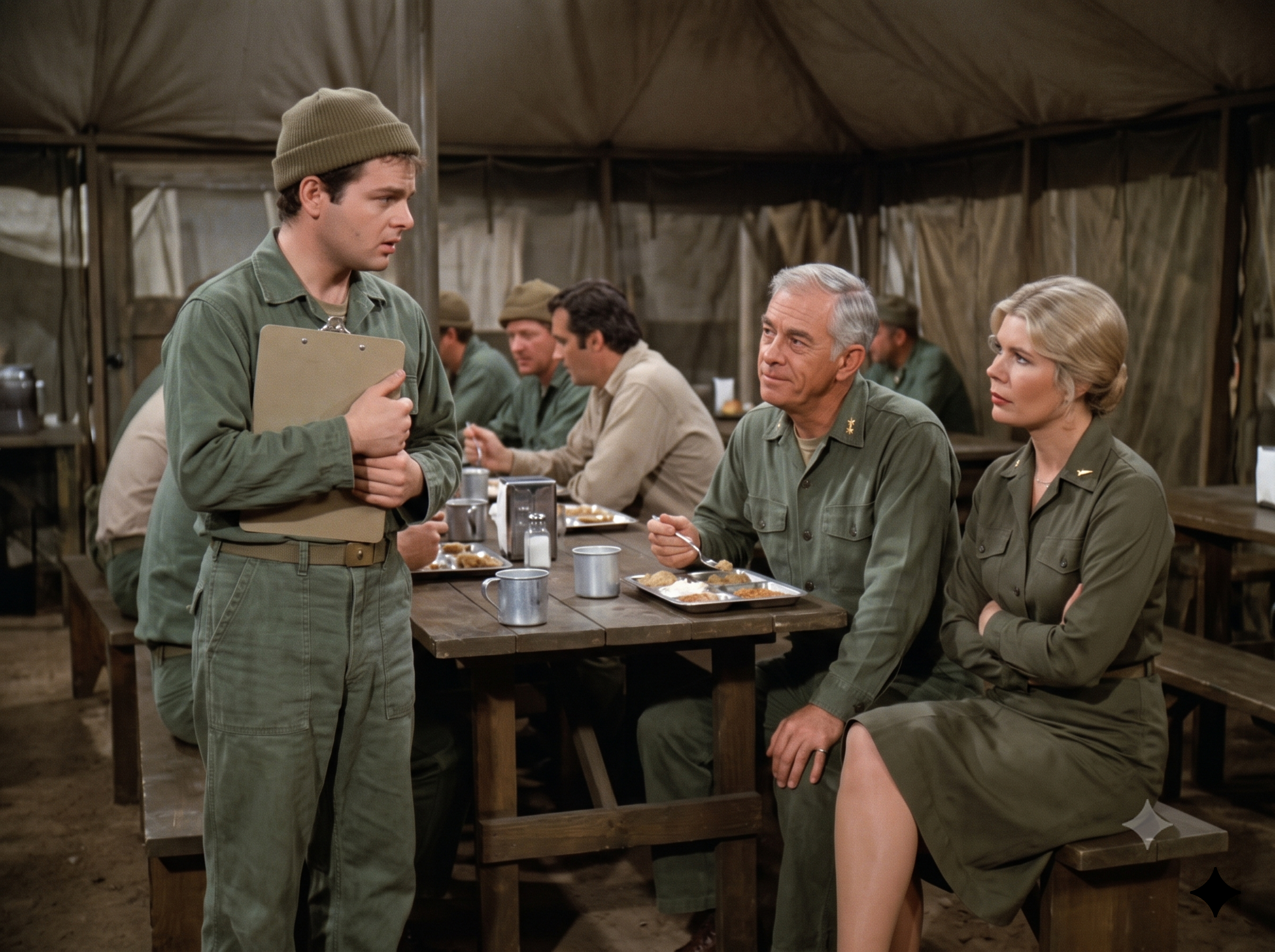
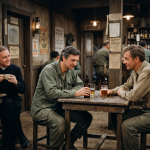
The midday sun beat down on the canvas of the mess tent, turning the interior into a sweltering, humid oven that smelled faintly of scorched coffee and powdered eggs. For the staff of the 4077th, lunch wasn’t just a meal; it was a ceasefire.
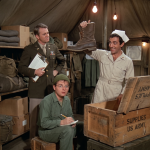
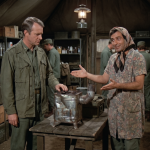
Radar O’Reilly stood near the end of one of the long, rough-hewn tables, his fingers white-knuckled as they gripped a clipboard to his chest. He looked like a young man delivering a death sentence rather than a supply requisition.
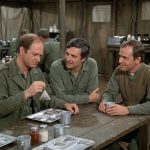
Colonel Potter, his brow furrowed with the familiar, weary lines of command, sat across from Major Houlihan. He was picking at his tray with a fork, his gaze flicking between the food and the young corporal, while Margaret sat perfectly upright, her arms folded tightly across her chest as if holding herself together against the quiet intrusion of the afternoon.
“Corporal,” Potter said, his voice dropping into that gravelly, patient tone he reserved for when the world had gone slightly sideways. “If that report says what I think it says, you’re about to ruin a perfectly adequate serving of creamed chipped beef.”
Radar swallowed hard, his eyes darting toward the other tables where laughter from the surgeons seemed to be dying down into a heavy, anticipatory silence. He hadn’t meant to interrupt their break, but the news was burning a hole in his pocket.
“Sir, it’s not exactly about the food,” Radar stammered, his voice cracking just a fraction. “It’s about the mail plane. The one that was supposed to land at Inchon yesterday? It didn’t make it to the base, Colonel. And the cargo manifest I just pulled… it says it was carrying the crates from the States. The ones we’ve been waiting for since last month.”
Margaret’s eyes narrowed, her professional composure flickering as she looked at Radar, then back to Potter. The silence in the tent shifted, moving from the casual lethargy of a tired crew to something sharper, colder.
Potter sighed, the sound echoing the collective exhaustion of the entire unit. He looked up at Radar, his eyes searching the boy’s face for a lie, but finding only the earnest, painful truth.
“Are you telling me,” Potter asked, his voice deathly quiet, “that the supplies we needed to keep the ward running are gone, or worse, that we’re completely cut off from home for another week?”
Radar stepped forward, leaning in, his face pale. “It’s worse than that, sir. The communication wire just came in, and they’re saying the storm last night didn’t just delay the plane—it grounded everything. And Colonel… they said we’re not getting anything else until the front shifts.”
The air in the mess tent seemed to vanish, replaced by the crushing weight of a thousand miles of distance and a war that didn’t care about their hunger for a reminder of home.
Margaret felt a sharp, hollow ache in her chest, the kind that usually came when she tried to write a letter home and couldn’t find the words that wouldn’t make her seem weak. She looked at Colonel Potter, watching as the stoic, iron-willed man she’d followed through hell and high water suddenly looked every one of his years.
He didn’t yell. He didn’t order Radar back to his post. He just set his fork down on the metal tray with a soft, final *clink*.
“Gentlemen, ladies,” Potter said, his voice low but carrying through the tent. “It seems we’re going to have to find another way to nourish ourselves today.”
The tension that had paralyzed the room began to fray, not into anger, but into the quiet, collective resilience that was the true heartbeat of the 4077th. Hawkeye, who had been listening from the adjacent table, stood up and drifted over, a tired half-smile playing on his lips. He didn’t offer a joke; he simply reached out and placed a hand on Radar’s shoulder, easing the grip the boy had on his clipboard.
“Easy, Radar,” Hawkeye said softly. “The mail is a fickle beast. It always has been. We’ve survived worse than missing packages, haven’t we?”
B.J. Hunnicutt joined them, his expression one of gentle, steadying calm. He looked at the mess in the center of the table—the meager, unappealing food—and then at his friends. He reached into his pocket and pulled out a small, crumpled photograph of his daughter, Erin, placing it face-up on the table between Potter and Margaret.
“My supply line,” B.J. said with a quiet, knowing glint in his eyes. “It’s not in a crate, and it didn’t come on a plane. It’s right here.”
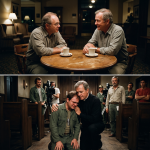
Margaret looked at the photo, the rigid posture of her arms finally relaxing. She let out a long, shaky breath, her eyes softening as she looked around at the faces of the people who had become her true family. She reached out, her hand brushing against the table, and for a fleeting moment, her fingers touched Potter’s weathered hand.
“We do what we always do,” Margaret said, her voice regaining its steady, professional strength, though tempered now with an unexpected tenderness. “We take care of each other.”
The mood in the tent shifted again. The profound, aching loneliness of being trapped in a war zone began to recede, pushed back by the simple, stubborn act of being together. Potter gave a short, affirmative nod, a glimmer of his usual gruff humor returning to his eyes.
“Right,” the Colonel grunted. “Radar, sit down. Have a bite of whatever this is. It might be awful, but at least we’re eating it together.”
Radar finally let out the breath he’d been holding, the crushing news of the lost mail still there, but no longer the end of the world. As the group settled back into their seats, the sounds of the camp—the distant hum of a jeep, the wind rattling the canvas, the murmur of distant voices—seemed to harmonize.
They weren’t at home. They were a world away, surrounded by everything they hated about this place, but in that small, crowded mess tent, they were home. They leaned in, sharing a joke, sharing a look, and sharing the quiet, unbreakable bond that had carried them through every crisis.
The war hadn’t ended, and the supplies hadn’t arrived, but for this moment, they were whole.
Sometimes, the best medicine is just knowing you’re not fighting the world alone.