A Taste of Toledo, Served with a Smile
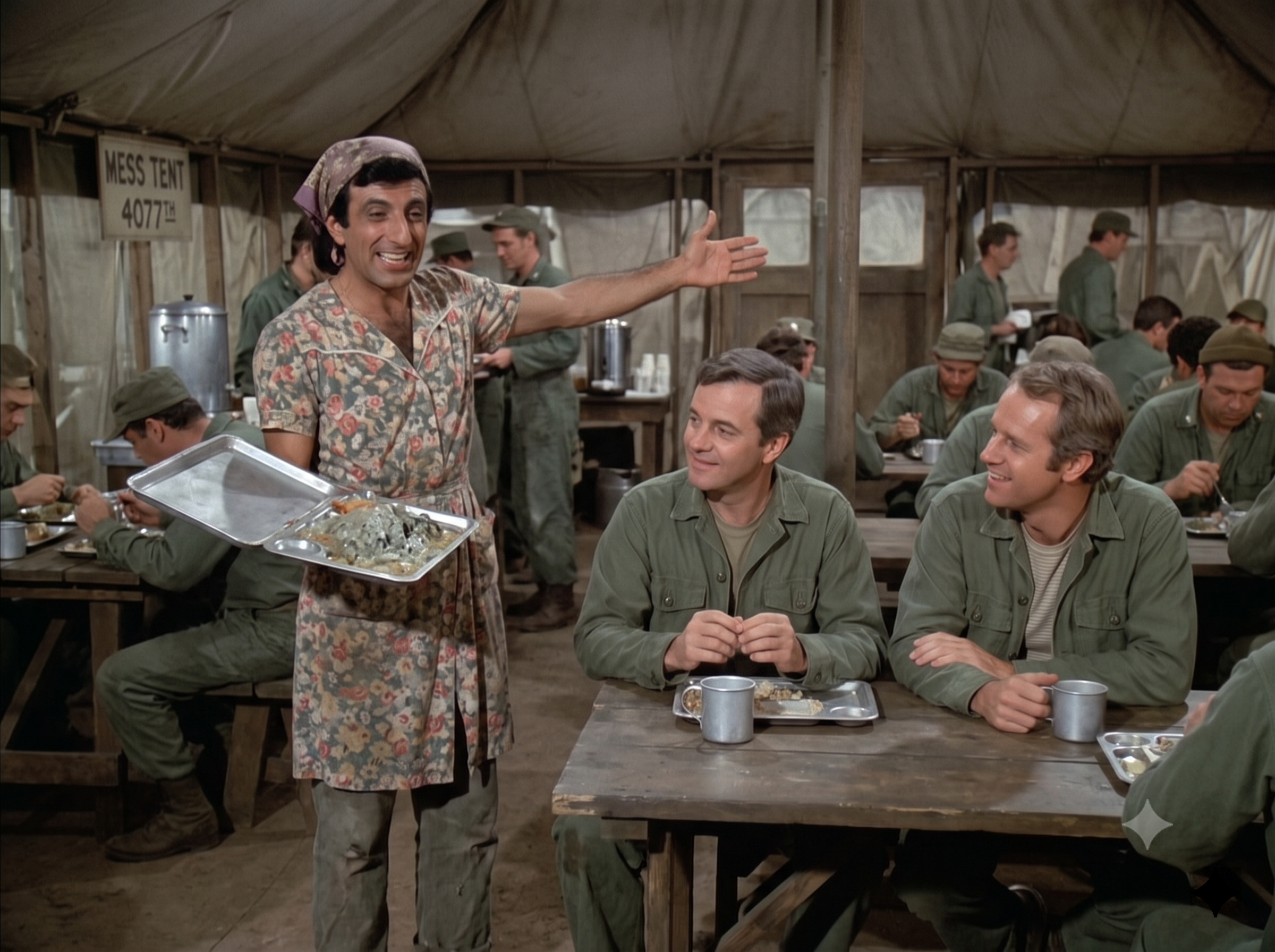
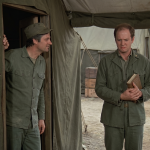
The mess tent of the 4077th Mobile Army Surgical Hospital was rarely a place of culinary joy or comfort.
It was a cavern of faded olive-drab canvas, smelling perpetually of dust, damp wool, and whatever mystery meat the army had decided to boil into submission that day.
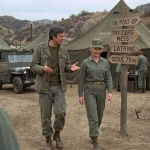
Underneath the wooden sign declaring it the “MESS TENT 4077th,” a low, exhausted murmur usually filled the air as doctors, nurses, and enlisted men tried to forget the war for twenty minutes at a time.
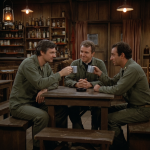
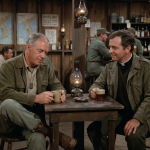
Captain B.J. Hunnicutt leaned casually over the scarred wooden table, his shoulders slumped in a comfortable, familiar fatigue.
Across from him, Father Francis Mulcahy sat with his hands resting quietly near a dented aluminum mug, seeking a bit of warmth from the bitter coffee inside.
They were enjoying a rare, quiet pocket of peace between the endless, brutal waves of incoming choppers, simply appreciating the silence of a slow Tuesday afternoon.
That gentle peace was suddenly, and spectacularly, interrupted.
“Gentlemen! I ask you to prepare your palates for an absolute journey of the senses!”
Corporal Maxwell Klinger materialized at the end of their long table like a vivid, theatrical vision from a very strange dream.
He was wearing a practical but brightly patterned summer dress, covered in blooming flowers, complete with a matching kerchief tied neatly over his dark hair.
But it wasn’t the floral outfit that commanded the table’s immediate attention, nor was it Klinger’s loud, booming voice.
It was the dull metal tray he held out in front of him with the grand, sweeping flair of a headwaiter at a five-star restaurant.
Klinger beamed brightly, his face shining with a comic, undeniable pride.
He extended his left arm outward in a theatrical gesture of presentation, offering the tray up to the heavens before lowering it toward the two officers.
“I present to you,” Klinger announced, his voice carrying easily over the clatter of tin cups, “a little slice of home. A culinary triumph straight from the bustling heart of Toledo, Ohio!”
B.J. offered a dryly amused, friendly smile, leaning forward on his elbows to safely inspect the damage from a distance.
Father Mulcahy, however, looked down at the tray with a mixture of mild, innocent confusion and sheer, polite terror.
Resting in the center of the aluminum tray was a mound of something entirely unidentifiable and profoundly unappetizing.
It was a grey, lumpy mass, possessing a dull, gelatinous sheen that seemed to defy all natural laws of modern cooking.
“My word, Corporal,” Mulcahy murmured, his gentle, soft smile straining just a bit at the edges as he stared at the dish. “It certainly is… a very robust creation.”
“Robust? Father, please, it’s a masterpiece of modern improvisation!” Klinger declared proudly.
He stepped closer, lowering the tray right under the chaplain’s nose, completely ignoring the priest’s subtle hesitation.
“It’s my mother’s famous stuffed cabbage, reimagined for the modern army using only powdered eggs, canned mystery grease, and a very creative interpretation of what constitutes a vegetable.”
B.J. chuckled quietly, his eyes twinkling with warmth as he observed the sheer absurdity of the moment.
“I’ve got to hand it to you, Max,” B.J. drawled softly, his voice laced with dry affection. “You’ve managed to invent a food that looks exactly like the mud outside the Swamp.”
“Philistines! Both of you lack vision!” Klinger playfully scolded, placing a single, tarnished spoon onto the edge of the tray.
He looked directly at the priest, his grand, theatrical demeanor softening just a fraction into something painfully hopeful and earnest.
“Come on, Father. You’re a man of faith. Take a leap into the unknown.”
Mulcahy stared at the spoon, then up at Klinger’s beaming, expectant face, slowly realizing that there was absolutely no escape without breaking the corporal’s fragile, homesick heart.
The air around the wooden table seemed to hold its breath.
Even the dull roar of the surrounding mess tent faded away for Father Mulcahy as he faced what felt like the greatest moral dilemma of his week.
To lie was a sin, but to insult a man wearing a matching floral kerchief who had spent his precious, limited free time cooking for his friends felt like a far worse transgression.
B.J. shifted his weight, folding his arms comfortably on the table, a thoroughly entertained spectator to the holy man’s impending culinary doom.
“Take your time, Father,” B.J. offered with a sly, steady grin, his eyes bright with gentle mischief. “I hear the first bite of a Toledo masterpiece is always the most… character-building.”
Mulcahy shot B.J. a look of gentle, pleading betrayal before slowly reaching out for the tarnished spoon.
He picked it up with the extreme reverence and caution of a man handling a live, unpinned grenade.
He looked back at Klinger, who was practically vibrating with theatrical anticipation, his arm still extended in a gesture of grand, proud presentation.
Beneath the ridiculous dress, the hairy chest peeking out of the collar, and the loud comedic bravado, Mulcahy saw the truth.
He saw the deep, aching homesickness that fueled almost everything Klinger did in this terrible place.
This wasn’t just a silly prank or a scheme to get a Section 8 discharge; it was a desperate, touching attempt to manifest a memory of a warm kitchen halfway across the world.
With a quiet, internal prayer for the safety of his digestive tract, the chaplain scooped up a tiny, quivering portion of the grey mass.
He brought it to his lips, closed his eyes tightly for a fraction of a second, and swallowed it whole.
It tasted exactly as it looked: like salty despair mixed with old combat boots and an overwhelming sense of regret.
Mulcahy’s eyes watered instantly, stinging from the sheer force of the spices, but his sweet, innocent smile returned in full force as he looked up at the corporal.
“Well?” Klinger asked, leaning in closer, his dark eyes wide and hopeful.
“It is…” Mulcahy paused, swallowing hard and forcing his voice to remain steady, “…truly unforgettable, Maxwell. It speaks of a very… inventive and passionate spirit.”
Klinger’s face lit up like a spotlight hitting center stage.
“See? The Father knows quality when he tastes it! The spices are subtle, right? It’s all about those delicate Toledo undertones hitting the back of the palate.”
“Oh, yes,” Mulcahy squeaked slightly, reaching desperately for his tin cup of bitter coffee to wash away the memory of the undertones. “Very subtle indeed.”
B.J. let out a warm, genuine laugh that cut right through the weary, dust-choked atmosphere of the tent.
“Alright, Max,” B.J. said, reaching across the table to clap Klinger lightly and affectionately on the arm. “You’ve successfully poisoned the clergy. I suppose it’s my turn to suffer.”
B.J. grabbed a second spoon from his own tray, digging into the grey mound without a second moment of hesitation.
He took a healthy bite, chewed thoughtfully for a long, agonizing moment, and managed to keep his bearded face perfectly, impressively deadpan.
“My compliments to the chef,” B.J. lied smoothly, his eyes crinkling with quiet, deep affection. “It perfectly masks the taste of the war.”
Klinger beamed, puffing out his chest under the floral fabric, his dignity fully intact despite the utter absurdity of the situation.
“I’ll save you both a healthy portion for dinner!” Klinger announced happily, swiftly scooping up the metal tray.
With a grand, sweeping bow that would have belonged in a Shakespearean play, he turned and marched away.
His dress swished around his heavy army boots as he headed toward the next table of unsuspecting, tired doctors, ready to share his culinary gift with the rest of the camp.
B.J. and Mulcahy sat in comfortable silence for a long moment, watching their friend weave through the crowded tent.
The mess tent slowly settled back into its usual, dreary rhythm of clattering metal trays and tired, hushed voices.
Mulcahy looked down at his cold coffee, a soft, genuine smile lingering on his face despite the terrible, lingering taste still coating his tongue.
“He really is quite a remarkable young man, isn’t he, Captain?” Mulcahy said softly, his voice full of quiet wonder.
“That he is, Father,” B.J. agreed, leaning back and resting his hands on the table, the heavy fatigue in his shoulders momentarily lifted. “That he is.”
They didn’t mention the terrible food again.
They didn’t have to.
In a place defined by blood, mud, and endless exhaustion, a friend had cared enough to put on a show and serve them a little piece of his heart.
Even if that piece of home tasted like wet, salted cardboard, the love in the recipe was entirely undeniable.
It was just another ordinary day at the 4077th, where the food was always terrible, but the company was the only thing that kept them alive.