A Quiet Moment in the Eye of the Storm
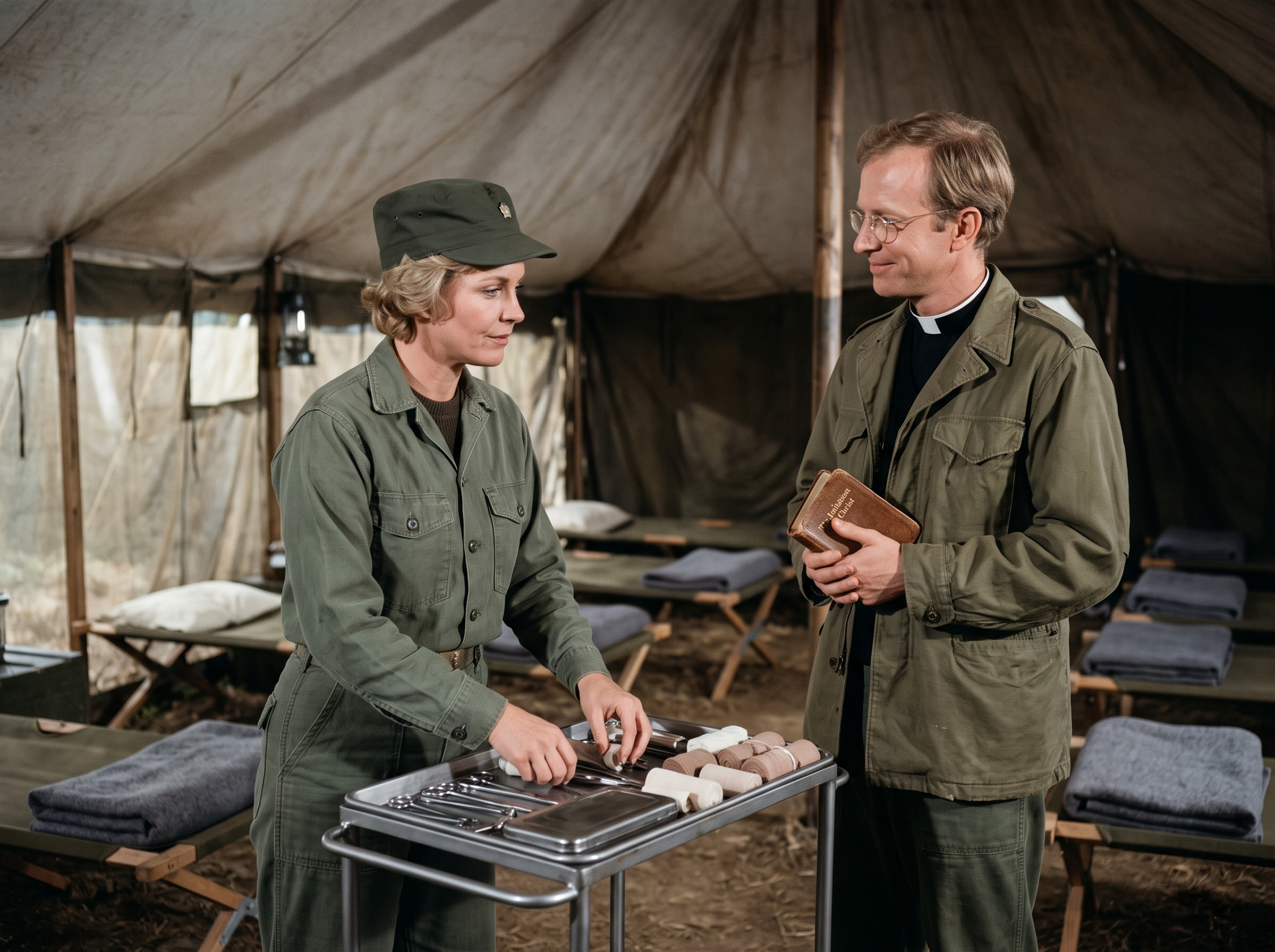
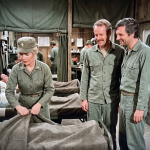
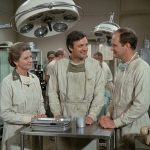
The canvas walls of the Post-Op tent always seemed to amplify the silence whenever the helicopters finally stopped screaming. Inside, the air was heavy with the scent of antiseptic, damp wool, and the lingering, metallic tang of too many long hours spent under the bright, unforgiving lights of OR. Major Margaret Houlihan stood by the instrument tray, her hands moving with the precise, practiced muscle memory that had kept her going for the better part of a decade. She was sorting through the last of the sterile supplies, her brow furrowed in concentration.
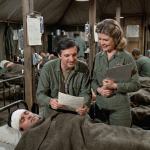
Father Mulcahy stepped into the tent, his boots making no sound against the packed earth floor. He looked weary, the kind of exhaustion that settled deep into the bones, yet he carried his worn Bible like a steady anchor. He didn’t interrupt her immediately. He simply watched, a soft, sympathetic smile resting on his face as he observed the way Margaret’s shoulders finally dropped an inch from her ears. It was a rare, fragile moment of stillness before the next inevitable chaos rolled in.
“You know, Margaret,” he said, his voice gentle and breaking the silence like a soft chime, “the world doesn’t stop spinning just because you’ve decided to reorganize the entire inventory.”
Margaret didn’t look up, but the sharp line of her jaw softened. She shifted a roll of gauze, her movements betraying just how tired she truly was. “If I don’t keep this tray in order, Father, we’ll be digging for clamps in the dark the next time the horn blows,” she replied, though her tone lacked its usual bite.
Suddenly, a distant rumble—not a chopper, but the heavy, grinding gears of a supply truck—shook the ground beneath their feet. A jar of sterile saline teetered precariously on the edge of the tray. Margaret lunged to catch it, but her reflexes, dulled by thirty hours of fatigue, were a fraction of a second too slow. The jar tipped, and in that split second of suspended gravity, everything seemed to freeze. Would it shatter and spill their last clean supplies, or would it somehow find purchase?
Father Mulcahy moved with a surprising, quiet grace, reaching out to steady the tray just as Margaret’s hand brushed against his sleeve. The jar wobbled, danced on its base, and finally settled back into place with a sharp *clink* that sounded like a gunshot in the quiet tent. They both stood there for a heartbeat, breathing in unison, hands still hovering over the cold metal tray. The tension drained out of the room, replaced by a sudden, overwhelming sense of the sheer absurdity of their situation.
Margaret let out a long, ragged exhale that might have been a laugh if she had the strength for it. She looked at the Father, really looked at him, noticing for the first time the dust on his collar and the way his glasses had slipped slightly down his nose. “Close,” she murmured, her voice uncharacteristically small.
“In this place,” Mulcahy said, offering a weary, knowing grin, “close is usually the best we can hope for.” He moved to the side, leaning against the wooden support post, and opened his Bible. He wasn’t there to preach, and he wasn’t there to judge. He was simply there to be. “I saw Klinger earlier,” he added, his voice dropping to a conversational lilt. “He was trying to convince Colonel Potter that he’d sprouted a tail in his sleep, and that it was a clear medical disqualification for active duty.”
Margaret finally cracked a smile—a genuine, tired, beautiful thing that transformed her face. “And what did the Colonel say?”
“He told him that if he had a tail, he’d be the first to recommend him for a job as a ship’s rudder,” Mulcahy chuckled. The shared humor felt like a warm blanket in the middle of a winter night. They stood together in the half-light, two people trying to hold onto their humanity in a place that seemed intent on stripping it away. There were no patients to tend to for the moment, no generals to impress, and no reports to file.
The weight of the war didn’t disappear, but it shifted. It became something they could carry together, if only for ten minutes. Margaret picked up a clean bandage, her movements now slower, more deliberate, and she tucked it into the kit with a sense of peace she hadn’t felt in weeks. She knew the sirens would wail again soon. She knew the trucks would return, and the stretchers would be lined up, and they would all be tested again. But for now, they were just two friends standing in a tent, sharing the silence, and finding a little bit of grace in the middle of the mess.
In the heart of the 4077th, it was never the big gestures that saved us, but the quiet moments we shared while waiting for the world to stop shaking.