A Quiet Breakthrough in Bed 6
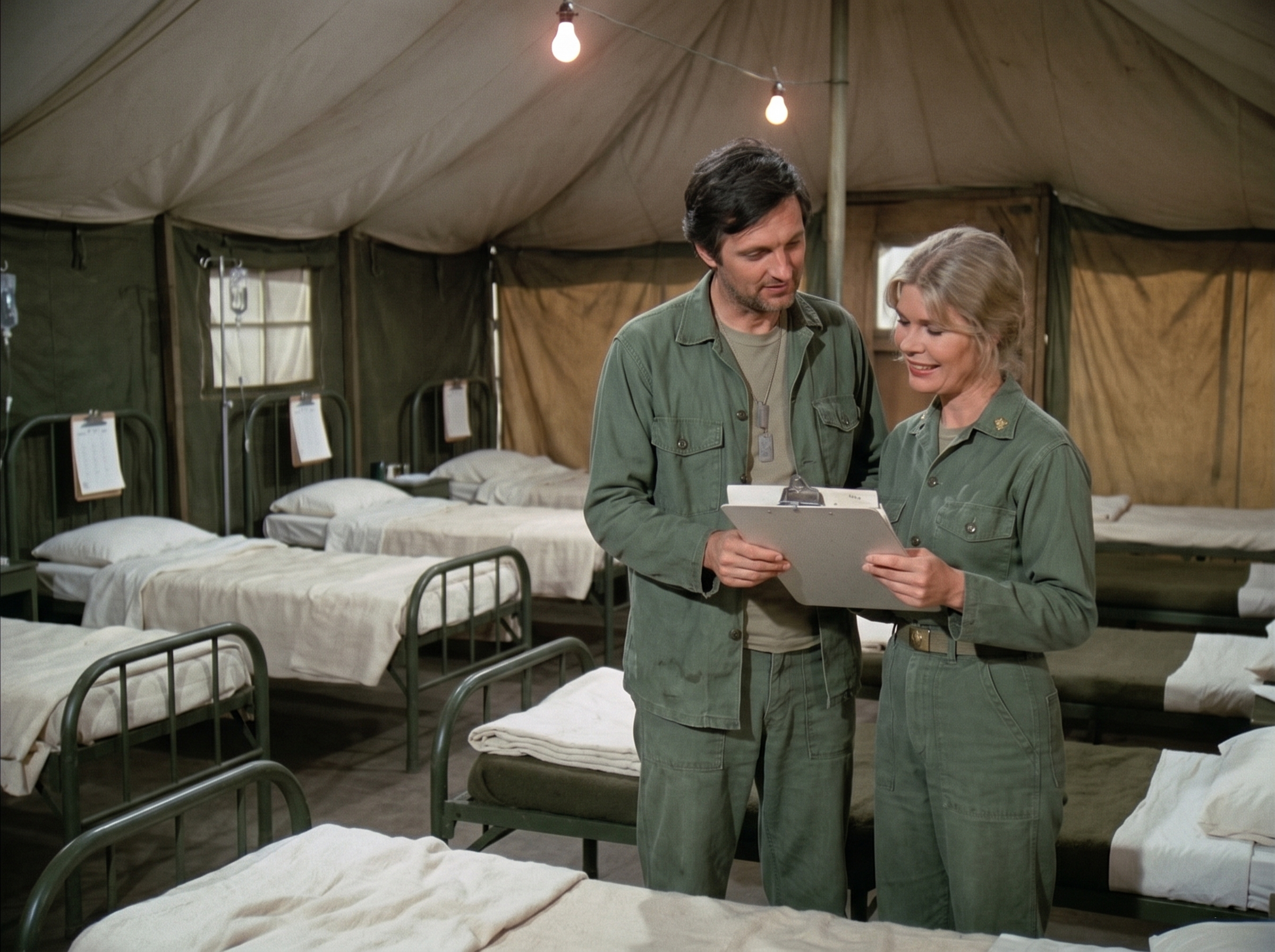
It was the kind of night when exhaustion didn’t just sit on you; it wrapped itself around your bones like wet canvas.
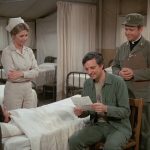
The O.R. was quiet, but the Post-Op tent hummed with the slow, labored breathing of men who had cheated death by the narrowest margin.
It was 2 AM, and the endless rotation of surgical shifts left only a deep, pulsing numbness.
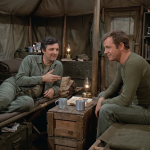
In the back of the ward, under a single, vibrating bulb, Hawkeye Pierce found himself drawn to the meager light, trying to escape the heavy silence of his own thoughts. He was supposed to be checking charts, but his eyes were blurring. He reached for the chart clipped to Bed 6, preparing a tired internal joke for the patient, only to find another hand already gripping the metal clipboard.
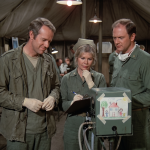
“I didn’t realize you were making rounds, Major,” he said, his voice surprisingly soft. He stepped fully into the light, where Margaret Houlihan stood, clipboard in hand. She looked impeccable, even at this hour, but her eyes held the same leaden fatigue as his. “Someone has to care about follow-up, Captain,” she snapped, but the bite was missing, replaced by a weary, professional resolve. She gestured silently at the chart. They both leaned in, the common purpose overcoming their habitual barrier.
For a long minute, there was only the sound of them scanning the ink notes, their breath syncing in the cool air. The small, localized event in the tent, the shared review of one patient’s chart, became the entire focus of their exhausted worlds. Hawkeye pointed to a scribbled data line. “He hasn’t spiked a fever in twelve hours. The last time we saw numbers like this was…” He trailed off, the memory elusive.
Margaret slowly lifted her gaze from the page, her face softening in the yellow light, her eyes holding a reflection of his own weary soul.
Her usual controlled mask didn’t just slip; it completely dissolved.
“It’s been months, Hawkeye,” she said quietly, acknowledging not just the patient’s progress, but the relentless, dehumanizing grind they had both endured, alone. The unexpected use of his nickname, spoken with a raw, shared sincerity that stripped away all rank and pretense, hung in the warm air. It cracked open the carefully constructed professional veneer and exposed the fragile, battered humanity beating beneath, leaving him utterly stunned and searching for his own carefully constructed words in the profound, pulsing silence.
He stared back at her, the quick wit he usually summoned to deflect pain completely failing him. He had never heard her say his name like that—not as a command, not as a challenge, but as a simple, human recognition of their mutual suffering. The quiet in the Post-Op tent roared around them.
“Months,” he echoed, finally finding his voice, but the word felt impossibly heavy. He didn’t make a joke. He just nodded, and the shared burden seemed to lighten, just a fraction, for being acknowledged. The air between them, previously defined by barbed tension, now felt filled with a rare and unexpected understanding.
The moment of raw vulnerability broke into a new kind of connection. Margaret’s professional composure slowly returned, but the hardness was gone. She managed a small, tired smile—the kind that truly touched her eyes—and Hawkeye, looking at her, realized how long it had been since he had seen it. The shared breakthrough in the patient’s chart, a simple set of numbers, became a beacon of hope, a tangible reminder of why they were there, fighting the darkness.
Together, they continued reviewing the charts. The rhythm was comfortable and familiar, yet completely different, free from their usual barbs and defense mechanisms. When they reached Bed 8, they didn’t even need to speak; a shared look over the clipboard communicated all the necessary medical adjustments and professional respect.
When the last chart was finally clicked back onto its bed frame, Margaret straightened up, her gaze resting briefly on the row of occupied cots, a sense of weary pride in her expression. “They’re holding,” she said, a quiet strength back in her voice.
Hawkeye finally let a grin break across his tired face—a genuine, warm expression that had nothing to do with defense. The image of them, standing together, connected by that shared victory and newfound respect, seemed to chase away the worst of the night’s ghosts. “Yeah,” he agreed. “They are.”
They didn’t speak again as they walked out of the light and into the dark passageway. It wasn’t the end of the war, but it was a quiet victory of the human spirit. The Post-Op tent faded back into its usual hum, but it felt a little warmer, and the load they both carried felt a little lighter, knowing they were, in that small moment, truly a found family.
They were holding onto hope, one patient at a time, in the heart of the 4077th.