Post-Op Poetry and the Long, Cold Winter
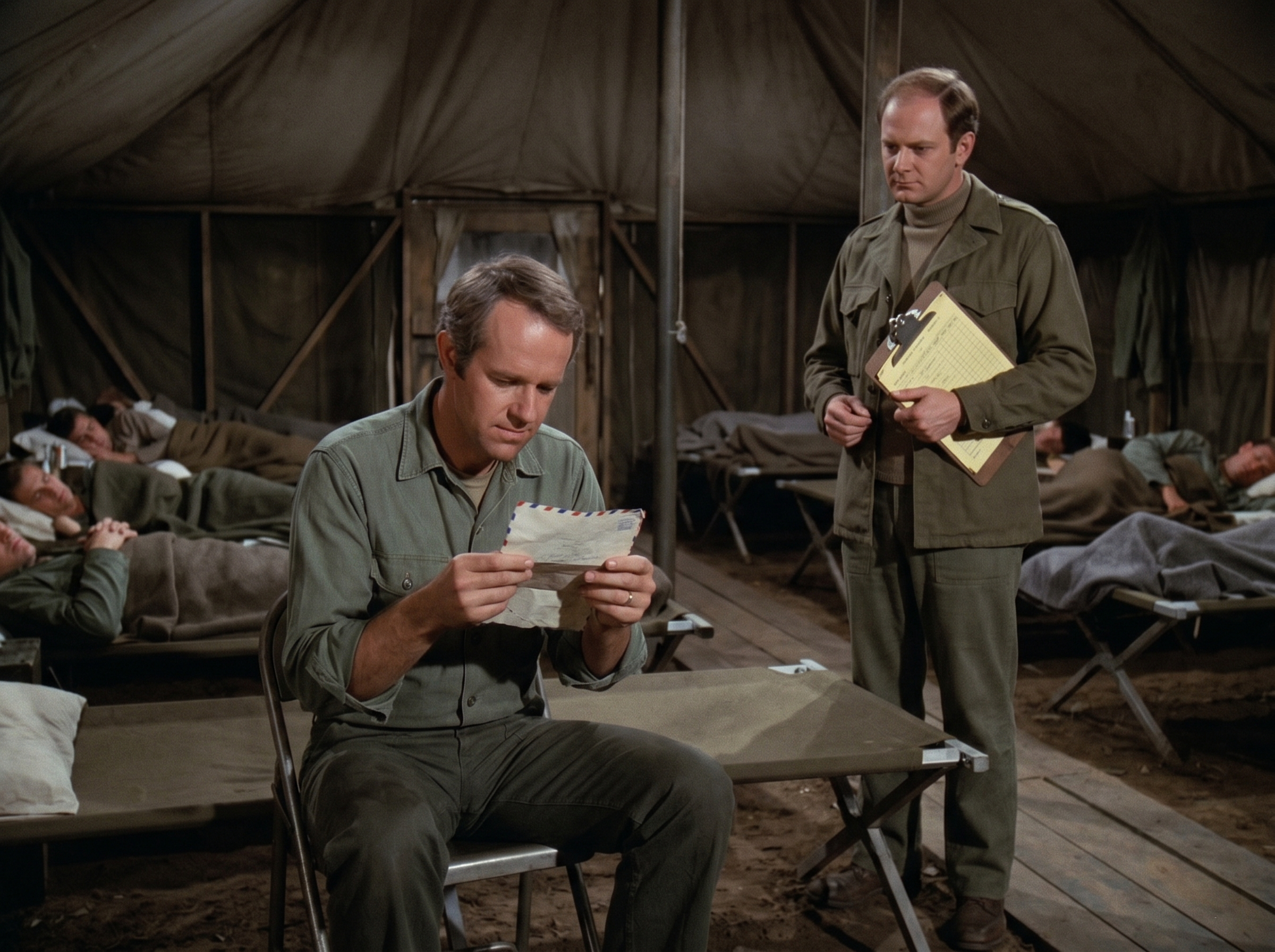
Sometimes, the quiet in the Post-Op tent felt heavier than any shelling. It was that kind of night—the kind where you can hear the deep breaths of the patients and the slow thrum of exhaustion in your own bones.
I was standing there, near the back, my clipboard heavy with records from the last surgery marathon. Charles was just opposite me, impeccably holding his own clipboard like it was an aristocratic shield.
We had just started processing the usual charts—temperature spikes, medication orders, the silent census of the wounded.
The only noise was the scratch of pencils. No witty one-liners, no jokes from Hawkeye or Klinger. The stillness was unnerving.
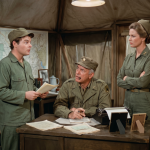
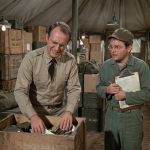
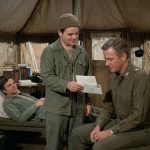
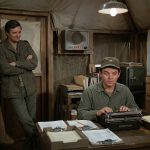
Then, the flap of the tent rustled, and our little, reliable Radar stepped in. He had a stack of mail that was thinner than usual, but even that felt significant.
He paused when he saw us—the two of us, frozen like statuary among the cots of wounded boys. His eyes darted between me and Charles.
The stillness remained unbroken until a voice finally spoke. It wasn’t the captain’s usual dry wit, and it wasn’t my usual pragmatic update.
It was Winchester, his voice remarkably quiet, breaking the silence as if afraid that anything louder would disturb the fragile peace.
“Captain, did you happen to notice the unusual clarity of the stars tonight?” Charles asked, still looking down at his clipboard, though I knew he was looking at nothing on it.
I glanced over at him, then at Radar, who was now just standing there, clutching the mail. “Can’t say I noticed, Major. I’ve been somewhat focused on whether Corporal Adams’ fever is finally breaking.”
Charles took a breath, a short, sharp inhale, and finally, his gaze shifted from the clipboard to me. It wasn’t his usual look of disdain or refined sarcasm. It was a look of raw, uncharacteristic vulnerability.
He was waiting for something, and as my gaze followed his, I realized what he was looking at. Radar, oblivious to the atmosphere he had walked into, was still holding that small stack of letters.
And then, Charles, defying every ounce of his ingrained Boston reserve, spoke directly to me, and the tension in the room snapped like a taut wire. “Do you think… do you think any of that is for *us*?”
The question hung in the air, a whisper against the silence of the tent. It wasn’t a question about military correspondence. Charles wasn’t asking for supply requisitions. He was asking if *connection* had found its way through the cold night to us.
Radar finally understood the weight of the moment. He lowered his hand, the few remaining envelopes in his grip. His eyes were wide, and he looked smaller, more earnest. “For… for you, Major? Yes, sir. There’s one. For Captain Hunnicutt too.”
The shift in Charles was palpable. The rigid posture didn’t change, but his shoulders seemed to drop. The silence was still there, but now it was full of *potential*. He just nodded, once, and extended his hand, the gesture both demanding and infinitely patient.
I felt a ghost of a smile pull at my lips. In a world where every conversation was a performance of wit or professionalism, this was a rare moment of the masks slipping. This was the friendship we only admitted in the dark, or when we were too tired to fight it.
Radar handed Charles his letter, then nervously passed mine, his fingers just brushing mine as if he feared his own proximity would shatter the magic.
I didn’t open mine right away. I watched Charles. He took the envelope, a crisp, white rectangle that seemed out of place against his olive-drab jacket. He examined the handwriting with a look of reverence I had rarely seen.
He didn’t read it then. He just folded it carefully and tucked it into his breast pocket, over his heart. Then, he looked at me again, the mask of sarcastic reserve slamming firmly back into place.
“You’re correct, Captain. Corporal Adams’ chart does require your immediate, and *thorough*, attention.”
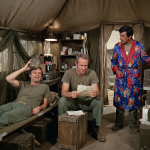
I chuckled quietly, opening my own letter from Peg. “Right you are, Major. But before I do that…” I held up a piece of Peg’s writing, the scent of lavender and home barely perceptible against the Post-Op smell. “Would you like to hear about the new puppy the neighbors got?”
Charles’ eyebrows shot up, a perfectly arched defense against sentiment. “An exhaustive report on canine activities? I believe I can endure it.”
I started reading, quietly, a small, ridiculous, and perfect piece of home spilling into that cold, quiet tent. The dry humor was back, but now it was laced with the warmth of shared experience. We weren’t just two officers in a war zone; we were friends, relying on the ridiculous to keep from dissolving into the darkness.
Radar didn’t say a word. He just smiled, a gentle, understanding expression, before turning and stepping back out into the night, leaving us to the simple comfort of reading letters from home.
It was just another Tuesday. Just another night where the cold of Korea seeped in, but the warmth of connection, no matter how brief or fragile, was stronger. And sometimes, knowing you weren’t alone in the quiet was enough to face the morning.
Sometimes, a single letter is the longest bridge back to the world.