The Taste of Ordinary Sundays
The mess tent at the 4077th never truly changed, no matter how many calendar pages Radar tore away. It always smelled of boiled cabbage, scorched coffee, and the faint, metallic tang of sterilized instruments drifting over from the O.R.
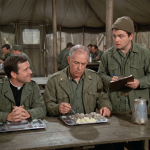
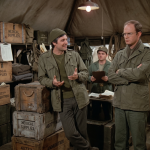
On this particular afternoon, the heavy canvas overhead sagged under the weight of a gray Korean drizzle. Inside, three figures sat anchored to a scarred wooden table, trying to remember what a normal life felt like.
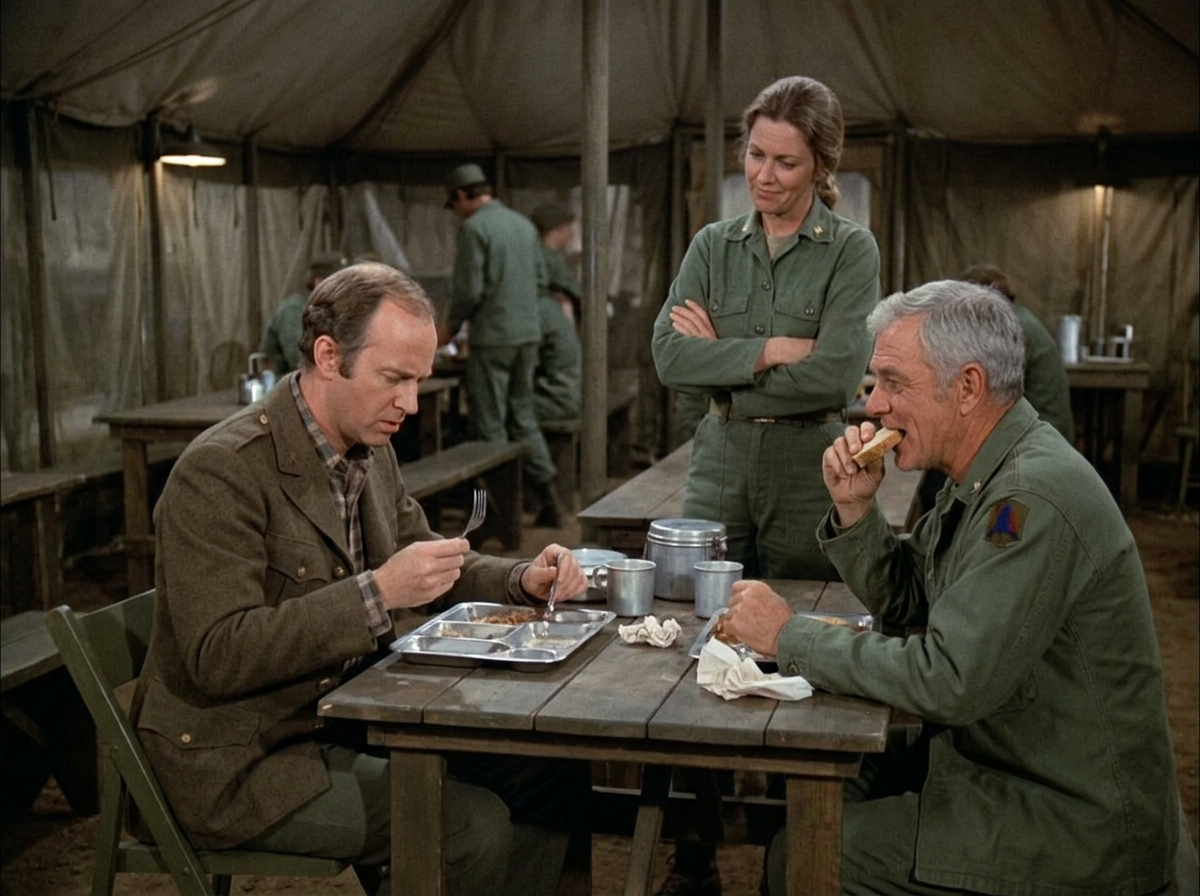
Charles Emerson Winchester III sat on the left, looking entirely out of place in his tailored civilian tweed jacket. He held his fork with a surgeon’s precision, staring down at his metal tray with an expression that sat somewhere between profound offense and deep philosophical despair.
“It is an absolute abomination,” Charles muttered, his voice dripping with Bostonian grandeur despite the humble surroundings. “I am convinced that the army culinary branch has successfully isolated the exact molecular structure of disappointment.”
Across from him, Colonel Potter didn’t even look up from his meal. He casually lifted a thick slice of dry white bread, taking a hearty, defiant bite that defied both Charles’s snobbery and the reality of their rations.
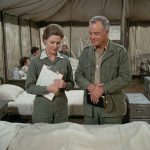
Standing just behind them, Margaret Houlihan watched the exchange with her arms tightly crossed over her fatigue shirt. Her face wore a rare, soft expression—a quiet, maternal fondness that she only let slip when the chaos of the triage pad finally slowed to a crawl.
“Oh, stop your caterwauling, Charles,” Margaret said, though her tone lacked its usual military bite. “It’s warm, it’s filling, and nobody is shooting at us. By 4077th standards, this is a banquet.”
Charles let out a theatrical sigh, gingerly prodding a mysterious gray lump with his fork. “Major, the fact that we define survival by the absence of active mortar fire does not mean we must surrender our palates to the dark ages. Look at this… this gelatinous entity. Back in Boston, this would be classified as a chemical spill.”
Potter chewed thoroughly, swallowed, and pointed his crust of bread toward Winchester. “Son, back in Hannibal, Missouri, we called that gravy. And if you don’t want it, stop poking it. You’re making the meatloaf nervous.”
The small tables around them were mostly empty, save for a few tired corpsmen slumped over their tin mugs in the background. The camp was in that strange, fragile lull between flows of casualties—a ghost town of exhausted people holding their breath.
Charles raised his fork, staring at the lone, sad morsel he had managed to isolate. “It isn’t just the food, Colonel. It’s the utter lack of dignity. One requires a sense of ritual, a touch of civilization to keep the madness of this peninsula at bay.”
He lifted the fork toward his mouth, his expression hardening into a mask of stoic resignation. But just as the metal tines touched his lips, his hand froze, his eyes widening as a sudden, sharp tremor rattled the mess tent floor.
The metal tray rattled against the wooden table, and for a terrifying second, the entire tent held its breath, expecting the familiar, dreaded wail of the sirens. But the rumble wasn’t artillery; it was just the heavy thunder of a passing supply truck splashing through the deep mud outside.
Charles let out a long, slow breath, lowering his fork back to the tray, his Bostonian composure momentarily cracked to reveal the deep, aching fatigue beneath.
Potter lowered his bread, his fatherly eyes locking onto Winchester with a quiet, knowing understanding. “Lost your appetite, Charles?”
“I seem to have misplaced it somewhere around late 1950, Colonel,” Charles replied softly, his voice suddenly stripped of its usual pompous armor. He looked down at his hands, which were still vibrating slightly from the phantom adrenaline. “Sometimes… it just hits one. The sheer, unadulterated absurdity of our existence here.”
Margaret stepped closer, placing a hand on the back of the empty wooden chair next to them. The hard-nosed head nurse vanished, replaced by the woman who stayed awake for forty-eight hours straight just to hold a dying private’s hand.
“My mother used to make pot roast on Sundays,” Margaret said quietly, her eyes drifting toward the canvas ceiling as if she could see right through it to a different life. “The whole house smelled like onions and carrots. We’d use the good china, even if it was just the three of us.”
Potter smiled, a warm, crinkly expression that smoothed out the deep lines on his weathered face. “Mildred does a fried chicken that’d make a grown man weep. Crispy on the outside, juicy on the inside. We’d sit out on the porch afterward, listening to the crickets, not saying a word because we didn’t have to.”
Charles listened, his fingers tracing the rim of his metal tray. The anger and sarcasm had completely drained out of him, leaving only the raw, homesick man from Beacon Hill.
“A proper Sunday roast,” Charles murmured, almost to himself. “With a vintage Bordeaux. My father would argue with my uncle about the stock market, and mother would play the piano in the parlor. It was terribly predictable. Terribly dull.” He paused, his voice dropping an octave. “And I would give everything I own to experience that boredom right now.”
The silence in the tent grew thick, but it wasn’t a lonely silence anymore. It was the shared, comfortable quiet of three people who had become an accidental family in the middle of a wasteland.
Potter reached across the table, his rough, calloused hand gently tapping Charles’s sleeve. “We don’t have china, Charles. And Sparky hasn’t delivered a vintage Bordeaux in all the time I’ve been here. But we’ve got each other. And we’ve got tomorrow.”
Charles looked up, meeting the Colonel’s steady, reassuring gaze, and then looked at Margaret, who offered him a small, supportive nod.
With a slow, deliberate movement, Charles picked up his fork once more. He scooped up a piece of the questionable army meatloaf, lifted it with a faint return of his old dignity, and looked at his companions.
“To predictable Sundays,” Charles said quietly.
“To home,” Margaret whispered.
Colonel Potter raised his half-eaten slice of bread like a royal goblet. “Eat up, Winchester. Tomorrow’s a brand new day, and the army expects us to survive it.”
Charles took the bite, chewed thoughtfully, and smiled just a little. It still tasted terrible, but surrounded by the warmth of the 4077th, it was just enough to keep the cold at bay.
In a place where time stood still, it was the memories of home—and the friends beside us—that kept us moving forward.