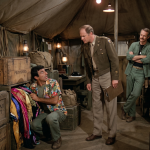
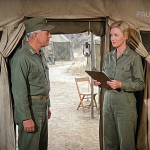
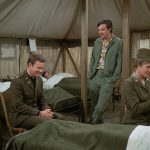
THE SILENT CONSENSUS OF TUESDAY AFTERNOON
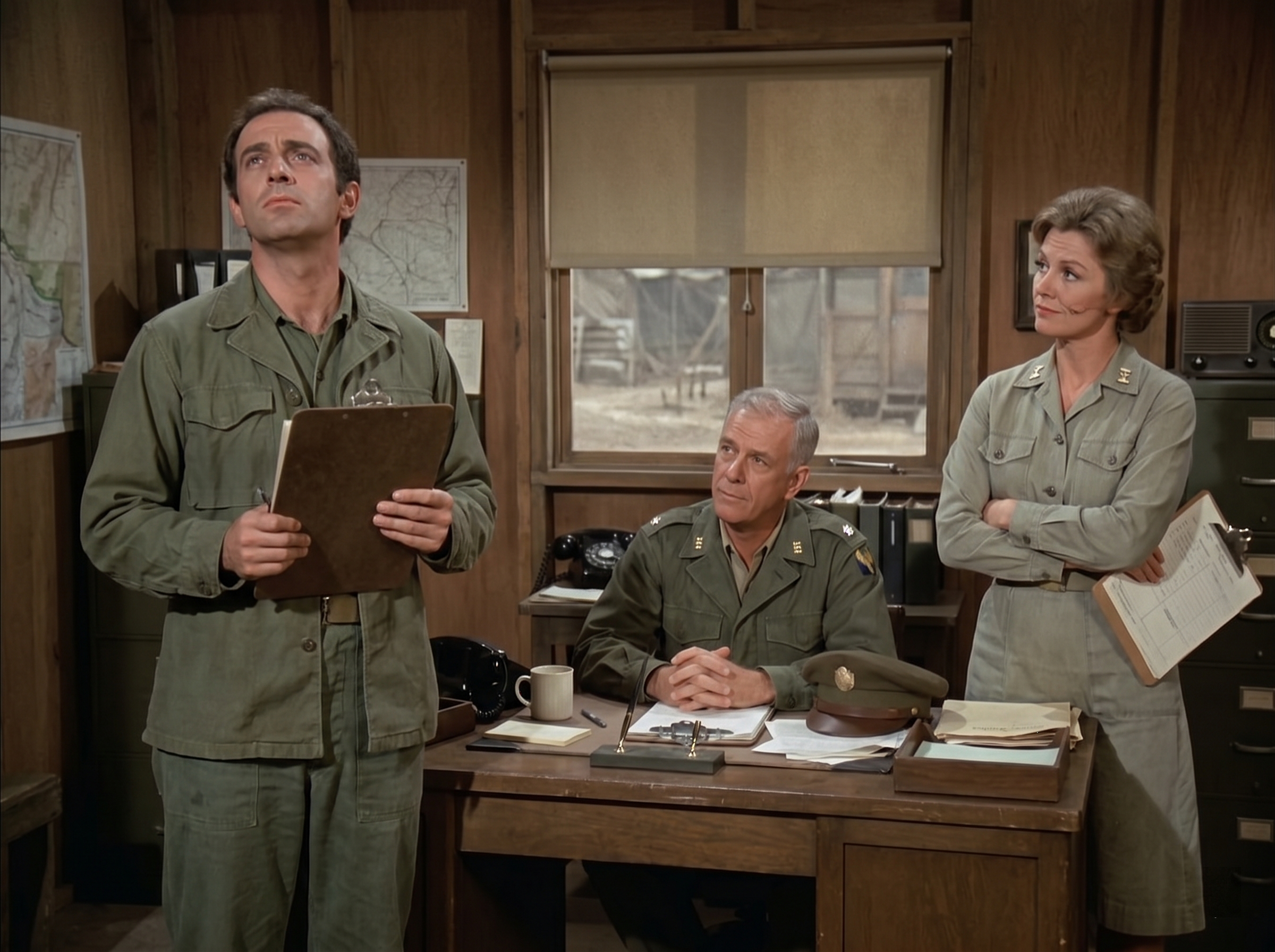
You knew it was coming. The moment the generator started its inevitable, high-pitched whine. In the wood-paneled quiet of the head clerk’s office at the 4077th, milliseconds stretched into an anxious eternity.
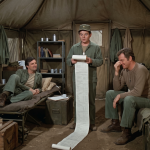
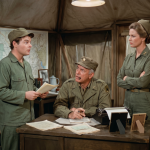
B.J. Hunnicutt stood up first. Still wearing his utility shirt, he gripped his clipboard like it contained the mysteries of the universe, his gaze fixed on the single, dust-covered bulb dangling from the ceiling. His expression wasn’t panic; it was a perfect blend of exasperation, skepticism, and a quiet plea to whatever power managed the flow of uncooperative electricity in Korea.
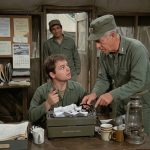
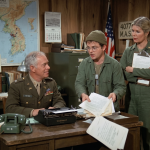
Down at the desk, Colonel Sherman Potter didn’t look up. He didn’t need to. He just stopped mid-sentence on the order he was reading, his fingers lacing together tightly. His face, etched with decades of military tolerance, held a look of profound resignation. A silent prayer that perhaps, just perhaps, the bulb was playing a cruel joke. He stared ahead at the phone on his desk, mentally calculating how many supply requests he’d have to sign in the dark.
And then there was Margaret. She had been leaning casually against the filing cabinet, arms crossed, matching B.J.’s upward glance with a skeptical smirk. Her expression said, ‘I *knew* the Engineering detail couldn’t sort a simple dimmer switch.’
The silence before the break was agonizing. For an incredible few seconds, the entire war, the incoming wounded, the shortages, the noise of the Swamp—it all just boiled down to three pairs of eyes fixed on that flickering promise of light. They were trapped in a snapshot of anticipation.
Then, with a final, pathetic, high-pitched squeak from the generator, the filament pulsed one last time and died.
Total, sudden darkness plunged the office into gloom.
“Aaaand, scene,” B.J.’s voice floated down from the dark, perfectly dry. The tension broke instantly.
Somewhere in the corner, the distinctive sound of Margaret uncrossing her arms echoed. A rustle of paper followed. “Colonel, if I can track down that Quartermaster sergeant in Seoul who *swore* these new bulbs were army-grade…”
“Forget Seoul, Major,” Potter’s voice rumbled, followed by a soft *thump* as he dropped his clasped hands. They could hear him reach for his coffee mug. He took a long, thoughtful sip. “Unless that Quartermaster can deliver 200 yards of extension cord that will stretch directly into Eisenhower’s closet, we are temporarily out of the illumination business.”
B.J. lowered his clipboard, which was now a completely useless rectangle of wood in his hands. He felt a smile quirk his lips, matching the one Margaret was likely wearing in the dark.
“Well,” B.J. said. “There goes my plan to check the manifest for those missing peach slices. I was really hoping for a little glow-in-the-dark comfort food tonight.”
“Comfort, Hunnicutt?” Margaret retorted, but the usual bark was missing. It was the soft edge of her voice, the one that appeared when she forgot to be intimidating. “If you want comfort, I have some gauze. We can wrap you like a mummy and pretend you’re getting medical attention for lack of peach.”
Potter let out a soft snort of laughter. “Keep it professional, both of you. And, Captain? Your peach slices will likely return with Corporal Klinger. He went to find the spark plugs, or at least that’s what his last message said before the radio went static.”
“Or,” B.J. offered, “he’s currently trading the jeep’s spark plugs for a nice feather boa.”
They shared a quiet, contained laugh. In that darkness, stripped of the military insignia and the professional veneers, they were just three tired people. A husband missing his wife, a daughter missing her distant father, and a professional soldier missing a simpler definition of duty.
For fifteen minutes, the darkness held them in a strange truce. No requests. No protocols. No incoming. They sat in the silent, wooden room and breathed. B.J. thought of Peg and the light in her eyes. Potter remembered the smell of the stable and the horses. Margaret quietly recalled the feel of clean, starched sheets.
The generator began to rumble again. A low growl that rose in pitch.
They all braced themselves.
The bulb above did not flicker. It simply bloomed. Warm, slightly yellow light flooded the room.
The snapshot was gone.
Now they were just three professionals who needed to get back to work.
Potter cleared his throat and picked up his glasses. B.J. flipped his clipboard. Margaret smoothed her uniform and turned back to the filing cabinet.
“Where were we, Colonel?” she asked.
The moment was over, but the memory of the quiet, shared waiting lingered. In this war, sometimes you found the family in the places where the light failed.
Sometimes the best view in Korea was when the light was out.