The Quiet Hour Between Stitches
The mud outside the 4077th had finally stopped calling our names, replaced for a few precious hours by the steady, rhythmic hum of the generators and the clatter of metal trays being cleared. It was that strange, liminal time of night when the adrenaline of the OR begins to curdle into a bone-deep exhaustion, yet sleep remains a distant, improbable ghost.
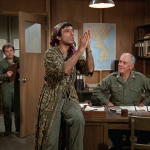
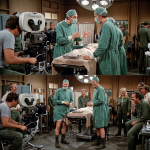
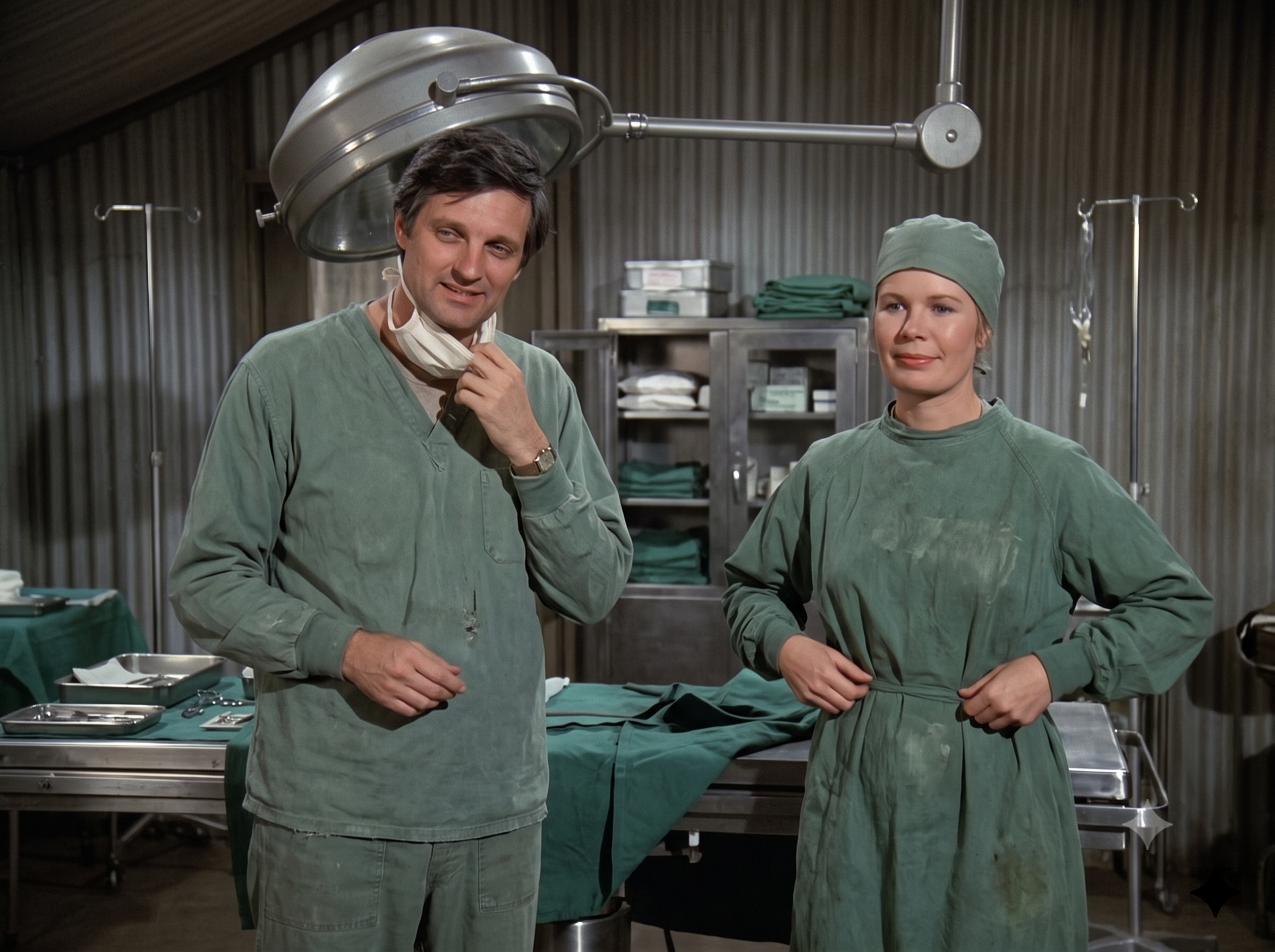
Inside the tent, the air hung heavy with the scent of antiseptic and the lingering humidity of a Korean summer. Hawkeye stood near the surgical light, his mask pulled down, fingers tracing the edge of his scrubs as he stared at nothing in particular. He looked like a man who had been stretched thin across a dozen different tragedies and was now trying, with limited success, to pull himself back together.
Beside him stood Major Houlihan. She was adjusting the ties of her gown with a precision that bordered on the militant, her face a mask of calm composure. But if you looked closely—really closely—you could see the slight tremor in her hands as she cinched the fabric. The OR had been particularly brutal today; the kind of day that made you question if the laughter you shared at the mess tent was merely a mask for a collective, silent scream.
They hadn’t spoken for nearly twenty minutes, the silence between them thick with the unspoken camaraderie of those who have seen too much and said too little. Hawkeye finally broke the quiet, his voice raspy, laced with that familiar, jagged wit that usually served as his primary defense mechanism.
“You know, Margaret,” he murmured, his gaze still fixed on the wall, “I think I’ve reached my quota for ‘miracles’ for the fiscal year. Any more and I’m going to have to file a complaint with the Almighty.”
Margaret stopped mid-motion, her hands frozen at her waist. She looked up at him, and for a fleeting, terrifying second, the professional veneer cracked wide open. Her eyes, usually sharp and guarded, welled with a sudden, overwhelming vulnerability that caught them both off guard. She wasn’t just tired; she was mourning.
“Don’t start with the jokes, Hawk,” she whispered, her voice cracking in a way that signaled she was holding on by a single, fraying thread. “Not tonight. I don’t think I can handle the funny tonight.”
Hawkeye stepped closer, the playful spark in his eyes extinguished, replaced by a quiet, steady gaze. He realized then that he wasn’t just standing next to a colleague; he was standing next to someone who had been holding the same heavy sky as he had all afternoon, and she was starting to buckle under the weight of it.
“I’m not joking,” he said softly, moving to the stainless steel cabinet to grab a fresh cloth. “I’m just trying to figure out how we’re going to be human again in time for breakfast.”
He handed her the cloth. It wasn’t much—just a small, utilitarian gesture—but it was an admission. It was an acknowledgment that they were both just kids playing doctor in a nightmare, trying to hold on to the edges of themselves before the next whistle blew.
Margaret took the cloth, her shoulders sagging. The tension that had held her upright for twelve hours finally began to bleed out of her. She leaned against the instrument table, closing her eyes, and let out a long, shuddering breath. The silence was no longer heavy with tension, but heavy with a strange, weary grace.
“I just keep thinking about the one in bed four,” she murmured, her voice barely audible. “The way he looked at his photograph. He was so young, Hawkeye. They’re all so young.”
“I know,” he replied, and he did. He knew the weight of those faces, the way they etched themselves into your dreams until you couldn’t tell the difference between the living and the ghosts.
He didn’t try to fix it. He didn’t offer a witty retort or a cynical observation to lighten the mood. He just stood there, a silent anchor in the middle of a storm-tossed tent, letting her have the space to be weak. It was the most important thing they did for each other—the quiet, unglamorous work of being witnesses to one another’s survival.
After a few minutes, Margaret opened her eyes. The tears were gone, wiped away with a firm, practiced motion, but the softness remained in her expression. She looked at Hawkeye, really looked at him, and offered a faint, tired smile that reached her eyes. It wasn’t the smile of a major in the U.S. Army; it was the smile of a friend who had survived another day in the middle of nowhere.
“Breakfast,” she said, her voice steadier now. “I think I can manage some powdered eggs if you promise not to comment on the texture.”
“I make no such guarantees,” Hawkeye teased, the familiar twinkle returning to his eyes, though it didn’t quite reach the sadness still lingering in the shadows of his face.
They left the tent together, stepping out into the cool, dark night of the camp. The 4077th was mostly quiet, the distant sound of a jeep engine fading into the hills. It was a long road back to sanity, and the morning would bring another round of sirens and sorrow. But for this one, fleeting moment, they weren’t just surgeons or soldiers. They were two tired people walking toward the promise of a warm meal, leaning on the fragile, enduring hope that tomorrow might be a little bit quieter than today.
We were just trying to hold onto each other long enough to see the sunrise.