A Rare Afternoon of Quietude in the Supply Tent
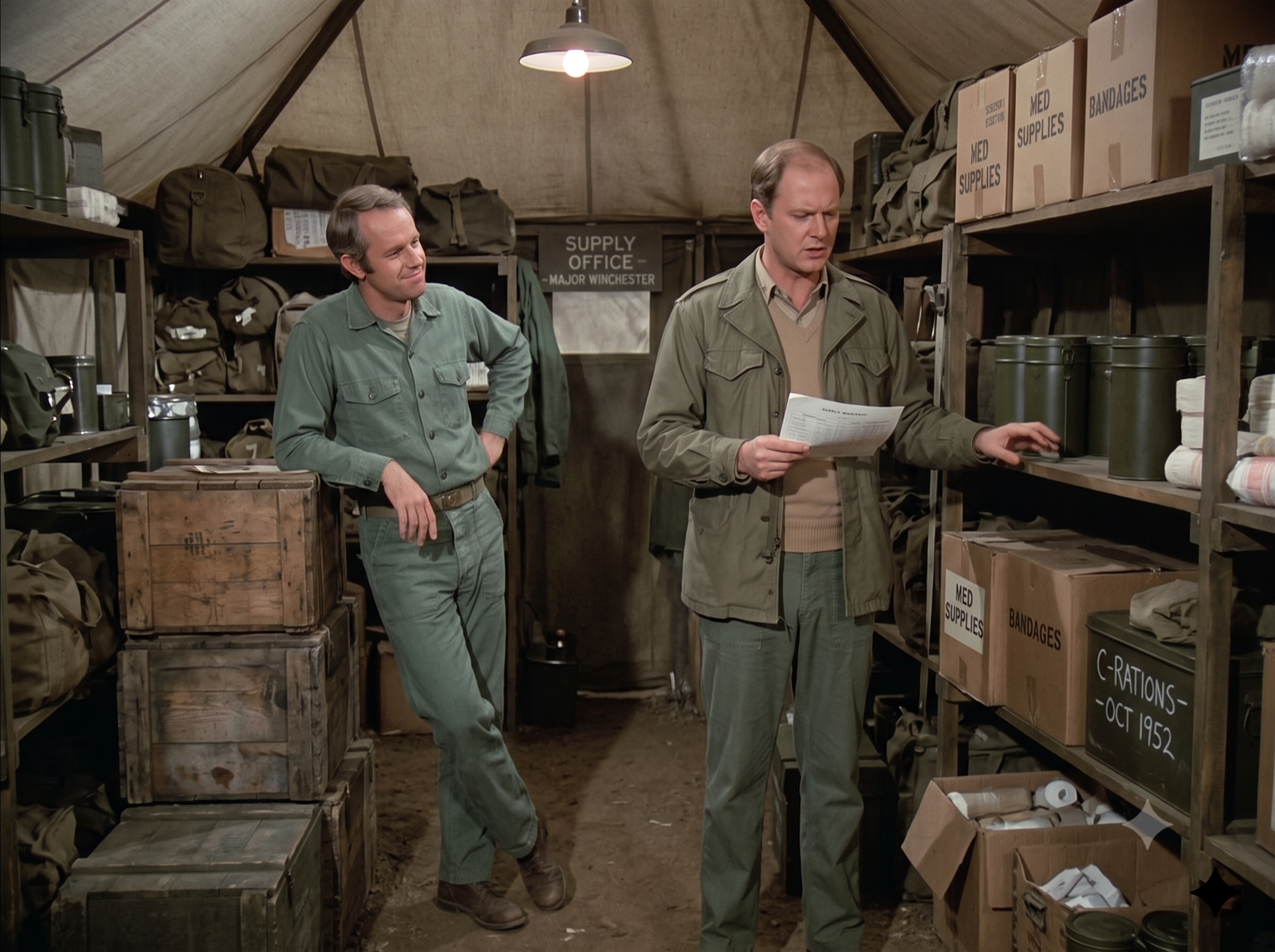
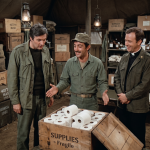
The supply tent was the only place in the 4077th where the air didn’t taste like ozone and antiseptic. It smelled of canvas, dry dust, and the peculiar, metallic promise of overdue inventory.
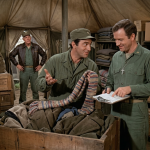
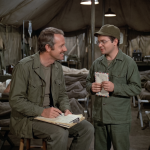
B.J. Hunnicutt leaned against a stack of wooden crates, his posture effortlessly relaxed despite the long hours they’d both put in at the OR. He was watching Major Charles Emerson Winchester III, who stood before a metal shelf with the intense, furrowed concentration usually reserved for a difficult surgical procedure.
Charles held a clipboard as if it were a delicate musical score, his eyes scanning the labels on the boxes with a mixture of disdain and genuine confusion. He gestured toward a row of olive-drab canisters with the precision of a conductor signaling the brass section.
“Hunnicutt, this simply will not do,” Charles muttered, his voice echoing slightly in the cramped, shadowed space. “According to my requisition ledger, we are supposed to have an abundance of sterile bandages. Yet, all I see are these… what are these? C-rations from October of 1952? One does not dress a compound fracture with a can of beef stew, no matter how much one might desire a hot meal.”
B.J. suppressed a grin, shifting his weight. “Maybe it’s a new experimental treatment, Charles. A little bit of gravy, a little bit of gauze. Comfort food meets comfort care.”
Charles whipped his head around, his gaze piercing. “Your attempts at humor are as dry as these crackers, B.J. This is a matter of administrative incompetence. If I am to run the supply office with the efficiency required of a civilized institution, I cannot have my medical supplies replaced by rations from a year that has, quite frankly, been a blight on my existence.”
He turned back to the shelves, his hand trembling slightly—not from fear, but from the sheer exhaustion that had been clinging to them all week. He reached for a box labeled ‘Med Supplies,’ but his fingers slipped, knocking a small, heavy tin off the shelf.
It clattered to the dirt floor with a jarring, definitive metallic ring, the sound sharp enough to shatter the relative silence of the camp. The lid popped off, and the entire contents—a collection of small, rusted metal clips and loose, stray bits of office detritus—scattered across the floor.
Charles stood frozen, staring down at the mess, his shoulders sagging under the weight of a week that had finally broken his composure. His breath hitched, a soft, wounded sound that wasn’t a sob, but the quiet admission of a man who had reached the absolute end of his tether.
B.J. didn’t crack a joke. He didn’t offer a witty rebuttal about the quality of the floor debris. Instead, he pushed off the crates and knelt immediately, his knees popping against the hard-packed earth.
He began to gather the scattered clips, his movements slow and deliberate. After a moment, he looked up to see Charles still standing there, his hands still clutching the clipboard, his eyes fixed on the ceiling of the tent as if praying for a transfer to a parallel universe where supplies were infinite and wars were brief.
“Charles,” B.J. said softly, not looking up. “You’ve spent more time in this tent this week than you have in the officers’ club. Nobody expects you to be a one-man miracle worker.”
“It is not about miracles, Hunnicutt,” Charles replied, his voice strained, though he finally lowered his hand. “It is about order. It is about maintaining a sliver of standard in a place that treats madness as a daily routine. If I cannot even account for our bandages, then what hope is there for the rest of this wretched enterprise?”
B.J. reached out and gently took the clipboard from Charles’s hand, setting it aside on a crate. “The bandages are probably in the wrong tent, or under a pile of Klinger’s dresses, or buried under Potter’s horse-grooming equipment. It’s the 4077th. It isn’t supposed to make sense.”
Charles looked down at B.J., his usual armor of aristocratic disdain visibly fraying. He let out a long, shuddering sigh, the tension finally leaking out of his posture. He slowly sank to the floor, sitting cross-legged in the dirt, heedless of the crease in his trousers.
“I miss Boston,” Charles confessed, his voice barely a whisper. “I miss the smell of clean linen and the sound of a decent symphony. Here, the only thing that changes is the date on the ration boxes.”
B.J. pulled a small, slightly crushed pack of gum from his pocket and offered a piece to the Major. “I know. But look on the bright side. At least we aren’t eating the 1952 stew tonight. I heard Radar got a fresh shipment of potatoes.”
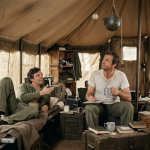
A faint, tired smile touched the corners of Charles’s mouth. He accepted the gum, his movements returning to a semblance of his usual, dignified grace. For a moment, the two men sat there in the quiet of the supply tent, surrounded by the absurdity of the war, finding a brief, unspoken kinship in the sheer fatigue of being human.
They weren’t surgeons right then. They were just two people, thousands of miles from home, sorting through the wreckage of a long week.
“Fine,” Charles said, picking up a stray clip and inspecting it. “We shall organize this chaos tomorrow. But if I find one more tin of C-rations where the suture kits belong, I am formally requesting a transfer to the front lines. It would be less stressful.”
B.J. laughed, a warm, genuine sound that seemed to chase the chill out of the tent. “Deal. But only if you let me handle the labels.”
“Don’t push your luck, Hunnicutt.”
They stood up together, dusting off their uniforms, the heavy atmosphere replaced by a quiet, shared understanding. As they walked toward the exit, the sun was beginning to dip, casting a long, golden light through the tent flap. It wasn’t the life they would have chosen, but in the heart of the madness, they had each other, and for tonight, that was enough.
Sometimes, the greatest comfort in the war isn’t the mission, but the friend who helps you pick up the pieces.