The Golden Valve and the Long Night
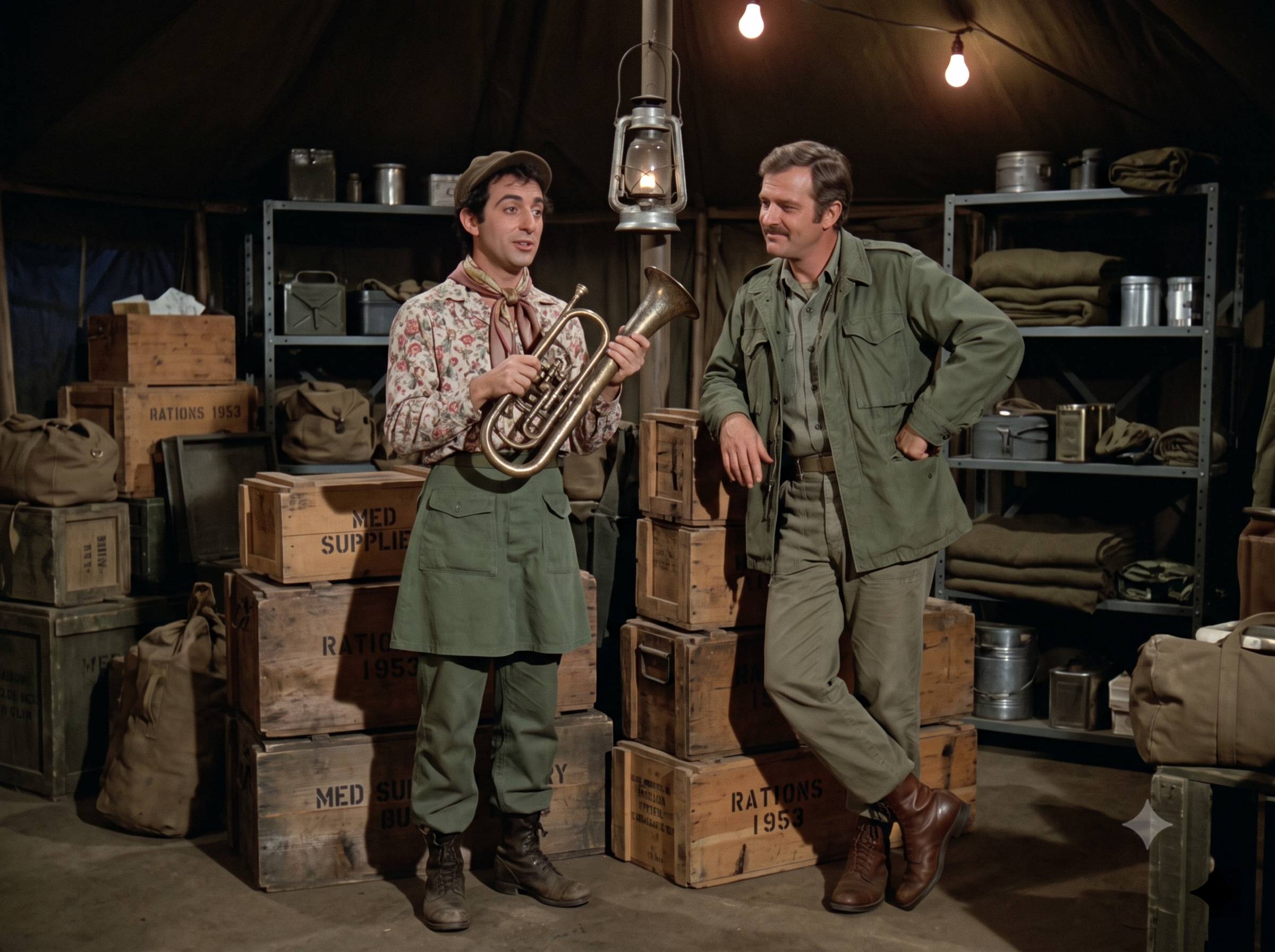
The sounds of the 4077th were usually predictable. The grinding *thump-thump* of the helicopter blades, the *beep* of a jeep horn, the weary sighs echoing in the pre-dawn stillness of the Post-Op tent. But tonight, a new sound cut through the silence of the supply depot, a brassy, nervous groan, like a very small whale was having a bit of indigestion.
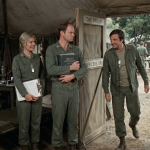
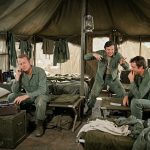
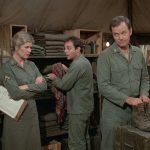
B.J. Hunnicutt, looking comfortable yet commanding in his unbuttoned M-65 field jacket, heard it first. He’d come looking for a box of specific sutures he’d ordered, but the familiar sound of a supply tent at rest—heavy wooden crates labeled ‘RATIONS 1953’ stacked high, the smell of damp canvas and stale coffee—was replaced by this curious, melancholy noise.
He followed the sound deep into the shadows, past a precarious wall of ‘MED SUPPLIES’ boxes (visibly stacked by someone who valued efficiency over aesthetics, like Radar). The noise stopped. He peeked around the corner and saw the source.
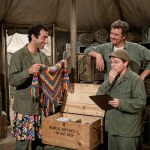
There was Corporal Maxwell Q. Klinger, a man whose supply operations typically ran with a touch of theatricality. But tonight, Klinger looked different. He wasn’t in one of his famous, questionable “discharge dresses.” He was, however, wearing a remarkably bold, patterned floral scarf and a jaunty cap, along with his standard-issue fatigue trousers. He was holding something he’d certainly never received on requisition.
It was a small brass cornet, tarnished but still gleaming where the lantern light caught the valves. Klinger stood in the small pool of light, framed by the chaos of supplies and his own reflection in the hanging brass lantern, looking up with wide, almost desperate eyes. He was gripping the instrument tight, but his expression was that of someone who had just committed a major musical faux pas.
“A little early for reveille, isn’t it, Klinger?” B.J. said, stepping into the light. The warmth in his eyes took the edge off his words.
Klinger jumped, nearly dropping the horn. “Oh, Captain Hunnicutt, sir! I was just… I was testing the acoustics! For… for Colonel Potter’s birthday! I heard he loves brass bands.” Klinger’s face was an open book of elaborate lies, written in capital letters.
“Birthdays are in September, Klinger. It’s February.” B.J.’s gaze was steady. He didn’t push, just waited. He saw the nervous energy vibrating in Klinger’s hands, gripping the brass tubing. The tension in the tent thickened, the silence after the trumpet blast more pronounced.
B.J. sighed, his own exhaustion seeping in. It had been a long, brutal week in OR. He rested his hand on the stack of ‘MED SUPPLIES’ crates, his face softening with a different, more serious concern. The small, tarnished horn seemed to be at the center of everything, a tiny, silent cry for attention. The nervous tension in Klinger was palpable, a balloon ready to burst. “What’s going on, Maxwell?” B.J. asked softly.
Klinger swallowed hard. He looked at the horn, then at the piles of rations and supplies that surrounded him—his empire. He looked back at B.J., and the bravado crumbled, leaving something small, weary, and real. “It was my brother’s, Captain. Before the war.” The words were quiet, but they resonated. “We used to play duets. I was trumpet, he was clarinet. We… we weren’t very good, but we were loud. And we laughed a lot.” His eyes were shimmering. “He… he doesn’t play anymore. And I… I haven’t picked this up since I got my notice.”
B.J. felt a pang of profound sadness, the kind that only hits after days without sleep, hearing about a life interrupted. The small brass instrument suddenly felt heavier.
The tension wasn’t coming from the lie anymore, but from the sudden, powerful wave of nostalgia and grief. B.J. knew about the things left behind. He thought of his own home, Peg, his daughter. The fragile world of before. He leaned back on his heels, the light of the lantern reflecting in his eyes, as the true weight of Klinger’s moment hit them both.
Klinger’s eyes were locked on B.J.’s face, searching for judgment, for the inevitable joke, but finding only a quiet, understanding stillness. The air in the supply tent, usually so heavy with bureaucracy, felt light and brittle. The silence stretched.
B.J. didn’t rush in with a comforting platitude. Instead, he just stood there, letting the weight of the moment settle. The lantern flared slightly, casting their long, distorted shadows onto the stacks of ‘RATIONS 1953’ and ‘MED SUPPLIES.’ He looked from the tarnished brass in Klinger’s hands to the man himself, seeing the tired lines etched in Klinger’s face that no amount of floral scarfs or flamboyant outfits could hide.
“I can’t play it, Captain,” Klinger whispered, his voice trembling like a faulty generator. “I can’t make a good sound. It just… it remembers the bad sounds. The wrong sounds.” He held the small cornet out, almost defensively, as if the instrument itself was the source of his pain. “It shouldn’t be here. I shouldn’t be here.”
B.J. finally broke the silence. He didn’t offer a grand speech. Instead, he just took a step closer, into the small circle of light where the lantern and the brass horn met. He looked down at the cornet, his gaze thoughtful. “You know, Klinger,” B.J. said, his voice low and rich with a different kind of authority. “Sometimes the instrument isn’t the issue. Sometimes it’s just the musician who’s tired.”
He reached out and gently took the horn from Klinger’s shaking hands. Klinger let it go willingly, looking up with a confused, hopeful gaze. B.J. turned the small cornet over, running a finger along the brass, feeling the wear and the history of it. He looked up at Klinger, a genuine, warm smile finally breaking through his fatigue. “It’s a fine piece of work, though. The valves move. The finish is… well, it’s present.”
“It is, isn’t it, Captain?” Klinger said, a tiny spark of his usual energy returning. “He took care of it. Polished it every week.”
B.J. handed the cornet back. “So, polish it. Clean the valves. Oil them.” He stepped back, leaning his hands on his hips, his pose relaxed but attentive, mimicking his casual stance from earlier but with an entirely new context. “You can’t force a bad sound out of a good heart, Maxwell. But you *can* take care of the tool.”
Klinger stared at him, then down at the horn, and then back up, a complex mix of surprise and gratitude on his face. His fingers brushed against the floral scarf. “Thank you, Captain,” he said, and the words were real. For the first time in years, the simple phrase ‘Thank you’ felt like a genuine human transaction, not just military politeness.
The tension was gone, replaced by a quiet warmth. Klinger wasn’t the theatrical supply clerk. B.J. wasn’t the wise-cracking surgeon. They were just two men, stranded far from home, connected by a small, tarnished brass cornet and the shared understanding of things lost and things remembered.
Klinger carefully placed the cornet back into its open velvet box, resting on a stack of rations. He didn’t make a spectacle of it. He just did it with the respect it deserved. He looked back at B.J., and the playful glint returned to his eyes, but it was softer now. “About those sutures, Captain. I happen to have an extra box of ‘3-0’ silk, standard issue, but with a *very* superior quality. A true supply sergeant’s choice.”
B.J. laughed, a tired, honest laugh that felt like a release. He pushed off the ‘MED SUPPLIES’ crate. “Lead the way, Maxwell Q. Supply Sergeant Extraordinaire. But don’t expect me to keep secrets from Hawkeye.”
They walked deeper into the labyrinth of crates and tents, the silence of the night returning, punctuated only by their quiet conversation and the rhythmic clinking of supply keys. The memory of the single, melancholy brass note and the tarnished horn remained, but now it was wrapped in the warmth of shared humanity and simple, silent support. The brass lantern continued to burn, a small beacon of normalcy in the deep darkness of the supply tent, illuminating the stacks of boxes, the empty horn case, and the echo of a friendship reinforced.
They might have been halfway around the world, surrounded by chaos and pain, but tonight, one small piece of home was safe in the 4077th.