The Floral Diplomat of the 4077th
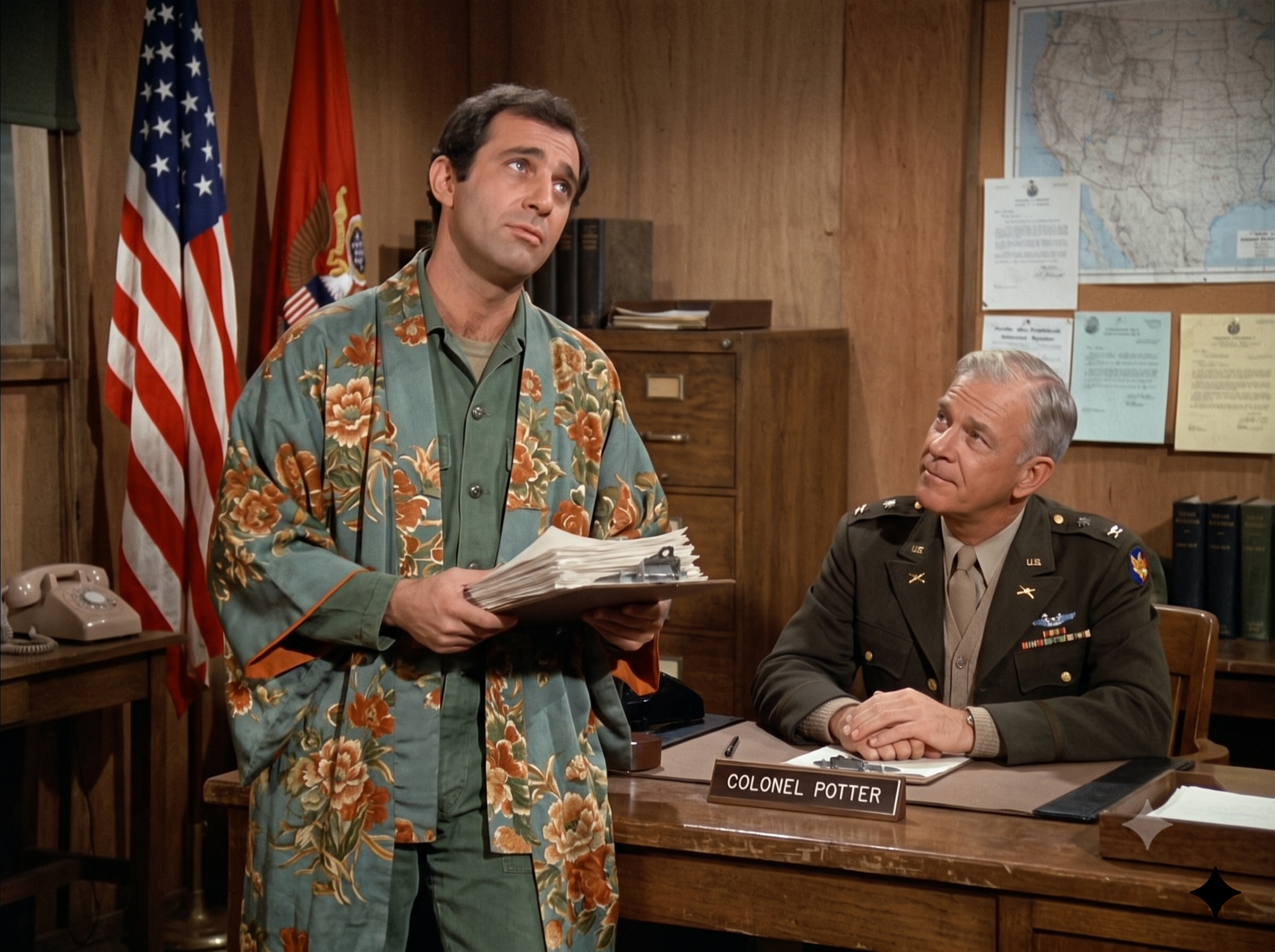
The mud outside was a deep, soul-sucking violet, but inside Colonel Potter’s office, the air smelled faintly of ink, stale coffee, and something inexplicably floral.
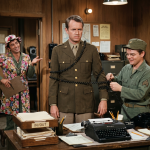
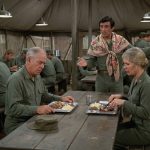
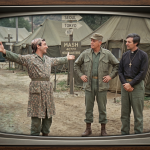
Max Klinger stood before the desk, his posture a masterclass in theatrical exhaustion. He was draped in a vibrant, oversized kimono adorned with orange and gold chrysanthemums, a stark contrast to the utilitarian olive drab of the Colonel’s sanctuary.
He held a clipboard like a holy relic, his head tilted back as if beseeching a higher power to intervene in his latest scheme for a Section 8.
Colonel Potter leaned back in his leather chair, his hands clasped over his stomach, his expression somewhere between a weary sigh and a begrudging smile. He’d seen a lot of things in his long career, but Klinger in full bloom was a sight that never quite lost its ability to baffle him.
“Colonel, sir,” Klinger began, his voice dripping with practiced, melodramatic sincerity. “I don’t mean to burden you with the crushing weight of my civilian yearning, but this garment… it’s not just a robe. It’s a message. It’s a statement of peace, a botanical protest against the very concept of military bureaucracy.”
Potter’s eyes narrowed, his brow furrowing as he studied the floral print. “Klinger, you look like a disgruntled wallpaper sample. What in the hell is the point this time?”
Klinger sighed, a long, shaky exhale that rattled his chest. “The point, sir, is that I am a man of peace, trapped in a man of war’s clothing. And I’ve just received news that could break the spirit of a lesser man.”
He thrust the clipboard toward the desk, his eyes wide and glistening with artificial moisture.
“If you deny this request, sir,” Klinger whispered, the humor suddenly vanishing from the room, replaced by a thick, heavy silence, “I’m afraid I’ll have to tell you the real reason I’ve been wearing these flowers—and it’s a story that’s going to break your heart.”
Potter froze. He reached out, his hand hovering over the clipboard, his gaze locked onto Klinger’s face. The theatricality was gone. For a fleeting second, the man behind the costume looked terrified, tired, and profoundly human.
“What are you talking about, son?” Potter asked, his voice dropping from a bark to a gravelly, quiet hum.
Klinger looked down at his floral sleeves, plucking nervously at the silk. “It’s not about getting out, Colonel. Not today. It’s about… it’s about my sister. She sent me this robe in a care package months ago. She thought it was funny. She thought it would make me smile.”
His voice cracked. “I got a letter from home this morning. She’s gone, sir. Just like that. And I’ve been wearing this stupid, beautiful thing because it’s the only way I can feel like I’m still talking to her.”
The office seemed to shrink. The maps on the wall, the files in the cabinet, the American flag standing guard in the corner—they all faded into the background. There was only the sound of a distant chopper, a lonely, mechanical heartbeat against the quiet of the room.
Potter’s face softened, the lines around his eyes deepening with a familiar, weary sadness. He didn’t ask for papers. He didn’t ask for a medical excuse. He simply reached across the desk and placed his hand over Klinger’s knuckles, which were white from gripping the clipboard.
“Klinger,” Potter said softly. “Why didn’t you say something? You know you didn’t have to put on a show for me.”
Klinger wiped his eyes, the humor creeping back in, fragile and forced, but genuine. “Well, Colonel, if I didn’t put on a show, I’d have to deal with the truth. And frankly, the truth is a lot harder to wear than a kimono.”
Potter let out a short, dry chuckle, the kind that held a lifetime of shared losses and unspoken comforts. He stood up slowly, walked around the desk, and placed a firm, steady hand on Klinger’s shoulder.
“You go take the rest of the day,” Potter said, turning back to his paperwork to give the younger man some dignity. “And Klinger? Keep the robe. It’s a good color on you. Reminds me of a garden back in Missouri.”
Klinger stood there for a moment, the weight of the day seemingly lighter on his shoulders. He didn’t make a grand exit. He just nodded, a quiet, respectful gesture, and turned toward the door.
As he stepped out into the hallway, the sun broke through the gray clouds, catching the orange chrysanthemums on his shoulders, making them glow with a sudden, defiant brilliance. In the silence of the office, Colonel Potter sat back down, looked at the empty space where Klinger had stood, and silently poured a second cup of coffee.
They were all just people, doing their best to hold onto a little bit of color in a world that insisted on being mud-brown.
Sometimes, the bravest thing we can do is wear our heart on our sleeve, even if it’s covered in flowers.