One Long Story in a Tent
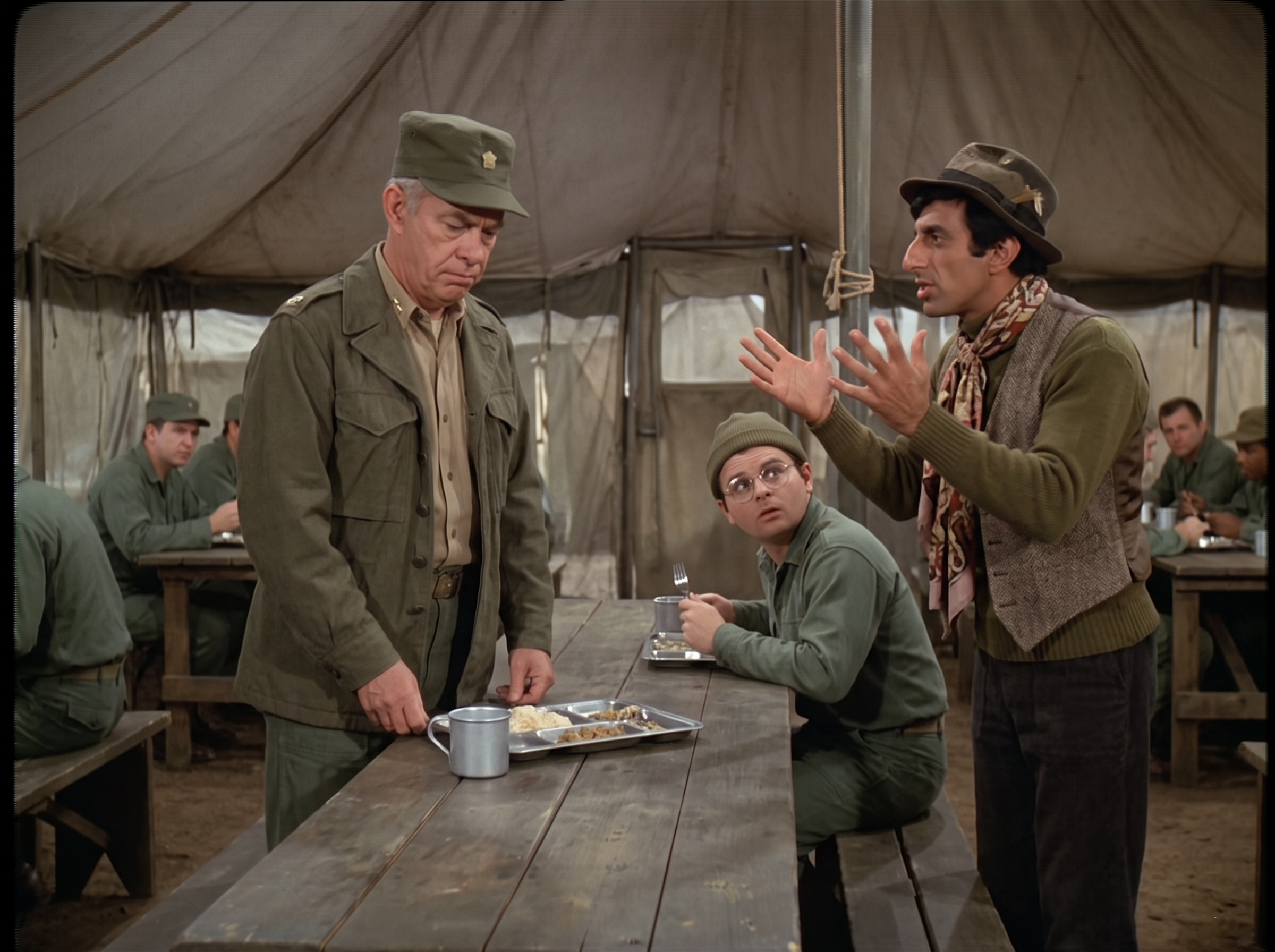
If there’s one place where hope and indigestion always live together, it’s the 4077th Mess Tent.
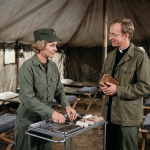
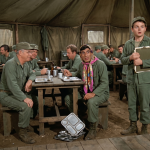
The air was the usual soup of powdered eggs and exhaustion. Radar O’Reilly sat on his long bench, holding a fork over a tray that looked exactly like the one yesterday. He’d barely touched his food. His beanie was pushed back, and those big glasses seemed heavier than normal today. Radar had the look of a kid waiting for news that never comes, holding back a sigh bigger than himself.
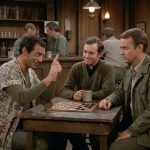
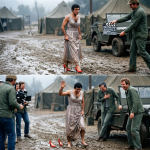
Beside him, standing and gesturing wildly like a man presenting evidence to a very tired jury, was Corporal Klinger. Klinger was back in his beloved Toledo sartorial splendor: a fedora with a jaunty feather, a tweed vest over a knitted sweater, and a colorful ascot. His hands were spread wide, palms up, pouring out his soul.
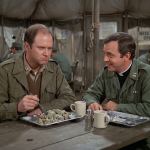
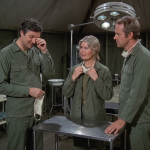
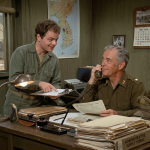
He was appealing directly to Colonel Sherman Potter. Colonel Potter had stopped at their table. He was looking down at his own metal tray, holding an aluminum cup, and the expression on his face was a complicated mix of paternal patience and absolute fatigue. His star was visible on his cap, but it felt secondary to the years etched on his brow. The rest of the tent hummed with the quiet, tired chatter of other soldiers in green fatigues, but for this small triangle of people, the world had shrunk to a few square feet of dirt floor.
Klinger was speaking with an urgency that had nothing to do with the menu. “It’s about the spirit of the thing, Colonel! A morale-builder. You can’t just mandate joy!” Radar shifted on the bench, his eyes fixed on Klinger, looking terrified that Klinger would push too hard and get them both on double latrine duty for a month.
Potter didn’t say anything. He just closed his eyes for a beat, a deep, slow exhale lifting his shoulders. The whole tent seemed to hold its breath. Klinger’s hands were suspended, waiting for the verdict. When Potter finally opened his eyes, he wasn’t looking at Klinger anymore; he was looking down at his tray, and a single tear had begun to well in his eye, poised to fall.
Klinger froze mid-argument. All the drama drained out of his posture. He’d seen Colonel Potter angry, frustrated, amused, and weary, but he’d never seen him on the edge of tears. His hands lowered slowly, coming together in front of his vest. He took a small step closer, all theatricality replaced by a sudden, protective alarm. “Colonel?” his voice dropped, losing its sharp, nasal edge.
Even other tables nearby noticed the shift. A few heads turned. Captain Hunnicutt, over by the coffee pot, started walking toward them. Radar scrambled to stand, his fork slipping from his fingers and clattering against his metal tray with a loud, hollow *ping* that was the only sound in the silence.
Colonel Potter blinked rapidly. That lone tear escaped, cutting a thin track down through the fine layer of Korean dust on his cheek before he could swipe it away with the back of a calloused hand. He gripped his aluminum cup tighter, the cold metal a sudden anchor.
“Forgive me, Klinger,” Potter said, his voice husky. “It’s not you. It’s just…” He looked from Klinger’s genuine, frightened face to Radar’s wide, wet eyes. “Today. It’s a day I usually spend in a duck blind. Just me, old Bessie, and the quiet. A little early morning light, the mist over the water. And you, in that… hat… talking about joy.” He managed a ghost of a smile, self-deprecating and infinitely tender.
He looked around the entire canvas world. “Joy is hard to find some days. Even for a Colonel. And sometimes, even the finest leadership can’t create it.” He gestured slightly with his cup. “You two. You’re good men. Thank you for that.”
There was a moment of silence so deep you could hear a distant jeep backfire. Klinger cleared his throat, his eyes suspiciously bright. “Colonel, if… if I could just get a small detail… I’m sure I could fix the P.A. speaker in the OR by tonight. I know that makes Captain Pierce crazy.”
Colonel Potter looked at him, and the paternal warmth came back fully. “Get it done, Klinger. And wear something suitable. No ruffles.” He clapped a hand on Radar’s shoulder, a gentle, reassuming squeeze. “Eat your lunch, Radar. Your mother would worry.”
He turned and walked toward his table, a little straighter. B.J. met him halfway, saying something quiet that made him nod. Klinger and Radar watched him go. Klinger looked down at his ascot and vest, the absurdity of his own image crashing against the simple, profound weight of what he’d just seen. He slowly unbuttoned his vest, folding it as if it were precious, his hands steady.
They all knew. For one heartbeat, the war wasn’t there. For one moment, it was just people, tired and caring, keeping each other from falling apart in the mud. Klinger pulled the feather from his fedora and carefully tucked it into his shirt pocket before sitting back down beside Radar, the world of the 4077th resuming its soft, determined hum of survival.
In the end, all we really had were each other.