The Taste of Home (or Something Like It)
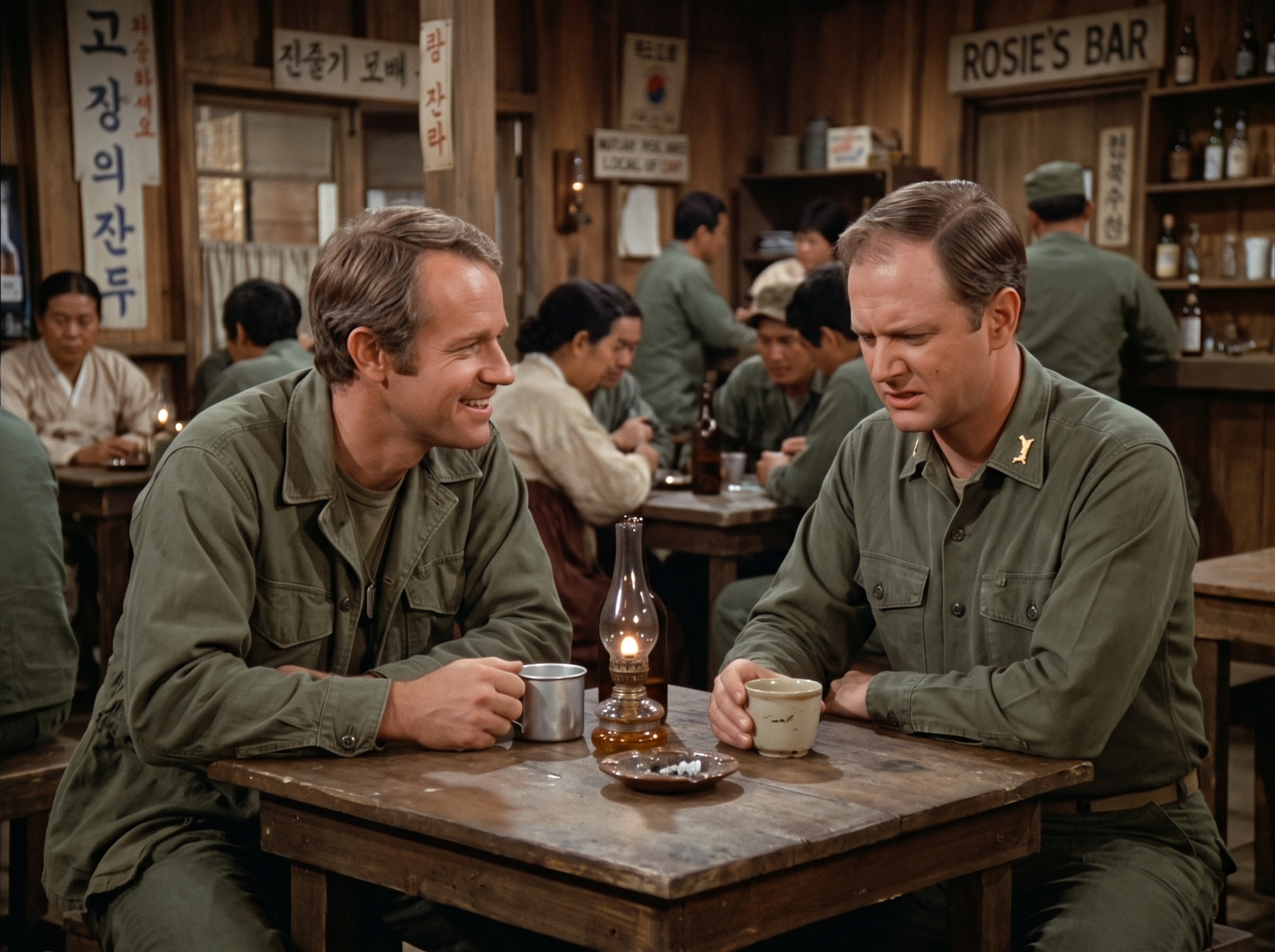
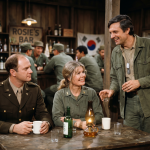
We’d just come off a forty-eight-hour push in OR, the kind where the sweat and the smell of antiseptic seep into your very bones. I found Charles sitting at a back table in Rosie’s Bar, staring into a chipped ceramic cup with the expression of a man who’d just been handed a live grenade instead of a drink. He was wearing that specific mask of Winchester disapproval, which I knew covered a deeper level of exhaustion.
“Evening, Charles,” I said, sliding into the chair opposite him. He didn’t look up immediately.
“B.J.,” he acknowledged, his voice a dry rasp. “Tell me, Captain Hunnicutt, do you believe there exists a single vestige of civilization left in this entire forsaken country?“
I smiled, picking up my own metal cup—mine was usually filled with something resembling water, sometimes whiskey, rarely both. “Well, Rosie has actual chairs now. That’s progress, isn’t it?“
Charles raised an eyebrow, finally meeting my eyes. “If you consider splintered pine and the distinct aroma of unwashed socks progress, then yes, we are practically in London.” He looked back down at his cup with genuine dismay. “And what, might I ask, is this?“
I glanced at it. It was the color of mud and smelled faintly of paint thinner. “Rosie calls it ‘The Special.‘ It’s mostly potato whiskey, a splash of something red, and I suspect, a good dose of desperation.“
“Desperation? How poetic,” Charles drawled, though his expression remained pained. “And I am expected to ingest this… substance?“
“It’s not so bad, Charles. It takes the edge off.” I took a sip of my own drink, wincing slightly. “Look, we just finished a tough shift. You need something other than surgery and Hawkeye’s jokes to clear your head.“
Charles shifted in his seat, the wooden chair groaning under his weight. He was a man who appreciated the finer things in life—quality scotch, classical music, a conversation that didn’t involve puns. This bar, this drink, this entire experience was antithetical to everything he stood for. And yet, there he was.
“I am perfectly capable of clearing my head without poisoning my system,” Charles said stiffly.
“Sometimes,” I said quietly, leaning forward, “a little poison is exactly what the doctor ordered.” I nudged his cup toward him, just an inch. He stared at it, the oil lamp casting flickering shadows across his tired face, and for a moment, I saw the immense weight he was carrying—the loneliness, the homesickness, the sheer absurdity of being a refined Bostonian surgeon in a canvas swamp.
For a long minute, Charles did nothing. He just stared at the cup, his jaw set, a muscle twitching slightly in his cheek. He looked like a statue of reluctant endurance. Across the bar, a group of GIs laughed loudly, and somewhere in the distance, we heard the familiar thwap-thwap-thwap of an incoming chopper, but in our little bubble of tired friendship, everything was silent.
Finally, Charles reached for the cup. He didn’t pick it up with his usual elegant flourish; he gripped it like it might bite him. He lifted it to his lips, his eyes tightly shut, and tilted his head back.
I watched him expectantly.
His reaction was immediate and visceral. His eyes snapped open, his mouth puckered into an expression of utter shock, and for a second, I thought he might spit it across the table. He swallowed hard, the sound amplified in the quiet corner.
“Good God, B.J.,” he sputtered, slamming the cup down harder than intended. “That is… that is…“
“Terrible?” I offered with a grin.
“Uncivilized!” Charles declared, reaching for the water chaser Rosie always provided. He took a hasty sip, still grimacing. “It tastes like… like engine coolant mixed with old boots!“
I couldn’t help but chuckle. The sheer, unadulterated dismay on his face was the first genuine emotion I’d seen him display all night, other than exhaustion. “Welcome to the 4077th, Charles. Sometimes the only luxury we have is complaining about how bad everything is.“
He sat back, exhaling a long breath that seemed to deflate some of his rigidity. “How you and Pierce endure this daily, I will never understand.“
“Practice,” I said, my voice softening. “And perspective. Look around.“
Charles slowly turned his head, scanning the bar. He saw the tired faces, the worn uniforms, the local Koreans trying to make a living amidst the chaos. He saw the makeshift signage, the flickering light, the shared glances and quiet conversations. The haughty, critical look in his eyes began to change, replaced by something closer to resigned acceptance.
He looked back at me, the trace of a weary smile playing on his lips. “I supposed you are right, B.J. One must adapt or be consumed.” He picked up his cup again, this time with a little less trepidation. “To adaptation, then.“
“To survival,” I added, clinking my cup gently against his ceramic one.
We sat in silence for a while after that. The chaotic noise of Rosie’s Bar washed over us, but it felt less intrusive now. The drink wasn’t good—it was awful, in fact—but it was something shared, a moment of respite that wasn’t surgery and wasn’t Hawkeye’s relentless wit. It was just two tired surgeons, miles from home, finding a moment of human connection over a terrible drink.
When we finally stood up to leave, Charles paused, looking back at the empty table.
“You know, Hunnicutt,” he said, adjusting his cap, “Despite its… obvious flaws… I don’t believe I have ever felt more grateful for a single, awful drink in my life.“
I smiled, putting a hand on his shoulder as we walked out into the Korean night. “That’s the beauty of it, Charles. It’s terrible, but it’s ours.“
Sometimes, friendship is just sitting with someone through the noise, sharing a drink that tastes like home wasn’t that far away.