The Letter from Home That Wasn’t
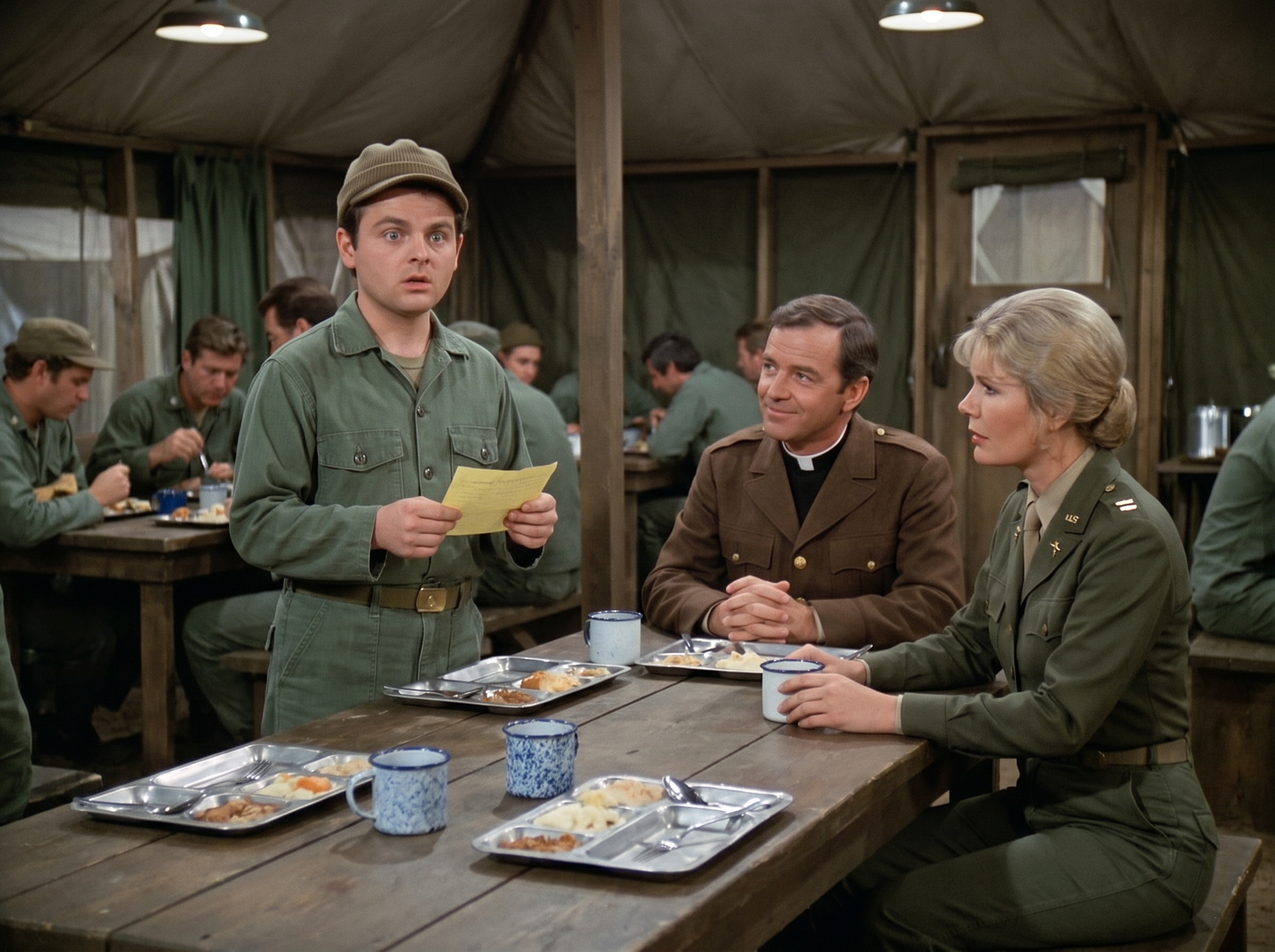
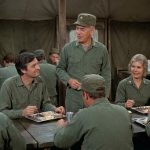
The mess tent at the 4077th smelled like powdered eggs, damp canvas, and the collective exhaustion of people who hadn’t slept enough in seventy-two hours. It was a quiet lull—that rare, precious sliver of time where the choppers weren’t overhead and the scalpels were finally resting.
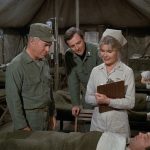
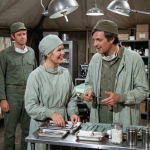
Father Mulcahy sat across from Major Margaret Houlihan, his hands clasped as if in prayer, though he was really just trying to keep them from trembling from sheer fatigue. Margaret, ever the model of composed efficiency, held her coffee mug with both hands, her eyes fixed on the man standing before them.
It was Radar. He looked as though he’d been dragged through a swamp, his cap pulled low, clutching a yellow piece of paper like it was a map to hidden treasure. He looked wide-eyed and breathless, a small, earnest figure holding the entire attention of the table.
“I—I think you need to see this, sir,” Radar stammered, his voice cracking just slightly. “It came in the mail pouch from home. It’s… well, it’s not exactly what I expected.”
Father Mulcahy leaned in, a flicker of concern creasing his forehead. Margaret sighed softly, shifting her shoulders, her professional guard dropping just enough to show genuine worry.
“Is it bad news, son?” Mulcahy asked, his voice gentle and steadying.
“I don’t know, Father,” Radar whispered, his eyes darting toward the canvas ceiling as if checking for ears. “But if this gets out, I think the whole camp might just turn inside out.”
He began to read, his voice barely audible over the clatter of silverware from the other tables. As he finished the first paragraph, the color drained from Margaret’s face, and the Father’s hands flew to his mouth in absolute, stunned silence.
“They’re doing *what*?” Margaret gasped, her voice sharp enough to cut through the hum of the mess tent.
Radar stood frozen, the yellow paper trembling in his grip. “It says right here, Major. The state fair back home… they’ve officially decided to hold a ‘Most Resembling Corporal’ contest. And the prize is a lifetime supply of tractor oil and a blue ribbon.”
The absurdity of it hung in the air for a long, heavy second. Father Mulcahy blinked, then blinked again, trying to process the sheer, small-town weirdness of the request. He looked at the paper, then at Radar’s earnest, slightly bewildered face, and then at Margaret.
Margaret, who had spent her entire career demanding order and protocol, suddenly let out a sound that was half-choke, half-laugh. It bubbled up from her chest, escaping before she could stop it.
“A lifetime supply of tractor oil?” she wheezed, covering her mouth with her napkin. “Radar, are they actually serious?”
“They even sent an application form,” Radar said, his voice regaining some of its usual rhythm. “They want a photo. And they want me to verify my own height, weight, and… ‘general teddy-bear-like demeanor.'”
The tension that had gripped the table vanished, replaced by the ridiculous, healing absurdity that only the 4077th could produce. Father Mulcahy began to chuckle, a soft, wheezing sound that soon turned into a genuine belly laugh.
Even Margaret, usually so stern, was now leaning back, a genuine, unburdened smile breaking across her face. It was the first time they’d seen her truly relax in days.
“Well, Corporal,” Mulcahy said, wiping his eyes, “I suppose if you win, you’ll have to decide which tractor in Korea is the most deserving of that oil. Perhaps we could start with the one that’s been rattling the Colonel’s jeep to pieces for the last month.”
Radar looked down at the paper, the weight of the war, the mud, and the long nights seemingly lightened by the sheer, ridiculous joy of being remembered for something so utterly pointless. He managed a small, shy smile—a look of pure, sweet relief.
“I don’t think I’m very good at being a teddy bear, Father,” Radar said modestly, though he clearly looked pleased.
“Oh, I wouldn’t be so sure, Radar,” Margaret added, reaching out to pat his sleeve with a rare, lingering touch of genuine affection. “In a place like this, being the only person who still believes in something as simple as a blue ribbon might be the most important job in the camp.”
The mess tent went on with its noise, the soldiers eating their bland food and nursing their lukewarm coffee, completely unaware of the small victory happening at the end of the table. For a few minutes, there was no war, no operating theater, and no pressure.
There was just a friend, a yellow piece of paper, and the quiet, steady warmth of a family that had been built on nothing but grit and the grace of laughing at the wrong time. As the afternoon light filtered through the tent flaps, turning the dust into gold, the absurdity of the world didn’t seem quite so heavy anymore.
Sometimes, the only thing that keeps us sane is the realization that, somewhere, someone is still worrying about tractor oil.