The Last Cup and the Silence Between Them
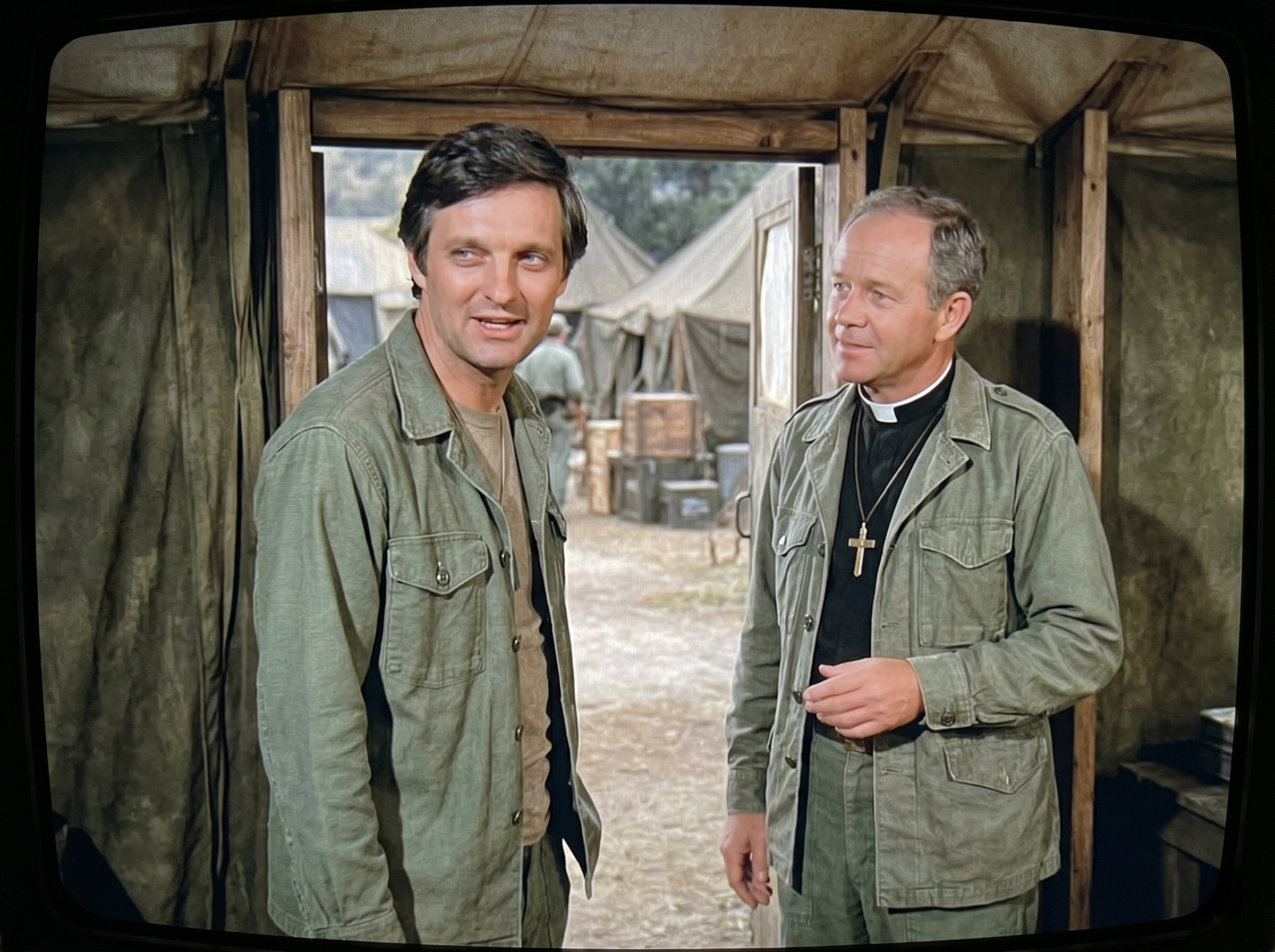
Sometimes, the best medicine in the 4077th didn’t come from a syringe or a scalpel. Sometimes, it was just the presence of a friend. Or, in this case, the presence of a man of God. We all know how rare those quiet, still moments were. But in this memory, there’s a distinct silence, and it’s heavy.
Captain Benjamin Franklin “Hawkeye” Pierce was tired. It was that bone-deep kind of fatigue that doesn’t go away with an hour or even a day of sleep. It was a fatigue that seeped into your marrow. He felt older than his father. And yet, there he was, standing outside the Swamp, not inside collapsing.
Across from him stood Father John Mulcahy. Mulcahy always seemed to possess a quiet, unassuming strength. While we were all prone to losing our temper or our patience, he had this endless well of gentleness. He had seen the same horrors as the rest of us, but he never let it break him.
Or so we thought. Because when I saw him that day, I noticed something in his eyes.
They were looking at the same thing Hawkeye’s were. The view just outside the door of the Swamp. Past the supply tents, the rows of O.R. tents, and into the dusty, barren compound. A chopper was just rising, carrying the last of the casualties from a five-day-long endless surgical marathon.
The compound was, for once, quiet. But that quiet was a vacuum, just waiting for the next noise of incoming. It was the silence of anticipation.
We had all been working around the clock. Margaret was near collapse. Colonel Potter was barking orders in a rasping whisper. Winchester had retreated to the absolute precision of his scalpel, his sarcasm a sharp, fragile defense mechanism. B.J. was writing another letter, his face set.
But this particular moment… this moment was just about these two men. Two very different men, united by the shared experience of that hell.
And the silence was the heaviest thing they had ever lifted.
Mulcahy broke it first. It wasn’t with a prayer, or a wise word. It was a simple question.
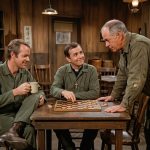
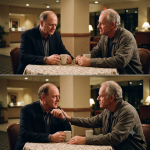
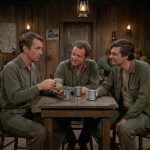
“Would you like some coffee, Hawkeye?” He nodded towards a small silver cup he had picked up, likely a stray from the mess tent that had made its way to the Swamp’s door.
Hawkeye looked down at the cup. It was tarnished and dented. Not exactly fine china. He managed a tired smile. It was a practiced, defensive smile, but a smile nonetheless.
“Coffee? Father, I wouldn’t call whatever that brown stuff they serve coffee. I believe I read in the Geneva Convention that a country can’t be forced to drink anything they’d use to paint a battleship.”
“Ah, but a bad cup of coffee,” Mulcahy countered, his voice soft, “is better than no coffee at all. And it might be a step up from the paint stripper I suspect you use.” He was referencing the still, of course. He never lectured, but he never pretended he didn’t know.
The wit was a mask for Hawkeye, a way to keep from screaming. And Mulcahy, as usual, simply let it slip away. He offered the cup of coffee. That small gesture. That’s all.
Hawkeye took a deep breath. The exhaustion was so profound it was almost visible. But as he looked at Mulcahy, and the tarnished cup, a shift happened. The defensive, sarcastic expression softened. The joke about the paint stripper was his last defense, and it was falling away.
This wasn’t a time for wit. It was a time for simple humanity. For a moment, the world didn’t have any wars, or any more wounded, or any more surgeries. It just had two men and a cup of coffee.
“Thank you, Father,” Hawkeye said, taking the cup. His voice was quieter than usual. The joke was gone. Just gratitude and fatigue.
“It’s not good, Hawkeye. But it’s yours.”
“That sounds like the theme song to this whole mess,” Hawkeye muttered.
The two men didn’t say anything more. Hawkeye sipped the coffee. He grimaced slightly. It was, indeed, terrible. But as he held the cup, he felt a warmth spread through him, not just from the liquid. It was a warmth of a connection. Of being seen and understood by someone who wasn’t a surgeon or a patient.
They stood there for another long minute. They looked back out at the tents and the dust. The war didn’t disappear. It was still out there, waiting. The next chopper was coming. The next case, the next wound, the next life to try to save.
But for a few seconds, it was pushed back. Just long enough for a tired surgeon to have a terrible cup of coffee, given to him by a simple man of God. It was a quiet moment, but it was everything. A moment of tenderness, human care, and the shared burden of being alive in a time of death.
They would soon be back in the O.R., elbows deep in blood. They would laugh, they would joke, they would cry. But this memory, this quiet moment between surgeries, was the heart of the 4077th. This was what kept us from becoming monsters. This was found family. This was home, as terrible as it was.
Because even in a war zone, there’s always a place for tenderness.
They say you can never truly leave the 4077th, and moments like this are the reason why.