The Symphony of the Swamp: When Mozart Came to Korea
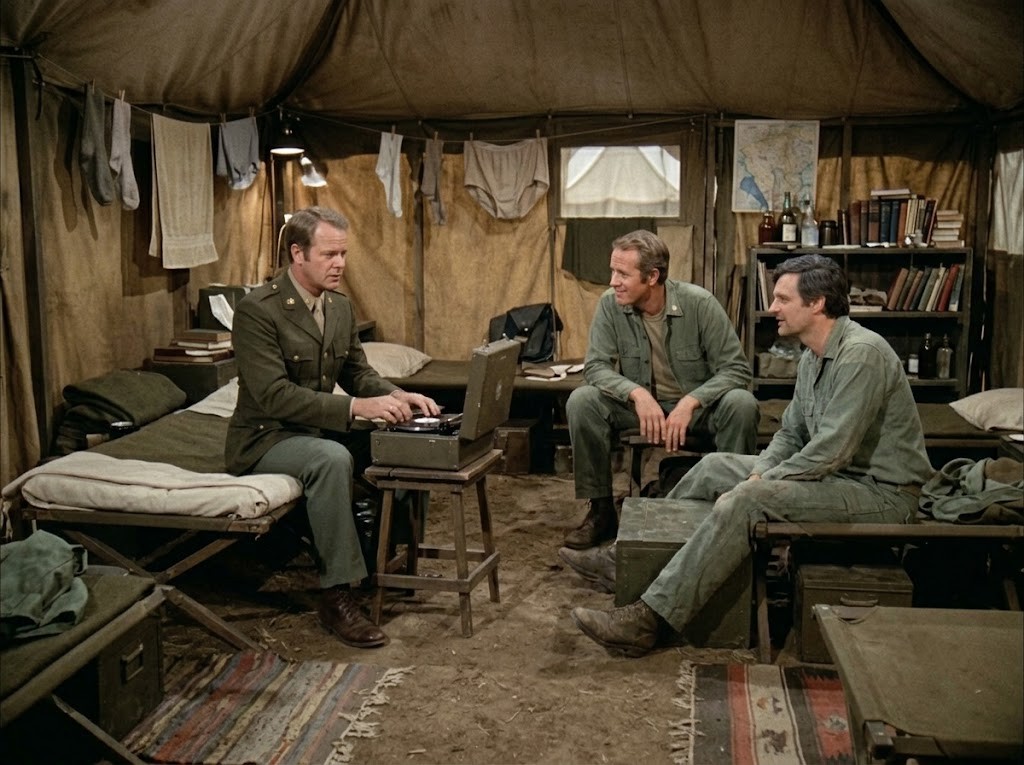
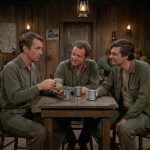
The mud in Korea has a way of seeping into your very bones, but it’s the silence after a forty-eight-hour session in the O.R. that truly echoes. In the permanent twilight of the Swamp, surrounded by hanging laundry, olive drab canvas, and the faint scent of cheap gin, three tired men sat waiting for a miracle wrapped in shellac.
Major Charles Emerson Winchester III sat stiffly on the edge of his cot in full dress uniform, looking like an exiled king who had misplaced his throne but refused to part with his posture. Between them sat a wooden stool holding a portable, olive-drab record player—its lid propped open like a treasure chest.
“If this needle so much as scratches the vinyl, Pierce, I shall have you transferred to a veterinary unit in the furthest reaches of the Aleutians,” Charles warned, his Bostonian accent sharp enough to slice Spam. His hands hovered over the turntable with a reverence usually reserved for open-heart surgery.
Hawkeye Pierce, leaning back on his own cot with a weary grin etched into his face, let out a dry, exhausted chuckle. Beside him, B.J. Hunnicutt leaned forward from his bench, resting his hands on his knees, a soft, expectant smile playing under his mustache.
They had just endured a relentless influx of casualties, their hands cramped from hours of stitching up young boys, and their souls bruised by the unceasing weight of the war. The arrival of a pristine, unbroken classical record from Boston was the only thing keeping the walls from closing in.
Charles carefully lowered the tone arm, his face a mask of intense concentration. For a long, agonizing second, there was only the rhythmic, comforting hiss and crackle of the needle finding the groove.
Then, the first rich, melodic notes of a Mozart concerto bloomed into the damp, dirt-floored tent.
The music was clean, pure, and entirely uninvited by the harsh reality of the Korean peninsula. It drifted up into the canvas rafters, cutting through the heavy smell of sterilization and fatigue, wrapping around the hanging socks and towels like a warm blanket.
Hawkeye closed his eyes, his cynical edge instantly softening as the melody carried him thousands of miles away from the sound of distant artillery. B.J.’s eyes stayed fixed on the spinning disc, his smile deepening as he thought of Peg and the quiet, sunlit afternoons back in California.
Even Charles seemed to transform; the rigid, defensive walls he built around his aristocratic pride began to melt, his eyes turning glassy and distant as the music brought him back to the Boston Symphony Hall.
For a few beautiful minutes, the war simply ceased to exist inside the Swamp.
But just as the concerto reached its most breathtaking, soaring crescendo, a sudden, violent screech tore through the music. The needle jumped wildly across the grooves, leaving a gut-wrenching silence in its wake as the turntable ground to a sudden, dead halt.
Charles froze, his hand suspended in mid-air, his face turning an alarming shade of crimson as the fragile peace evaporated instantly.
“Sacrilege!” Charles roared, slamming his hands onto his knees as he glared at the machine. “An absolute, unmitigated tragedy! This wretched, primitive contraption has murdered Mozart!”
Hawkeye didn’t joke, and B.J. didn’t smile; the loss of the music felt like a physical blow to the chest, snapping them violently back to the reality of their canvas cage.
Before Charles could throw the phonograph out into the mud, the tent flap pushed open, and Radar O’Reilly stepped inside, holding a stack of requisitions and looking characteristically anxious.
“Uh, excuse me, sirs,” Radar piped up, his large glasses catching the dim light of the tent. “Colonel Potter wants to know if the wounded duck you’re playing in here can be turned down. It’s keeping his thumbs from twitching correctly during his solitaire game.”
“It was not a wounded duck, Corporal, it was genius!” Charles snapped, his voice cracking with genuine, heartbroken frustration. “But it matters not. The spring motor has perished. We are condemned to total cultural starvation.”
B.J. stood up, stepping closer to the stool, and gently patted Charles on the shoulder. “Easy, Charles. Don’t call the time of death just yet. Let’s see what we can do.”
Hawkeye slid off his cot and knelt in the dirt next to the record player, his surgeon’s fingers moving with instinctive care as he examined the crank mechanism. “You know, Winchester, back in Crabapple Cove, my dad and I used to fix old Victrolas with nothing but a pair of pliers and some stubborn optimism. Let’s look at the patient.”
For the next twenty minutes, the hierarchy of the US Army completely dissolved in the middle of the Swamp.
Radar dropped his papers and knelt down to hold a flashlight, his observant eyes watching Hawkeye’s every move. B.J. used a pocketknife to carefully adjust a jammed gear inside the casing, while Charles—completely forgetting his disdain for manual labor—anxiously handed over tools like a scrub nurse in a high-stakes operation.
“Steady, Pierce… watch the mainspring,” Charles muttered, leaning in so close his pristine uniform brushed against Hawkeye’s faded fatigues.
“If I can repair a lacerated vena cava with a piece of fishing line, Charles, I can handle a wind-up toy,” Hawkeye muttered, though his brow was furrowed with genuine focus. He gave a tiny, precise twist to a small screw inside the gears.
A sharp *click* echoed through the tent. The turntable suddenly gave a tentative, experimental spin.
“We have a pulse!” Radar cheered, jumping up and bumping his head slightly on a hanging clothesline.
Charles let out a breath he seemed to have been holding for an hour. With trembling, reverent fingers, he repositioned the needle at the very beginning of the track.
The hiss returned, followed once more by the brilliant, golden notes of the concerto, filling the small tent with an even greater warmth than before.
The music spilled out through the mesh windows of the Swamp, drifting across the compound. Across the camp, Father Mulcahy paused on his way to the chapel, a serene smile crossing his face. Near the office, Margaret Houlihan stopped in her tracks, her stern posture softening as she listened to the distant, beautiful melody. Even Colonel Potter leaned back in his chair, putting his cards down, letting the music wash over his tired shoulders.
Inside the tent, the four men sat in a quiet circle around the small wooden stool. The humor and friction of their wildly different backgrounds faded into the background, replaced by the profound, unspoken bond of a found family surviving together in the middle of nowhere.
They were exhausted, they were homesick, and they were surrounded by a war that made no sense—but for the duration of a three-minute record, they were completely at peace.
Sometimes, the best medicine in the 4077th didn’t come from the pharmacy, but from a scratched piece of vinyl and the friends who helped you keep it spinning.