A Quiet Moment in the Mess Tent
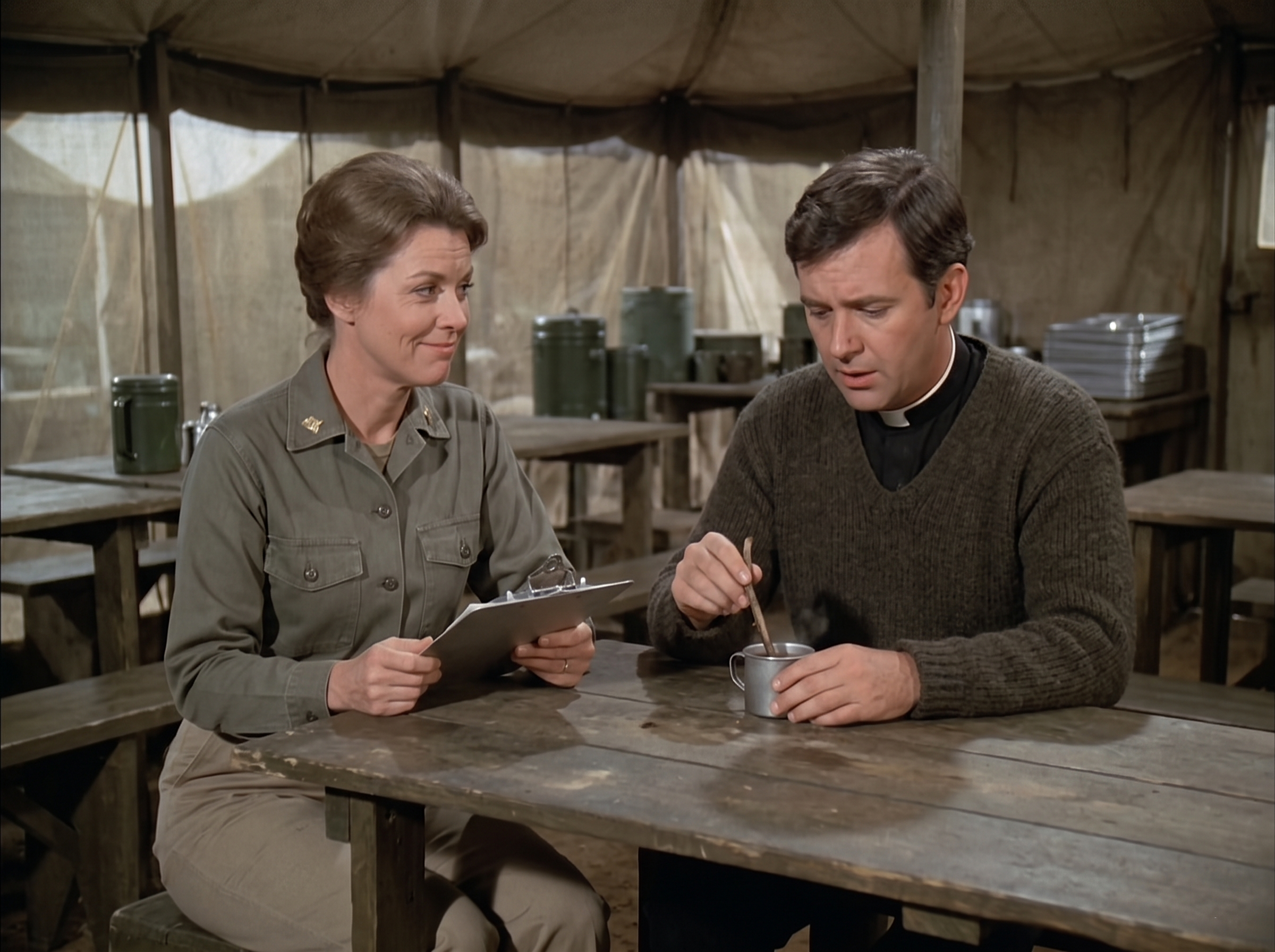
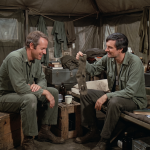
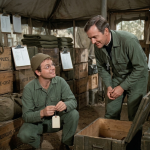
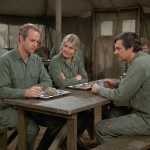
The coffee in the 4077th was less of a beverage and more of a chemical experiment, a dark, sludge-like substance that usually tasted like disappointment and charcoal. Yet, for Father Mulcahy, sitting at one of the scarred, splintering wooden tables in the mess tent, the tin cup in his hands was a tiny, grounding anchor in a world that felt increasingly unmoored. He stirred it slowly, the wooden spoon clinking softly against the metal, his brow furrowed in deep, quiet concentration.
Across from him, Major Margaret Houlihan sat with her clipboard, her uniform crisp despite the relentless Korean humidity. She looked tired, the kind of exhaustion that settled behind the eyes and refused to leave, but there was a softness in the way she watched the Father. They were miles away from the operating room, away from the screaming sirens and the endless, rhythmic thud of the choppers.
“It’s not going to get any better with more stirring, Father,” she said, her voice lacking its usual sharp edge of authority. She tilted her head, a rare, faint smile touching her lips as she looked at him.
Mulcahy looked up, startled, his gentle eyes blinking behind his glasses. “I’m not entirely sure I’m trying to make it better, Margaret. I think I’m just trying to make it… different.”
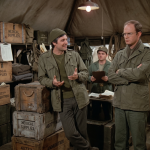
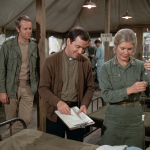
He took a tentative sip, winced, and set the cup back down with a clatter. Margaret leaned forward, the clipboard resting heavily on the table. The air in the tent was heavy with the smell of canvas and damp earth, a stark reminder of where they were, but for a moment, the war felt like a distant, low-frequency hum. Then, suddenly, the tent flap whipped open, and the frantic, unmistakable voice of Radar O’Reilly cut through the stillness like a jagged blade.
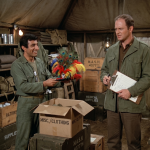
“Major! Father! You gotta come quick—the generator’s acting up again, and it’s taken out the refrigerator, and the supply sergeant says he’s got a crate of fresh eggs that are gonna be omelets by noon if we don’t fix it right now!”
Margaret stood up abruptly, the metal chair screeching against the dirt floor, her professional mask slamming back into place. Mulcahy jumped, nearly knocking over his coffee, his heart hammering against his ribs as the peace of the afternoon shattered into a dozen pieces. Everything suddenly felt urgent, critical, and utterly overwhelming.
“Eggs, Radar?” Margaret snapped, though her eyes betrayed a glimmer of genuine panic at the thought of losing the mess hall’s one reprieve from Spam. “Why is it always the eggs?”
“I don’t know, Major! I just know that if I have to serve powdered eggs for dinner, the Colonel is going to have my head on a platter, and not in a good way!”
Mulcahy watched them, his hands still trembling slightly from the sudden interruption. He realized then that their little moment of respite hadn’t been an escape from the war; it was just a brief pause before the next necessity. He stood up slowly, smoothing his sweater, his gaze shifting from the frantic corporal to the determined Major.
“Let’s go, then,” he said softly. “Perhaps I can offer a prayer for the refrigeration unit, though I suspect a wrench would be more effective.”
Margaret paused, her hand hovering over her sidearm, her posture rigid. She looked at the Father, then at the half-finished, lukewarm sludge in his tin cup. The frantic energy of the moment seemed to pull back, just an inch, as she caught the quiet, weary smile on his face. She took a breath, her shoulders dropping, and the tension in her jaw eased.
“You bring the wrench, Father,” she said, her voice dropping to a conspiratorial whisper. “I’ll handle the supply sergeant. And Radar? Take a breath. If the eggs go, they go. We’ve faced worse than a lack of breakfast.”
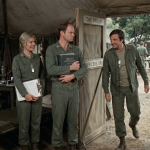
As they hurried toward the exit, the tent felt suddenly, strangely empty. The silence rushed back in, but it wasn’t the same silence as before. It was a comfortable, knowing quiet, the kind that only exists among people who have seen too much and yet still choose to care about the small things—like a crate of eggs or a quiet cup of coffee.
They stepped out into the blinding afternoon sun, ready to face the petty, exhausting, beautiful absurdity of their lives once again. The war was still there, looming over the hills, but for a few minutes, they had shared a table, a laugh, and the simple, profound comfort of being known. That was enough. It had to be.
In the heart of the 4077th, even the smallest moments of kindness were the victories that kept us going.