The Last Train from Rosie’s
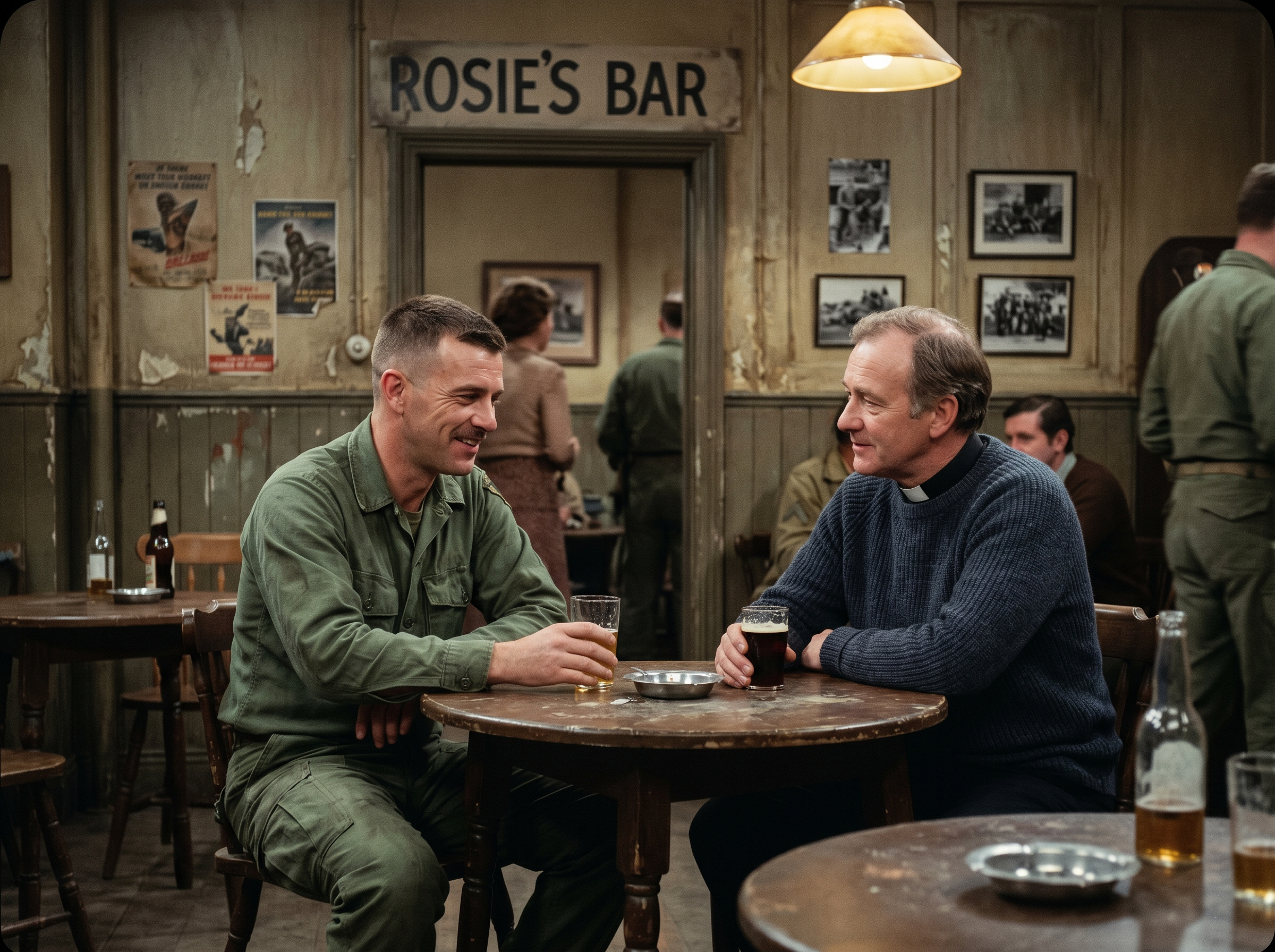
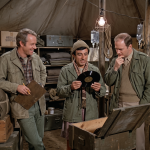
If there’s one place that never quite changes in Korea, it’s Rosie’s Bar. The dim light, the smell of dust, sweat, and cheap whiskey—and that sign above the door, a beacon in the night. Inside, under a single, low-hanging lamp, two men sat. One in olive drab, the other in clerical black and a blue sweater, two unlikely brothers-in-arms sharing a quiet moment.
They were talking, softly, beneath the gentle rumble of the surrounding room. The captain, whose wide smile and mustache marked him as a man of laughter, was telling a story. He held a glass of light lager, swirling it slightly as he spoke, his eyes alight with a rare joy. The father, listening with that familiar, patient warmth, was holding his own dark stout, his expression attentive and kind.
This was a small ritual, a reprieve from the noise and blood of the 4077th. In these moments, they weren’t just surgeons or chaplains; they were just two people, sharing the simple comfort of being known. Behind them, through the doorway, the blurry shapes of other soldiers and Koreans moved, a reminder that the world outside was still spinning.
Suddenly, the conversation lulled, and a shared silence, deeper than the usual quiet, settled between them. The chaplain looked down at his glass, and the captain’s smile softened into a thoughtful gaze. In that quietude, something shifted. A single word was spoken, a word that would normally bring cheers but was now layered with an unexpected weight.
“Radar’s leaving.”
The word hung in the air, heavier than any artillery shell. Radar. The kid. The pulse of the 4077th. He was finally going home. The captain’s eyes, normally so full of life, were distant now. “He was just a kid when he got here, Father. Still is.” He paused, looking down at his drink. “Sometimes, I forget just how young they all are.”
The priest, too, was reflective. “He has been the finest of us, Captain. The heart that beat when the rest of us were tired.” He raised his glass slightly. “Here’s to the heart of the 4077th.”
They drank, and then the captain smiled, a quiet, different kind of smile. “Remember that time he tried to sneak that local kid into the camp as a replacement for the laundry unit?”
The father chuckled. “Oh, yes. The one who insisted he was a top-tier surgeon because he’d once seen a pig having piglets?”
The laughter grew, filling the small space. They spent the next hour trading stories, each memory a thread in the rich fabric of their shared history. Radar’s innocent mistakes, his fierce loyalty, his knack for knowing what the colonel needed before the colonel himself knew. They were the stories of a place where humanity still flourished amidst the darkness.
As the bar began to empty, and the light grew slightly brighter with the approach of dawn, the captain put down his glass. “We’re all just waiting for our own last train, aren’t we, Father?” He looked at the other man, a serious question hidden beneath a casual tone.
The chaplain nodded. “In one way or another, yes. We wait, and in the waiting, we live, and we find ways to light the darkness for each other.”
They walked out of Rosie’s and back toward the camp, the morning light a pale gray over the hills. The captain looked back at the dim glow of the bar, then at the camp spreading out in front of him. “You know, Father,” he said, slinging his arm around the priest’s shoulder. “Even if the trains here don’t always run on time, at least we have good company while we wait.”
And so the 4077th marched on, missing one small, earnest heart, but never forgetting the life it brought to us all.