The Weight of the Clipboard, the Strength of the Hand
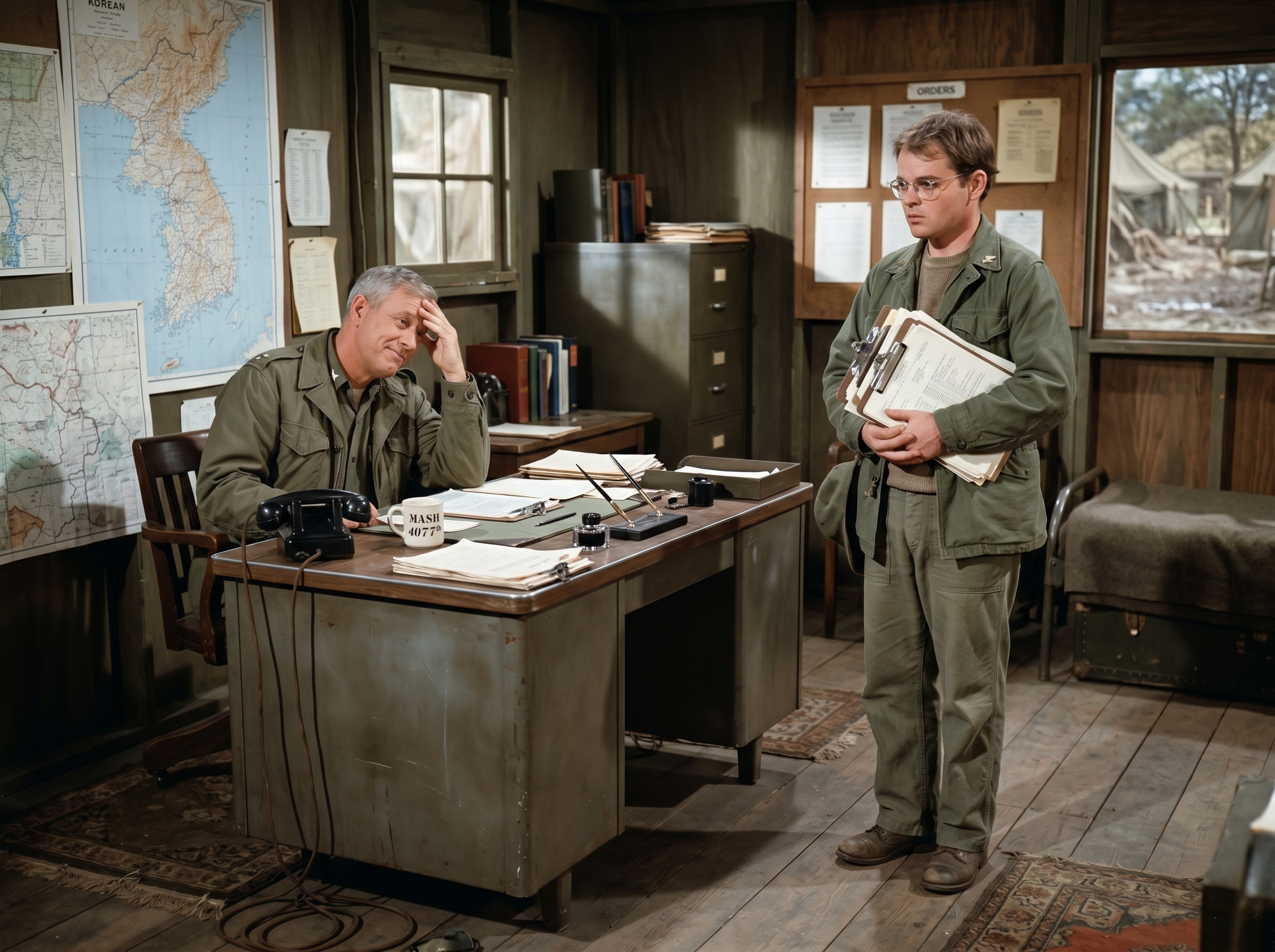
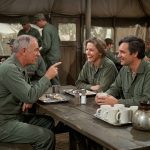
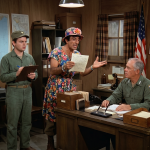
Look at the image: Colonel Potter is slumped at his desk in k4_clean.jpg, massaging his temples. It’s a classic posture at the 4077th. He looks up and catches Radar’s eye—the familiar, weary exchange of command fatigue. Radar is standing perfectly still, as always, his stack of clipboards hugged to his chest. This is their world.
The clipboards were heavy that day. Really heavy. Not because of the paperwork, but because of what was written on it. This batch didn’t just list supplies of canned peaches and penicillin.
For several quiet minutes, the office was silent, save for the scratching of Potter’s pen. Outside, the sounds of the camp drifted in—a truck engine backfiring, Margaret yelling about something, perhaps a stray joke from Hawkeye. The normal chaos felt strangely absent in this corner of the compound.
Radar held the paperwork tightly. He had just finished explaining the morning’s communications. He’d handled the incoming signals, sorted the requisition requests, and delivered the bad news to B.J. about a delayed package from Peg. The worst part was always the transfer requests.
Potter finished signing a form and exhaled. “Is that all of it, son?” He looked at the stack remaining in Radar’s arms.
Radar swallowed. “No, sir. There’s… this.”
He carefully slipped the single clipboard from the bottom of his stack and placed it on the green blotter. He didn’t make eye contact. He just stared at the phone. It was a single-page document, but it felt like lead.
Potter picked up his reading glasses. He didn’t have to read it. He knew the name, the service number. It was Private First Class Benjamin ‘Bunny’ Davis. He was eighteen. He was the kid who always had a smile, even when he was peeling the most rotten potatoes. He was the kid who had been helping Father Mulcahy organize the orphaned children’s school supplies. He was the kid who was always first in line to offer an extra hand.
PFC Davis had arrived at the M*A*S*H a month ago. He was wounded, but stable. He’d survived the OR. Everyone had thought he was one of the lucky ones. Then, yesterday, he collapsed. They tried, of course. But he didn’t make it. The official cause: ‘Complications.’ Just one word that felt so inadequate to describe the loss of all that brightness.
This was the notification. The one Colonel Potter had to sign. The one that officially began the bureaucratic process of telling a mother in Ohio that her ‘Bunny’ was gone. Radar had pre-drafted the accompanying letter from the Colonel, but even that felt hollow.
Potter looked at the paper. His hand trembled slightly. The pen hovered.
“I just can’t write it,” Potter whispered, looking not at the paper, but at the empty space on his desk. His voice, usually so steady and commanding, cracked.
Radar, seeing his CO’s pain, gripped his stack of clipboards even tighter. In that moment, the entire burden of command seemed to rest on that single signature. He didn’t know what to do, and time just stopped in that office.
Potter just stared at the empty space on the desk. He hadn’t looked up yet. The silence stretched.
Radar shift his feet quietly. He could feel the eyes of the clipboard ghosts staring at him. He could almost hear ‘Bunny’ Davis laughing about the giant rutabaga he found.
Potter finally dropped his hand and let it fall. He reached for the coffee cup with the ‘MASH 4077th’ logo, needing a moment of simple familiarity. He took a sip, but it had gone cold.
Radar made a move. He didn’t say a word. He placed the heavy stack of other clipboards on the side of the desk, freeing his hands.
Potter watched him, but said nothing. He watched Radar take a clean, unused pen—not the leaky one—and place it in Potter’s limp hand. Then, Radar gently took Potter’s other hand and gave it a small, reassuring squeeze, right there, under the watch of all the maps.
It was such a simple, quiet gesture of solidarity. It wasn’t formal. It was human.
Potter looked up. His eyes, rimmed with fatigue, met Radar’s earnest face. The image in k4_clean.jpg doesn’t show tears, only the complex weight of two men sharing a heavy burden. But a quiet tear finally escaped Potter’s eye.
“Thank you, son,” Potter said softly. It was the only thing that needed to be said. He wasn’t a commander speaking to an enlisted clerk; he was a grieving old man thanking a compassionate friend.
With that small squeeze, something finally gave. The trembling in Potter’s hand eased. He lowered the pen to the paper.
It was one single stroke. It only took a second. But when it was done, the entire room seemed to breathe again.
He sighed, the long, heavy exhale of a man who had completed the hardest duty.
Radar took the clipboard, adding it to the stack of resolved paperwork. He picked up the pile and stepped back into his familiar spot, the clipboards safe in his hug again. The posture is what we see in the image—his duty fulfilled, standing ready.
Potter looked at his empty hands and then back at Radar. He didn’t speak. He didn’t have to. The quiet understanding was louder than any order.
“Keep a close watch on Davis’s family back home, won’t you, Radar?”
“Yes, sir. Already made a note,” Radar replied, his voice still a little tight. He hadn’t let go of the stack, not yet.
They just stood like that. The old soldier, the father of the unit, sharing the grief with the young man, the heart of the unit. The maps on the wall kept watch. The light filtering in showed only dusty, quiet peace.
Potter didn’t return to the rest of the pile immediately. He kept his head lowered, processing the moment. Radar remained at his side, just present. The war would start again in the next ten minutes, with a new casualty list and another broken truck. But for a single, small moment, this room held the tenderness of the entire unit.
Some burdens are too heavy for even a colonel, unless his clerk is there to share the load.