The Fabric of the 4077th
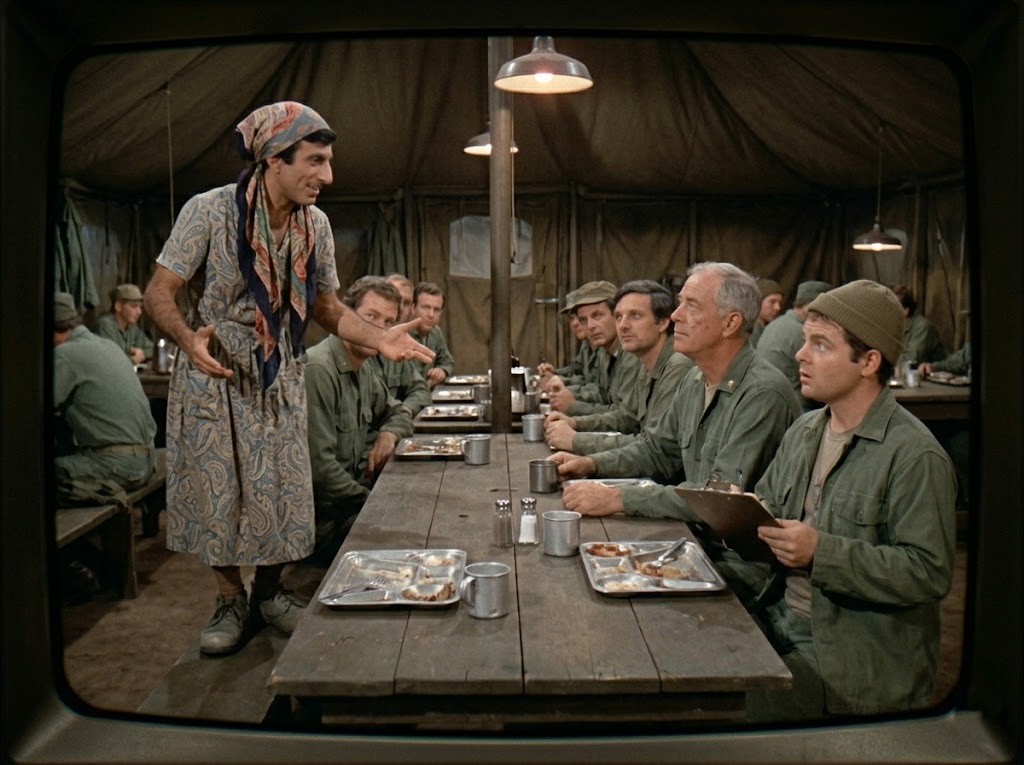
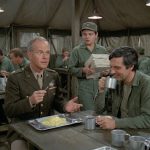
The Mess Tent always smelled of two things: stale powdered eggs and the heavy, exhausting scent of rain that had traveled too far across the Korean hills. Tonight, the metal trays clattered a little louder than usual. The overhead lights hummed a low, tired tune, casting long shadows across the wooden tables where the men of the 4077th sat shoulder-to-shoulder, their fatigues stained with the red clay of Uijeongbu.
They had been in the operating room for fourteen hours straight, a relentless convoy of helicopters keeping the scalpels moving until fingers went numb. Now, in the sudden, ringing quiet of the evening, the silence was almost too heavy to bear. Hawkeye Pierce stared down at his tray, his eyes bloodshot, his wit temporarily buried under the sheer weight of exhaustion. Beside him, B.J. Hunnicutt slowly stirred a cup of gray coffee, his mind thousands of miles away in San Francisco, wondering if his daughter’s first steps would look anything like the stumbling walk of a tired surgeon.
Then, the screen door banged open.
Corporal Maxwell Klinger marched into the Mess Tent, the screen door slapping shut behind him like a starter’s pistol. He wasn’t in uniform. Instead, he wore a vibrant, flowing paisley dress that looked like it had been salvaged from a trunk in Toledo, complete with a matching headscarf tied tightly around his brow. He didn’t look ridiculous; he looked like a man on a mission. Walking with a deliberate, theatrical stride that defied the mud outside, he stopped right at the head of the main table, gesturing broadly with his hands as if addressing a royal court.
“Gentlemen, and I use that term loosely based on the current hygiene in this tent,” Klinger announced, his voice cutting through the gloom. “I present to you the latest in Uijeongbu haute couture. Direct from the fashion capital of the Ohio River.”
A few heads turned. At the end of the table, Radar O’Reilly stopped his pen mid-air over his clipboard, his oversized green beanie pushed back on his head. His eyes wide, Radar looked up with that signature blend of earnest confusion and quiet innocence, trying to read the room before deciding whether to laugh or worry. Sitting next to him, Colonel Sherman Potter lowered his metal mug, his seasoned, fatherly eyes narrowing as he took in the sight. The old cavalryman’s face remained a mask of dry, military stoicism, but the faint twitch at the corner of his mustache betrayed him.
“Klinger,” Colonel Potter growled, his voice like gravel scraping against a shovel. “If you’re about to ask me for a Section Eight discharge based on that tablecloth you’re wearing, the answer is still no. And frankly, the pattern clashes with the mashed potatoes.”
The table fell silent. Hawkeye paused, a forkful of mystery meat hovering halfway to his mouth. B.J. leaned back, his eyes moving from Klinger’s defiant stance to the Colonel’s stern face. The tension in the tent hung by a single, fragile thread. The exhaustion was so thick you could carve it, and for a second, it felt like the whole room might just collapse into tears or anger from the sheer fatigue of the war.
Klinger drew himself up to his full height, his hands open, his expression shifting from theatrical confidence to something deeply serious. “Sir,” Klinger said, his voice dropping its usual playful cadence. “This isn’t about the discharge. Not tonight.”
The entire Mess Tent seemed to hold its breath. Radar slowly lowered his clipboard to the table, his fingers tracing the edge of the wood, his senses dialed in to the sudden shift in the air.
“Then what exactly is it about, Corporal?” Colonel Potter asked, his voice softer now, losing its hard military edge. He placed both hands flat on the table, looking at Klinger not as a commanding officer judging a soldier, but as a father watching a child who was trying very hard to say something important.
Klinger looked around the table, his gaze lingering on Hawkeye’s hollow cheeks and B.J.’s slumped shoulders. “I saw the trucks come in, Colonel. I saw the laundry coming out of the OR. You all look like you’ve been dragged through a keyhole backward.” He reached down and smoothed the front of the paisley dress, his fingers brushing the coarse fabric. “My mother always said that when the world gets dark, you put on something bright. You give the people you love something beautiful to look at, even if it’s just an ugly dress on a ugly guy from Ohio. I thought… maybe you guys just needed to see something that didn’t look like olive drab.”
A slow smile spread across Hawkeye’s face, the kind of smile that started in the eyes before it reached the lips. He dropped his fork onto the tray with a loud clatter. “Klinger, you beautiful, delusional bird,” Hawkeye muttered, his voice thick with affection. “You’re absolutely right. Olive drab is so last season. Tell me, does that ensemble come with matching combat boots, or are we going barefoot to the prom?”
B.J. let out a soft chuckle, shaking his head as he looked at the floor. “Personally, I think the headscarf really brings out the exhaustion in your eyes, Maxwell. It’s very… European peasant chic.”
“Laugh all you want, Captains,” Klinger said, a proud grin finally breaking through his serious facade. He turned around, doing a slow, graceful pirouette in the narrow space between the benches, letting the skirt flare out just enough to brush against the wooden table. “But while you’re making fun of my wardrobe, you’re not thinking about the artillery three miles away. And that means I’ve done my job.”
Radar watched the older men laugh, a warm, relieved smile finally breaking across his own face. He looked down at his clipboard, suddenly feeling the weight of the casualty reports lift just a fraction. He glanced up at the Colonel.
Colonel Potter picked up his mug again, taking a slow sip of the bitter coffee. He looked at Klinger for a long moment, the dry humor returning to his eyes. “Well, Corporal,” the Colonel said quietly, “if the Chinese see you in that, they’ll either retreat out of sheer confusion or send you an invitation to a dinner party. Either way, it keeps my doctors from falling asleep in their soup.” He nodded toward the empty bench. “Sit down and eat, Klinger. Before Hawkeye tries to perform surgery on your hemline.”
The Mess Tent didn’t suddenly become a happy place. The war was still just over the hill, the mud was still deep, and the next convoy of wounded was always only a phone call away. But as Klinger slid onto the bench, his colorful paisley dress stark against the sea of green uniforms, the silence changed. It was no longer heavy and suffocating; it was shared, warm, and distinctly human. They were a family built out of necessity and held together by the strangest things—sometimes by courage, sometimes by medicine, and tonight, by a man in a dress who just wanted to make his friends forget the color of war.
In the heart of the 4077th, home wasn’t a place on a map, but the quiet, beautiful moments we wove together out of whatever thread we could find.