The Music Box in the Mud
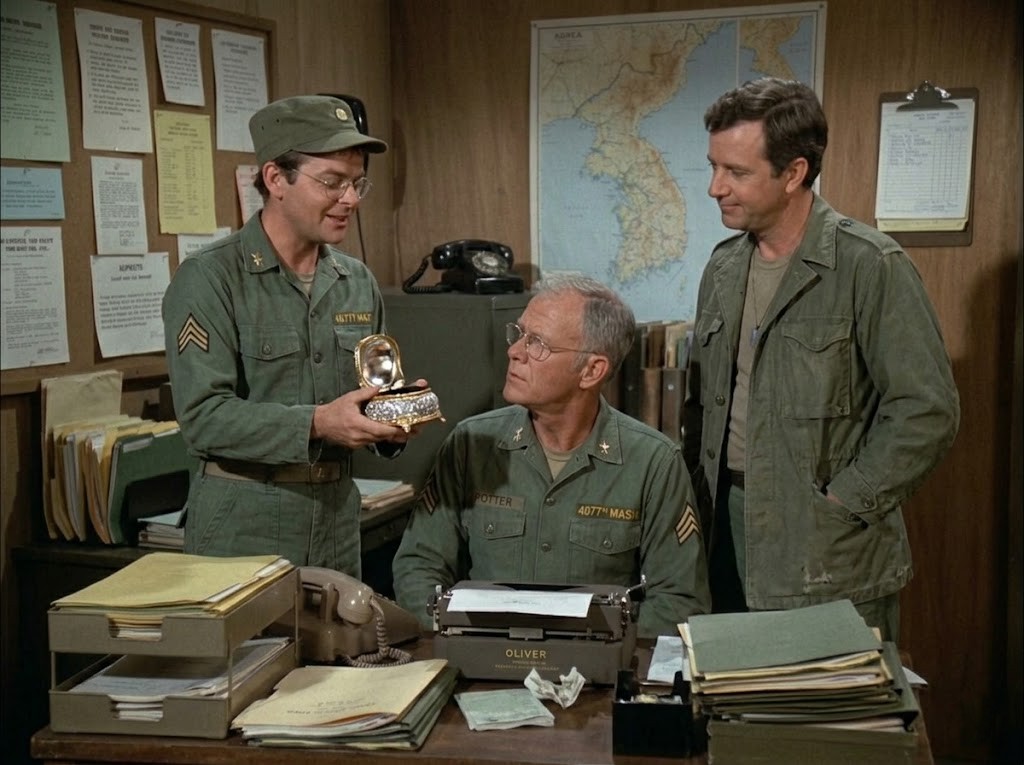
The Korean mud had a way of creeping into everything, from the seams of your boots to the corners of your soul. But inside the administrative office of the 4077th, the air smelled of stale coffee, mimeograph ink, and Colonel Potter’s favorite cigar smoke. It was a rare, quiet afternoon between incoming choppers, the kind of lull that made everyone hold their breath, waiting for the other shoe to drop.
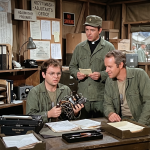
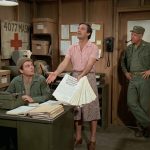
Radar O’Reilly stood beside the commander’s desk, holding an object so aggressively bright it seemed to belong to another planet. It was a small, ornate music box, encrusted with glittering faux jewels and polished to a blinding sheen. Radar held it as if it were made of spun glass, his eyes wide behind his spectacles, his face a mix of earnest pride and absolute terror.
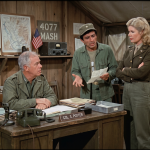
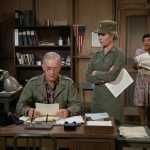
Colonel Sherman Potter looked up from his heavy Oliver typewriter, his spectacles perched precisely on his nose. His face was a roadmap of a lifetime in the cavalry and the medical corps, etched with the exhaustion of a war that wouldn’t end. He stared at the glittering trinket, then at Radar, his expression shifting from confusion to a deep, wary skepticism.
“Company Clerk,” Potter said, his voice a dry, gravelly rumble. “Unless that thing can magically turn into a fresh shipment of penicillin or a decent bottle of bourbon, I suggest you tell me why it’s sitting on my desk looking like a miniature disco ball.”
Standing just behind them, Captain B.J. Hunnicutt leaned against the wooden wall, his hands casually shoved into the pockets of his fatigue jacket. A faint, knowing smile played on his lips. Leave it to Radar to find a piece of absolute elegance in the middle of a war zone.
“It’s for the auction, Colonel,” Radar stammered, shifting his weight from one foot to the other. “For the orphanage in Uijeongbu. Sister Theresa said they desperately need winter coats for the kids before the frost sets in. I… well, I traded three cases of creamed corn and an old jeep tire to a supply sergeant from the 8th Army for it.”
Potter rubbed his temples, letting out a long, heavy sigh that seemed to carry the weight of the entire camp. “Creamed corn I can live without, Radar. But a jeep tire? In this mud? You’re lucky I don’t court-martial you and send you to live in the supply tent.”
“It plays a song, sir,” Radar whispered, his voice dropping to a tone of pure reverence. He gently wound the key on the bottom and lifted the lid.
Instead of a sweet, tinkling melody, the music box let out a horrific, metallic screech. It sounded like a dying cat trapped inside a meat grinder, a jarring, broken noise that shattered the quiet of the office and echoed off the wooden walls. Radar’s face went completely pale as the terrible grinding sound continued, refusing to stop.
The screeching noise seemed to vibrate through the floorboards. Radar frantically tried to slam the lid shut, but the mechanism was jammed, and the broken, metallic wail only grew louder, mocking the quiet afternoon.
B.J. took a step forward, his smile fading into a look of genuine sympathy. “Sounds like that 8th Army supply sergeant saw you coming, Radar. I think that music box survived one artillery shell too many.”
Radar looked as though he might burst into tears right there in front of the commander’s desk. His shoulders slumped, the bright enthusiasm draining out of him instantly. “I just wanted to get something nice,” he muttered, his voice cracking. “Something beautiful for the kids. Everything here is so gray and broken. I thought… I thought if they had something that played music, they could forget about the shells for a little while.”
Colonel Potter stared at the screeching box, then looked up at Radar. The annoyance vanished from the old man’s eyes, replaced by that deep, paternal warmth he usually kept hidden behind military discipline. He reached out and gently took the music box from Radar’s trembling hands.
“Give it here, son,” Potter said softly. He pulled a small screwdriver from his desk drawer—the one he used to fix the stubborn keys on his typewriter. With steady, practiced hands, he turned the box over, loosened a tiny screw, and gently adjusted the internal comb.
He flipped it back over and lifted the lid once more.
This time, there was no screech. Instead, a clear, delicate melody floated into the room. It was a simple, lilting lullaby, thin and sweet, completely out of place among the maps of Korea, the olive-drab filing cabinets, and the stacked casualty reports.
The three men stood in total silence, listening to the tiny notes fill the room. For a few brief moments, the war outside didn’t exist. There were no choppers, no operating rooms, and no mud. There was only a clean, beautiful sound.
“Brahms’ Lullaby,” B.J. said quietly, his eyes tracking the rotating gears inside the box. He thought of his daughter, Erin, back home in San Francisco, and a bittersweet ache settled into his chest. “My wife, Peg, sings that to the baby.”
“It’s a good tune,” Potter murmured, his voice softer than Radar had ever heard it. He closed the lid, silencing the music, and handed it back to the young clerk. “The children at the orphanage will love it, Radar. And as for that jeep tire… consider it an official donation from the United States Army.”
Radar’s face lit up, a brilliant, relieved smile breaking through his anxiety. “Thank you, Colonel! Thank you, Captain!” He cradled the box against his chest, turned on his heel, and practically floated out of the office to place it safely with the rest of the auction items.
Potter watched him go, then looked down at his typewriter, inserting a fresh sheet of paper. He glanced up at B.J., his usual dry smirk returning to his face. “If you tell Pierce I soft-hearteded a jeep tire, Hunnicutt, I’ll have you performing tonsillectomies in your sleep.”
B.J. smiled, turning toward the door to head back to the Swamp. “Your secret is safe with me, Colonel. Just don’t let anyone fix that typewriter. We’ve grown fond of the noise.”
In a place where everything felt broken, the 4077th always found a way to make the music play again.