A Quiet Toast at the End of the World
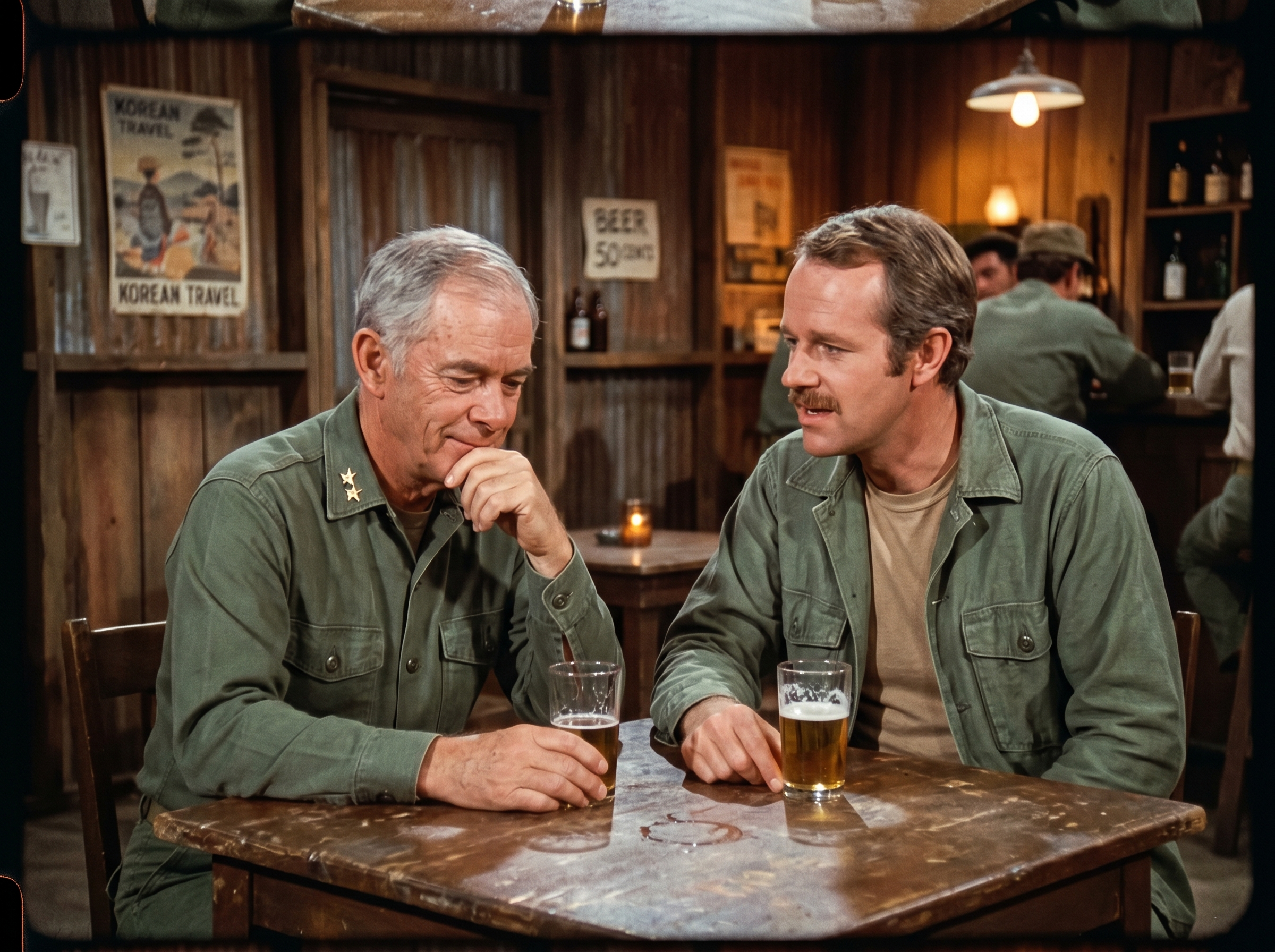
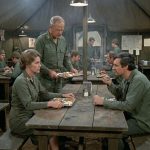
The beer was warm, the light was dim, and for the first time in thirty-six hours, the only thing dying in the 4077th was the fading daylight outside the mess tent.
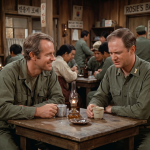
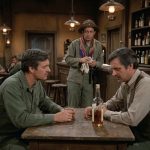
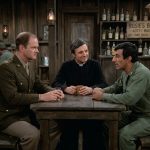
Colonel Sherman Potter sat at the small, scarred table, his fingers tracing the rim of a glass that had seen better days, much like the men drinking from them. Across from him, B.J. Hunnicutt leaned in, his mustache twitching with that familiar, tired smile that held more exhaustion than amusement.
It was one of those rare, stolen moments in Korea—a vacuum in time where the relentless thumping of choppers had finally ceased, leaving behind a silence so heavy it almost made your ears ring.
Potter didn’t look at the bar, or the posters on the corrugated walls, or even at B.J. He was looking at the bottom of his glass, lost in a memory of a farm in Missouri that felt a million miles—and a lifetime—away.
“You know, Hunnicutt,” Potter murmured, his voice like dry gravel smoothed over by time. “I’ve spent half my life trying to fix things that shouldn’t have been broken in the first place.”
B.J. stopped his own glass halfway to his lips, sensing the shift in the air. He didn’t reach for a joke; he didn’t offer a sarcastic jab about the quality of the brew. He just watched the Colonel, seeing the weight of the stars on those shoulders pressing down just a little harder than usual tonight.
“Maybe that’s the trouble, Colonel,” B.J. said softly, his blue eyes searching the older man’s face. “Maybe we’re not supposed to fix it. Maybe we’re just here to make sure no one has to face the breaking alone.”
Potter finally looked up, his eyes glassy and sharp with a sudden, painful vulnerability that made the room feel suddenly, terrifyingly small. He let out a long, shuddering breath, his hand trembling just enough to make the beer ripple in the light.
“That’s a fine sentiment, son,” Potter said, his voice cracking just at the edge, “but I’m afraid I’ve run out of ways to keep the glue together.”
The tension hung there, suspended in the amber liquid of their drinks, thick as the dust that clung to the tent flaps. B.J. didn’t pull away. He didn’t look for an exit. Instead, he set his glass down with a deliberate, firm click against the wood.
“Well,” B.J. said, his voice dropping into that steady, Midwestern cadence that had brought calm to so many frantic nights. “If the glue is gone, we’ll just have to hold it together with sheer, stubborn will. And I happen to know you’re the most stubborn man in the hemisphere, Colonel.”
Potter stared at him for a long moment, the corner of his mouth twitching, fighting the ghost of a smile. He let out a dry, wheezing laugh that started in his chest and eventually crinkled the corners of his tired eyes.
“You’re a pain in the neck, Hunnicutt,” Potter chuckled, finally lifting his glass. “A talented, irritating, pain in the neck.”
“I try my best, sir,” B.J. grinned, clinking his glass against the Colonel’s.
The sharp *clink* sounded like a bell in the quiet tent. It wasn’t a celebration, and it certainly wasn’t a victory. It was an acknowledgment—a silent pact between two men who had seen too much and were choosing, against all logic, to stay standing for one another.
Around them, the camp began to stir with the low hum of nighttime activity. Somewhere in the distance, a cook clattered a pot, and a dog barked at a passing jeep, but here, in this pocket of shadows and light, the war felt like a distant, angry storm that couldn’t quite reach them.
They sat there for a long time, not talking much. They didn’t need to. The conversation had already been finished, resolved not by words, but by the simple act of sitting together when the world wanted you to run.
They finished their beers in a comfortable silence, the kind that only exists between people who have shared the kind of hell that leaves scars on the soul.
As the Colonel finally rose, his joints popping with the protest of age, he clapped a heavy hand on B.J.’s shoulder. He didn’t say thank you; he didn’t need to. The squeeze of his fingers said everything that needed to be said about duty, about friendship, and about the fragile, beautiful absurdity of finding home in a tent in the middle of a conflict.
They walked out into the cool night air, leaving the empty glasses on the table, two small soldiers against the vast, dark expanse of the Korean hills.
They were tired, they were battered, and they were surely going to be exhausted again by dawn. But for this moment, they were whole, and that was enough.
Sometimes, the greatest act of courage is just showing up, glass in hand, to sit with a friend when the night feels too long.