The Gold Lamé Great Escape
It was a quiet Tuesday afternoon at the 4077th, which usually meant something was about to explode, or someone was about to try and walk to Toledo.
The morning had brought a heavy rush of wounded, leaving the camp draped in a familiar, bone-deep exhaustion. Now, the helicopters were gone, the O.R. was finally silent, and the late afternoon sun was baking the olive-drab canvas of the compound. The air smelled of dust, motor oil, and the faint, ever-present scent of iodine.
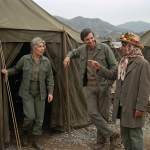
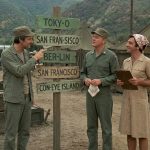
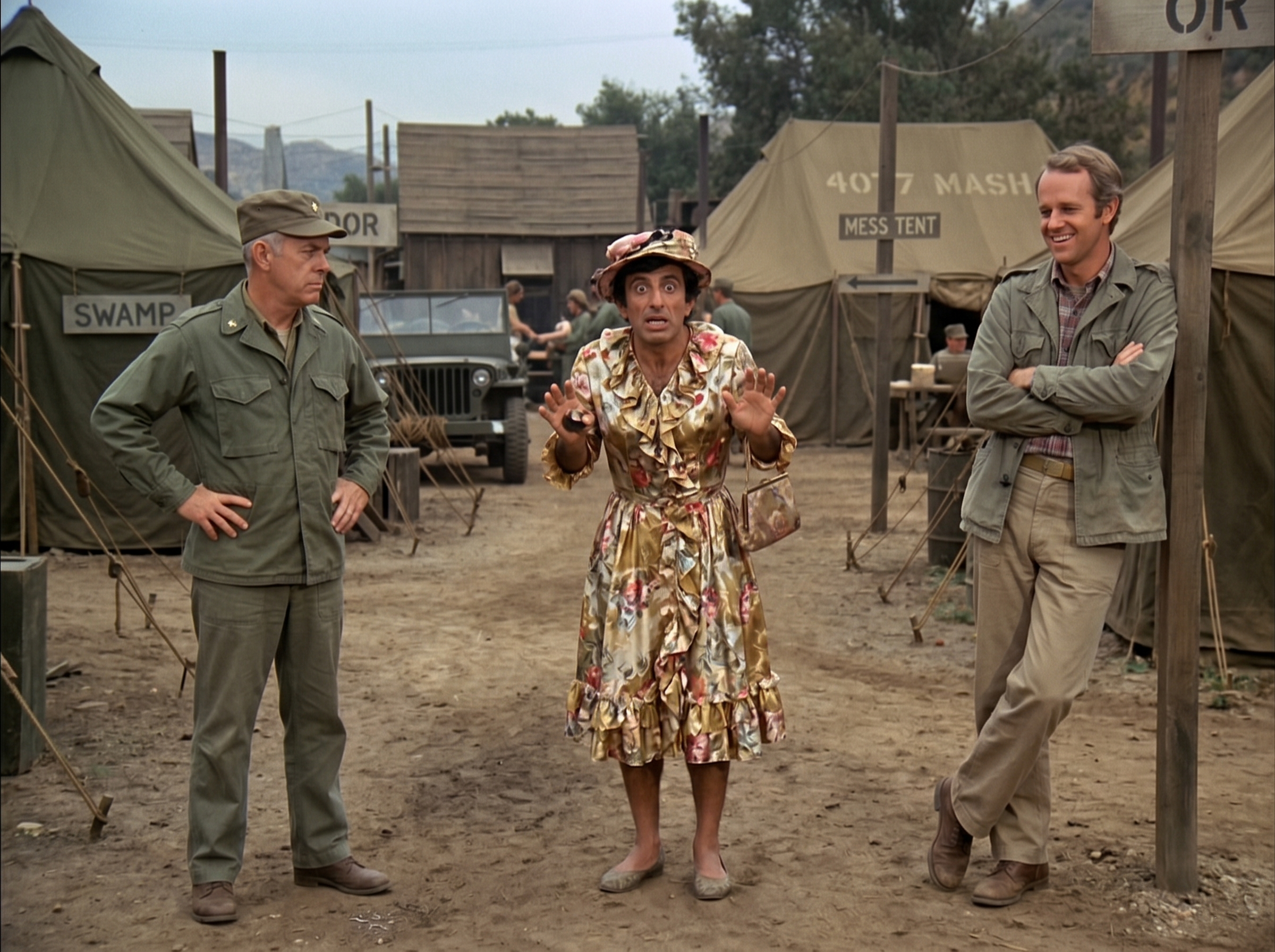
Captain B.J. Hunnicutt stood near the center of the compound, savoring a rare five minutes of doing absolutely nothing. He leaned casually against a wooden signpost, his arms comfortably crossed over his chest. His green fatigue jacket hung open over a faded plaid shirt, his posture radiating the relaxed relief of a man who had just spent twelve hours on his feet.
Beside him stood Colonel Sherman T. Potter. The commanding officer had his hands planted firmly on his hips, his green cap pulled low against the glare. Potter was surveying his camp with the weary, vigilant affection of a father watching over a yard full of unpredictable children.
For a brief moment, the war felt a million miles away.
Then came the rustle of taffeta.
It was a sound so completely out of place in a Korean War mobile army surgical hospital that both Potter and B.J. turned their heads in unison. Stepping out from the shadow of the tents, bathed in the muted sunlight, came Corporal Maxwell Q. Klinger.
He was a vision in ruffled gold.
Klinger had outdone himself. He was wearing a shiny, golden-yellow floral dress adorned with cascades of ruffles that fluttered in the dusty breeze. On his head sat a matching wide-brimmed hat, perfectly coordinated and decorated with a delicate pink ribbon. A small clutch purse dangled elegantly from his wrist.
He had timed the changing of the guard perfectly. He had plotted the blind spots of the camp. He was entirely convinced that today was the day he would simply stroll past the motor pool, flag down a passing jeep, and ride this wave of golden floral upholstery all the way back to Toledo, Ohio.
Klinger took a deep, dramatic breath of freedom. He took three confident, theatrical strides down the middle of the dirt path.
And then, he saw them.
Klinger froze in his tracks. His eyes went wide with sudden, absolute panic. His hands flew up into the air, palms facing forward in an instinctual gesture of surrender, his clutch purse dangling wildly from his forearm. His mouth fell open, caught halfway between a gasp and a fast-talking excuse.
He was caught. Dead to rights. Right in the middle of the open dirt compound.
Potter didn’t yell. He didn’t reach for his whistle. He just stood there, his hands still on his hips, staring down his company clerk with a look of stern, weary wisdom.
B.J. didn’t move from his post. He just let out a soft chuckle, a warm, knowing smile spreading across his face as he watched the golden statue of Klinger trembling in the dust.
The silence stretched over the compound, thick and heavy, waiting for the Colonel to drop the hammer.
The standoff lasted for a full ten seconds. Klinger didn’t dare breathe. He just stood there, a beacon of shiny floral fabric against a sea of faded canvas and brown dirt, waiting for the inevitable explosion.
“Afternoon, Klinger,” Colonel Potter finally said. His voice wasn’t a roar. It was calm, dry, and laced with a profound, fatherly amusement.
“Colonel!” Klinger squeaked, his voice cracking slightly. He kept his hands raised, desperately trying to project innocence. “I… I was just testing the perimeter, sir. Making sure the camp was secure from… from unauthorized floral arrangements.”
B.J. pushed himself off the signpost, his grin widening. “I have to admit, Max, it’s a stunning ensemble. Very ‘Springtime in Paris.’ Or maybe ‘Living Room Curtains in Poughkeepsie.’ The ruffles really accentuate your desperation.”
“It’s imported, Captain,” Klinger shot back, though his hands remained frozen in the air. “And for your information, it’s meant to project the image of a bewildered diplomat’s wife who took a wrong turn at Seoul.”
Potter let out a slow, heavy sigh. He shifted his weight, his eyes scanning Klinger from the pink ribbon on his hat down to the sensible flats on his feet. The Colonel had seen a lot of things in his military career, across multiple wars, but the sheer, stubborn resilience of Maxwell Klinger was entirely unique.
“You put a lot of work into that hemline, son,” Potter said gently.
The sternness in the Colonel’s face had melted away, replaced by a quiet, steady warmth. Potter understood, perhaps better than anyone, the toll the last few days of heavy casualties had taken on the camp. The blood, the noise, the endless stream of broken boys.
Sometimes, a man just needed to put on a gold lamé dress and pretend, even for three minutes, that he was anywhere else in the world.
Klinger slowly lowered his hands, sensing that the danger of a court-martial had passed. He adjusted his purse, looking down at the dusty dirt covering his shoes. The theatrical panic faded from his face, leaving behind the tired, homesick eyes of a young kid from Ohio.
“I just thought…” Klinger started, his voice losing its comedic pitch, dropping to a quiet murmur. “I just thought if I looked entirely out of place… maybe the war would realize I didn’t belong here, and it would just let me go.”
B.J.’s smile softened. He took a few steps forward, the casual amusement in his eyes replaced by a deep, unspoken brotherly affection. He reached out and gently patted Klinger on a ruffled shoulder.
“We all feel out of place, Max,” B.J. said quietly. “Every single one of us. But if you walk out now, you’ll ruin a perfectly good dress in this dust. And Peg would kill me if I didn’t get the pattern from you first.”
Potter stepped closer, closing the distance in the dirt path. He didn’t look at Klinger like a commanding officer looking at a soldier out of uniform. He looked at him like a tired father checking on a son.
“It’s a beautiful outfit, Klinger,” Potter said softly. “It really is. You’ve got an eye for color. But those shoes offer no arch support for a march to the coast. You’d have blisters before you hit the main road.”
Klinger looked at Potter, then at B.J. The desperation in his chest began to unspool, replaced by the heavy, comforting weight of knowing he was seen, understood, and somehow, inexplicably, cared for. He wasn’t going home today. But he wasn’t entirely alone, either.
“You really think it’s my color, Colonel?” Klinger asked, a small, genuine smile finally breaking through his fatigue.
“I think,” Potter said, turning toward the center of camp, “that a woman of your obvious high fashion standards shouldn’t be standing out here in the hot sun. It’s bad for the complexion.”
B.J. chuckled, falling into step beside them. “He’s right, Max. Come on. I think I smell powdered eggs calling our names.”
“Powdered eggs?” Klinger scoffed, his theatrical dignity returning as he smoothed down his skirt. “A woman of my station requires a minimum of toast and marmalade.”
“We’ll see what the chef can do,” B.J. smiled.
Together, the three of them walked slowly across the dusty compound. A career army doctor, a weary surgeon missing his family, and a corporal in a shiny gold dress. They didn’t look like an army. They didn’t look like soldiers.
But as they walked shoulder-to-shoulder through the dirt, sharing the quiet comfort of each other’s company, they looked exactly like a family.
In the middle of the madness, the greatest escape was simply finding people who understood your need to run, and loved you enough to walk you back home.