The Gravity of a Cold Potato
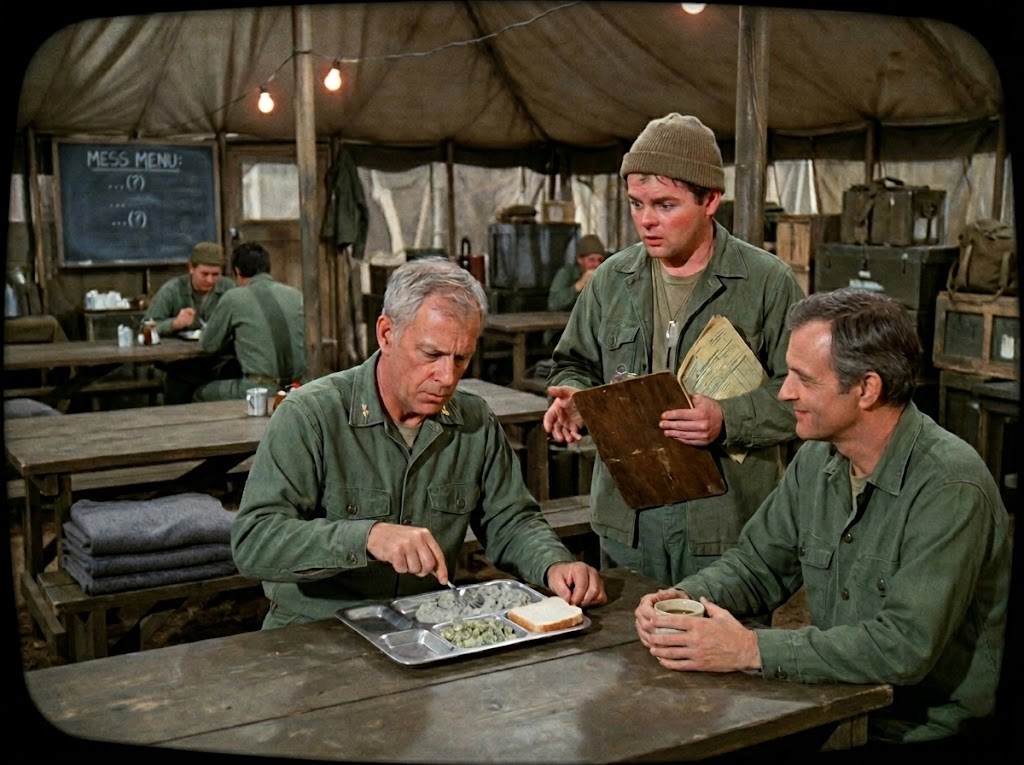
The mud outside the mess tent was four inches deep, the kind of thick, grey Korean clay that sucked the boots right off your feet if you didn’t step carefully. Inside, the air smelled of wet canvas, stale coffee, and whatever nameless, grey experiment the cooks had decided to boil for Tuesday’s lunch.
Colonel Potter sat at the worn wooden table, staring down at his metal tray with the expression of a man looking at a broken-down horse. His fork hovered over a pale, gelatinous mound of mashed potatoes that looked remarkably like the mud outside, only slightly more depressing. Next to it sat a lonely row of canned green beans and a single, dry slice of white bread.
“If I didn’t know any better, Pierce, I’d say the cook is trying to negotiate a separate peace with my digestive tract,” Potter muttered, his voice a low, gravelly rasp.
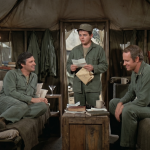
Hawkeye sat across from him, cradling a heavy ceramic mug of coffee like it was the last warm thing left on earth. A faint, tired smile tugged at the corner of his mouth, though his eyes remained heavy with the exhaustion of a twelve-hour shift in Post-Op.
“Oh, come now, Colonel, don’t insult the culinary staff,” Hawkeye said, his tone dripping with his usual dry irony. “That’s not food. That’s a structural adhesive. If the North Koreans breach the perimeter, we can just throw a scoop of that at their tanks and freeze them in place.”
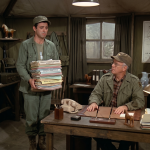
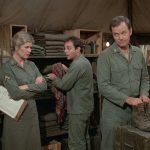
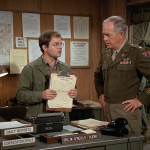
Before Potter could respond, the canvas flap of the tent rustled, and Radar stepped into the frame, a wooden clipboard tucked tightly under his arm. His knitted olive-drab beanie was pulled down low over his ears, and his face was twisted into an expression of acute anxiety. He hesitated for a second, his eyes darting between the Colonel’s plate and the frantic scribble on the papers held in his hand.
“Uh, Colonel? Sir?” Radar stammered, shifting his weight from one foot to the other. “I’m real sorry to interrupt your… whatever that is. But we’ve got a situation.”
Potter didn’t look up from his tray. He gently prodded the grey mound with his fork; it didn’t move, it didn’t give, it simply clung to the metal tines like a stubborn barnacle. “Radar, if the Chinese are crossing the river, tell them to wait until I finish trying to identify this vegetable. If it’s the supply report, sign it yourself.”
“It’s not the supply report, sir,” Radar said, his voice dropping to a tense, urgent whisper that immediately made Hawkeye set his coffee mug down. “It’s the radio from Seoul. They just got a wire from the 8055th. There’s a chopper incoming, but it’s not bringing casualties, Colonel. It’s a special courier. They say we have exactly twenty minutes before a General from the Inspector General’s office lands right in the middle of our helipad.”
Potter’s fork finally stopped moving. He raised his head, his sharp eyes locking onto the young clerk. The ambient hum of the mess tent—the clinking of tin cups, the low murmur of tired corpsmen in the background—seemed to fade away, replaced by the heavy, sudden weight of an uninvited storm.
Hawkeye leaned forward, his sarcasm instantly evaporating, replaced by the sharp alertness of a man who knew that a General’s visit to the 4077th never meant good news. “An IG inspection? Now? We’ve got half a roof on the pre-op ward, the generator is coughing up blood, and our Chief Surgeon is currently wearing a bathrobe that hasn’t been washed since the visual timeline of the Truman administration.”
“It’s worse than that, Captain Pierce,” Radar said, his fingers tightening on the edge of his clipboard until his knuckles turned white. “The wire says he’s checking morale and administrative compliance. He’s specifically looking at our supply logs and… and officer conduct.”
Potter let out a long, slow breath through his nose, a sound like a tire losing air. He looked around the mess tent. In the background, two lonely enlisted men sat at a distant table, staring blankly into their tin plates. The chalkboard on the wall read *MESS MENU:* followed by a series of cynical question marks scratched in fading white chalk. This wasn’t a military base; it was a sanctuary held together by tape, prayer, and the sheer stubbornness of human beings who refused to let each other die.
“Morale,” Potter repeated, the word tasting bitter on his tongue. He looked back down at the grey lump on his tray. “Radar, what’s the General’s name?”
“General Bradley, sir,” Radar whispered. “They say he’s a three-star textbook with boots.”
Hawkeye watched the older man carefully. He saw the subtle slump in Potter’s shoulders—the temporary weight of command that always took a little more out of the old cavalryman than he liked to admit. Hawkeye reached out, his hand resting near the edge of Potter’s tray, his voice softening into the quiet, fierce loyalty that defined the unit.
“Let him come, Sherman,” Hawkeye said quietly, using the Colonel’s first name with a rare, gentle reverence. “Let him look at the books. Let him look at the mud. If he wants to see officer conduct, I’ll show him the forty-eight hours we just spent pulling shrapnel out of kids from Ohio and Pyongyang alike. If he doesn’t like the morale, he can taste the potatoes.”
A tiny, brilliant spark returned to Potter’s eyes. He looked at Hawkeye, then at Radar, who was still waiting like a boy expecting a reprimand. A slow, dry smile broke through the Colonel’s weathered face, creasing the lines around his eyes.
“You know, Pierce,” Potter said, his voice regaining its steady, paternal rhythm. “For a man who avoids regulations like the smallpox, you occasionally make a lick of sense.”
Potter stood up, straightening his utility shirt. He looked down at the clipboard Radar held out. “Radar, tell the helipad to guide him in. Put Klinger on the reception detail—tell him to wear the nice chiffon dress, the one with the matching parasol. If we’re going to give a General a show, we might as well give him the whole circus.”
Radar’s face instantly cleared, a huge grin breaking across his youthful features. “Yes, sir! Right away, sir!” He turned on his heel and scrambled out of the tent, his boots splashing happily through the mud outside.
Hawkeye picked up his coffee mug again, watching the Colonel take a definitive, almost spiteful bite of the dry slice of white bread. The tension in the room hadn’t disappeared, but it had shifted. It had become something manageable, something they would face together, just as they faced the incoming choppers, the freezing winters, and the endless, aching distance from home.
“To the Inspector General,” Hawkeye raised his mug in a silent, mocking toast. “May his stay be brief, his eyes be blind, and his stomach be strong.”
Potter chewed the bread, gave a single, firm nod, and looked out the screen door toward the sound of the approaching rotors. “He won’t know what hit him, Pierce. This is the 4077th. We break hearts, we mend bodies, and we absolutely ruin military discipline.”
In the heart of the forgotten valley, the old tent held its ground, warmed by the quiet defiance of men who kept each other alive with a joke, a cup of bad coffee, and a bond that no army regulation could ever touch.