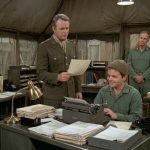
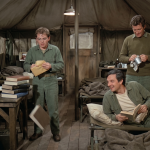
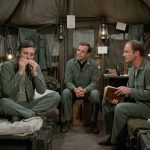
The Quiet Grace of the 4077th: A Smile in the Storm
Some days in Korea don’t end when the sun goes down, and they don’t start when it comes up. They just bleed into one another, measured only by the steady, rhythmic hiss of the autoclave and the endless rustle of olive-drab canvas.
After a grueling forty-eight-hour shift in the Operating Room, the silence of the compound was almost deafening. The swamp was a sanctuary of unwashed coffee mugs and exhaustion, but sometimes, the walls closed in just a little too fast.
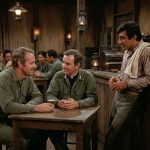
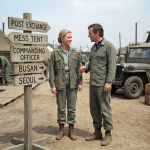
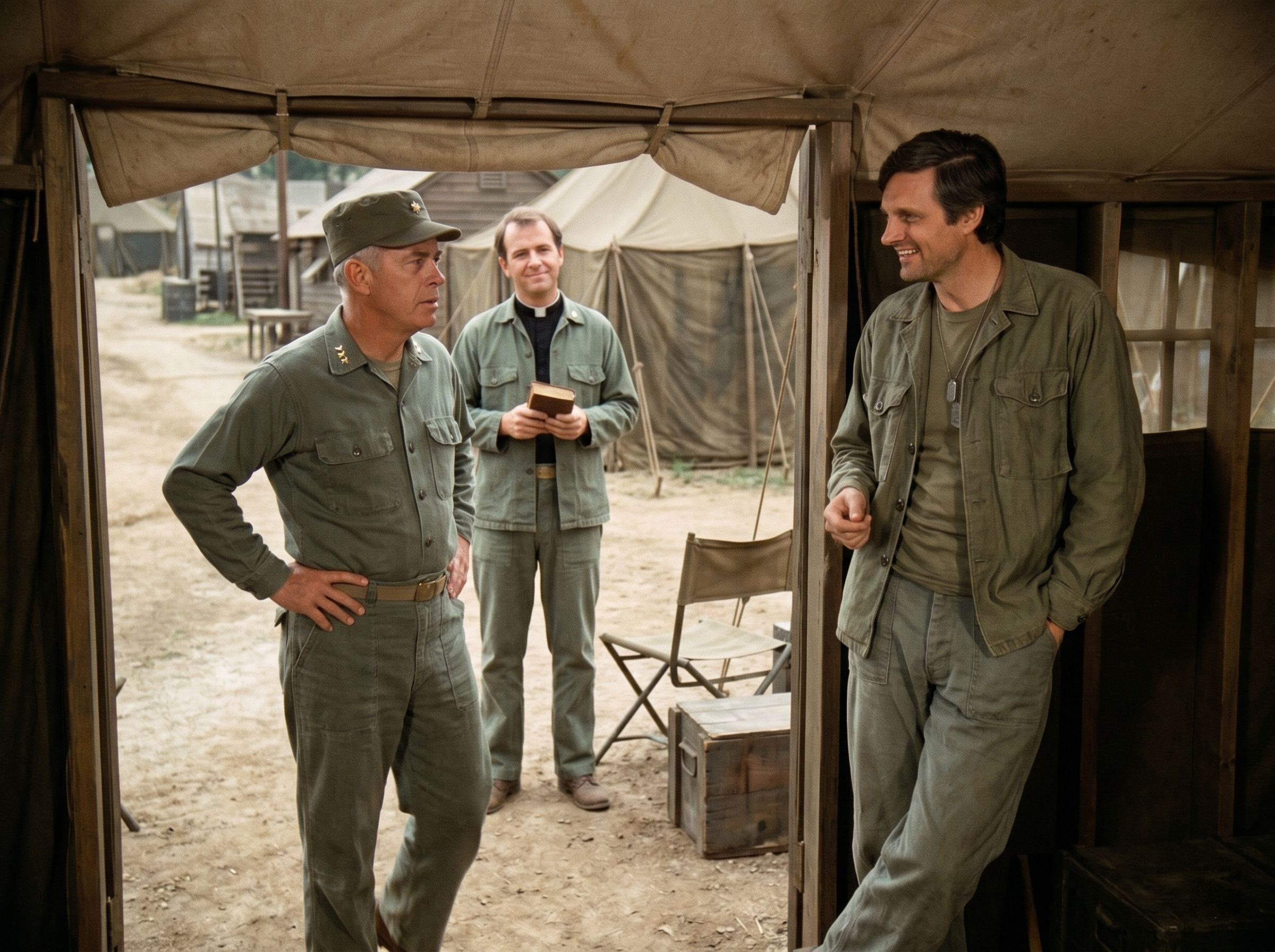
Hawkeye Pierce leaned against the wooden frame of the tent door, his hands tucked loosely into his pockets. His dog tags dangled against his chest, catching the pale afternoon light, a cold reminder of where he was. Yet, looking out at the muddy compound, a genuine, tired smile broke through the heavy layer of fatigue on his face.
Just a few feet away stood Colonel Potter, his hands planted firmly on his hips in that classic, unyielding posture of authority that everyone knew was mostly a front for a deeply weary father figure. Between them stood Father Mulcahy, clutching a small, worn leather Bible against his chest, a quiet observer to the daily, unspoken negotiations of survival.
The air smelled of damp earth, stale tobacco, and the ever-present, metallic tang of the nearby triage pads. A rare moment of absolute stillness had settled over the 4077th, but beneath the quiet, the tension of the last two days still hummed like a live wire.
“You know, Colonel,” Hawkeye said, his voice laced with that familiar, dry sarcasm that served as his armor against the world. “If you keep standing like that, your posture might permanently freeze, and the Army will have to ship you back to Missouri in a crate labeled ‘Fragile: Handle with Care’.”
Colonel Potter didn’t turn his head, his eyes scanning the quiet tents, but the corner of his mustache twitched. “Pierce, if the Army wanted me in a crate, they wouldn’t have wasted the lumber; they’d just wrap me in an old canvas tarp and call it a day.”
Father Mulcahy offered a gentle, sympathetic smile, holding his Bible a little closer, his presence a soothing balm in the midst of their exhaustion. He knew exactly what Hawkeye was doing—using humor to chip away at the heavy block of grief and fatigue that sat on all of their chests after losing a young corporal from Iowa just three hours prior.
The Colonel sighed, his shoulders dropping a fraction of an inch as he finally looked over at Hawkeye. The stern look in his eyes softened into something deeply human, something carrying the weight of three different wars and too many lost boys.
“We did everything we could out there today, Hawk,” Potter said quietly, his voice dropping the commanding edge completely. “Every last thing.”
Hawkeye’s smile faded for a split second, the raw, unedited pain flashing in his eyes before he quickly pulled the mask of wit back over his face. He leaned his head back against the wood, looking at the older man, the silence between them suddenly growing heavy with the names of the ones they couldn’t save.
Just then, the distant, unmistakable whupping sound of helicopter blades began to vibrate through the floorboards of the tent.
The sound grew louder, a mechanical heartbeat that always signaled the end of whatever peace they had managed to scrape together. Father Mulcahy looked up toward the hills, his knuckles whitening slightly around the edges of his Bible, while Colonel Potter’s posture instantly stiffened back into the commander.
Hawkeye didn’t move from the doorway, but his entire body went rigid under his loose fatigue jacket. The jokes evaporated into the damp Korean air, replaced by the cold reality that the O.R. was calling them back to the line.
“Incoming, Colonel,” Father Mulcahy whispered, his voice steady but filled with a profound, quiet sorrow for the boys who were currently in the air. “Sounds like two, maybe three choppers.”
Potter nodded slowly, his eyes meeting Hawkeye’s. For a long moment, nobody spoke; the transition from human beings sharing a quiet joke to a well-oiled medical machine was instantaneous, practiced, and heartbreakingly smooth.
“Well, Pierce,” Potter said, his voice returning to that dry, steady gravel that kept the camp anchored. “Looks like our intermission is over. Let’s go see what the wind blew in.”
Hawkeye let out a long, slow breath, finally pulling his hands out of his pockets and pushing himself away from the doorframe. The tired smile returned, but this time, it wasn’t a shield against the pain—it was an offering of pure, unadulterated solidarity to the man standing next to him.
“Right behind you, Colonel,” Hawkeye said softly, his voice stripped of its usual theatrics. “Just make sure you don’t break a hip on the way to triage; I’m fresh out of plaster and good humor.”
Potter gave a short, single nod of appreciation, a silent acknowledgment of the loyalty that ran deeper than any military regulation. He turned and began walking out into the mud, his stride purposeful and determined.
Father Mulcahy stepped into place beside Hawkeye, giving his shoulder a reassuring squeeze. “God bless you, Hawkeye,” the priest murmured, before moving quickly toward the chaplain’s tent to prepare himself for what was coming.
Hawkeye stood alone in the doorway for one last second, watching his found family move into their positions. He looked down at his own hands, still slightly stained with the scrub-soap from the morning, and took a deep, steadying breath.
They were tired, they were thousands of miles from home, and they were surrounded by a war that made less sense with each passing day. But as the first helicopter cleared the ridge line, splashing shadows across the tents, Hawkeye knew they would face it the only way they knew how—together, with a scalpel in one hand and a joke in the other.
He stepped out of the tent and into the mud, ready for the next round.
In a place where it was so easy to lose your mind, they saved each other by never losing their hearts.