The Alchemy of Gin and Gravity
The mud outside the 4077th didn’t care about the calendar, and the war certainly didn’t care about our sanity. Inside the Mess Tent, however, the air smelled less like cordite and more like burnt coffee and the faint, sweet promise of something stronger.
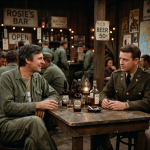
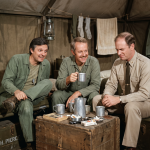
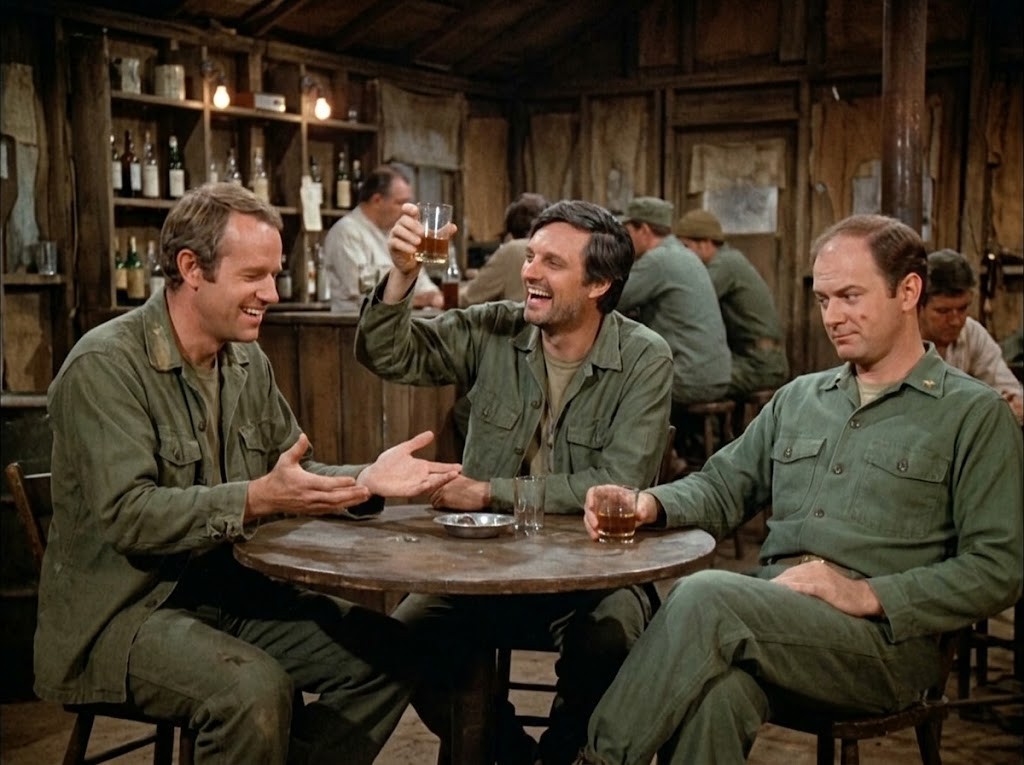
It was one of those nights where the silence between incoming choppers felt heavier than the shelling itself. Hawkeye sat at the scarred wooden table, his hands open in a gesture of mock exasperation, recounting a story that was likely seventy percent invention and thirty percent pure, unadulterated nonsense.
B.J. Hunnicutt leaned back, his eyes crinkling with that familiar, genuine warmth that made the claustrophobic walls of the camp feel a little wider. He was the anchor, the one who kept the laughter from drifting too far into the abyss.
And then there was Charles. He sat with his glass held just so, his expression a masterpiece of weary detachment—or so he wanted us to think. He was watching them, really watching them, his defenses lowered just enough to let the camaraderie seep through the cracks of his Bostonian armor.
“I’m telling you,” Hawkeye insisted, his grin wider than the tent flap, “the patient thanked me by offering to name his next three cows after my surgical instruments. I told him ‘Scalpel’ is a terrible name for a calf, but he wouldn’t hear of it.”
B.J. let out a short, sharp laugh, raising his glass in a toast to the sheer absurdity of it all. “To the medical history of Korea,” B.J. chuckled, “where the livestock are named after hardware and the doctors are just happy to be standing.”
Charles finally cracked. A reluctant, genuine smile broke across his face, and for a fleeting second, the exhaustion—the weight of every soul they’d tried to stitch back together that day—simply vanished. It was the highest point of the night, a moment of perfect, fragile equilibrium.
But as the laughter hung in the air, the distant, unmistakable thump-thump-thump of an approaching medevac cut through the thin canvas walls, turning the warmth of the room instantly, chillingly cold.
The laughter didn’t die instantly; it withered, turning into a strange, hollow echo. The three of them froze, their glasses suspended halfway to their lips, the camaraderie shifting into a sudden, focused readiness.
Hawkeye’s hands dropped to the table, the humor draining from his face as if a plug had been pulled. B.J.’s smile didn’t fade so much as it hardened into a look of quiet, grim resolve. Charles just looked down at his drink, his jaw tightening, the temporary light in his eyes replaced by the familiar, weary resignation of a man who knew exactly what that sound meant.
The truce of the evening was over. The war had come knocking again, demanding payment for the hour of peace they had stolen.
“Well,” Hawkeye said, his voice stripped of its earlier, frantic energy. He stood up, his movements efficient and practiced, the transition from storyteller to surgeon instantaneous.
B.J. stood with him, his hand briefly resting on the back of his chair, a silent, grounding gesture before heading back out into the dark. Charles didn’t say a word, but he rose with a stiff dignity, his face a mask of iron-clad professionalism.
They didn’t look at each other. They didn’t need to. They walked toward the exit, their shoulders brushing in a brief, almost imperceptible display of shared burden.
They stepped out into the night, the mud already waiting for them, the distant rotors growing louder, more urgent. In that transition from the warmth of the light to the cold of the dark, there was no resentment, only the quiet, crushing weight of duty.
Yet, as they moved, I remembered the way the light had caught the laughter in their eyes just seconds before. The memory of it—that fleeting, impossible spark of joy in the middle of a nightmare—was what carried them forward.
It wasn’t just gin that kept the 4077th afloat. It was that table, those tired faces, and the unspoken agreement that no matter how hard the world tried to break them, they would spend the night laughing until the very last possible second.
They weren’t just colleagues; they were the only family anyone had left in a place that had forgotten the definition of home.
We laughed because it was the only way to make sure we didn’t cry.