A Taste of Home in the Mess Tent
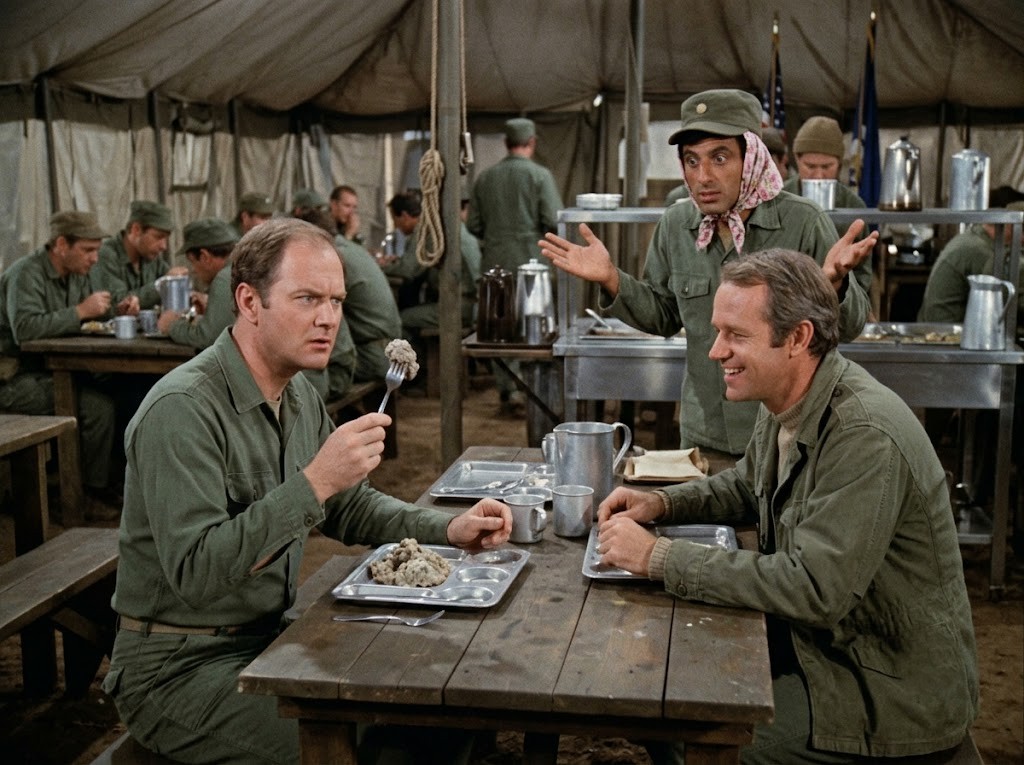
The hum of the mess tent at the 4077th was a symphony of clattering tin, weary sighs, and the distinct, ever-present aroma of powdered eggs and mystery meat. It was the kind of place where you didn’t go for the food, but for the company that made the day’s burdens just a little lighter to carry.
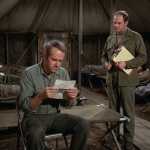
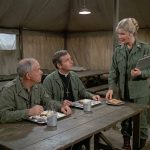
Major Charles Emerson Winchester III sat at the head of the weathered wooden table, staring down at his mess kit with a look of profound, aristocratic betrayal. Perched precariously on the end of his fork was a glob of something grey, gelatinous, and entirely unidentifiable, wobbling as if it possessed a nervous system of its own.
“I have traveled from the hallowed halls of Boston to the farthest reaches of the globe,” Charles drawled, his voice a razor-sharp instrument of disdain, “yet I am consistently baffled by the culinary atrocities masquerading as sustenance in this godforsaken neck of the woods.”
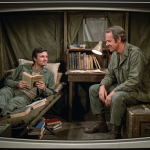
B.J. Hunnicutt, sitting across from him, merely grinned. He looked tired, the kind of deep, bone-weary fatigue that only a long shift in O.R. could induce, but his eyes were still bright with that signature, gentle warmth. He watched Charles with an amused, patient expression, as if observing a particularly stubborn toddler.
“It’s protein, Charles,” B.J. offered, tapping his own tray. “It’s supposed to build character. Or at least keep you from fading away entirely.”
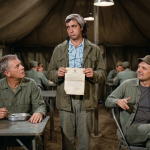
Suddenly, the flap of the mess tent parted, and Corporal Klinger strutted in. He was wearing his signature combat boots, but today, he had opted for a floral-patterned headscarf, tied neatly under his chin, adding a dash of pastoral whimsy to the grim, olive-drab surroundings. He stopped dead in his tracks, his eyes widening in dramatic disbelief as he looked at the tray in front of the surgeon.
“Major!” Klinger exclaimed, throwing his hands up in a gesture of pure, exasperated theater. “You are *not* going to eat that! I’ve seen better-looking results in the pathology lab, and I’m pretty sure the cook’s latest concoction is currently planning a coup against the kitchen staff!”
The tent went quiet for a heartbeat. Klinger’s over-the-top antics usually drew a laugh, but the tension in the room was brittle, stretched thin by the long, hard week they had all endured. Charles, his patience completely evaporated, stood up, the chair scraping sharply against the dirt floor.
“Enough, Corporal!” Charles barked, his face flushing a deep, uncharacteristic shade of crimson. “Your incessant theatrics and questionable fashion choices are an affront to my sanity! This ‘meal,’ however offensive, is simply a symptom of a larger, pathetic reality, and I, for one, have reached my limit!”
—
The silence that followed was absolute. Klinger looked momentarily stung, his bravado slipping to reveal the tired, desperate man beneath the costume. B.J. didn’t say a word, but his smile faded into a look of quiet, genuine concern, his hand instinctively reaching out to steady the edge of the table.
Then, the mood shifted. It didn’t break with a bang, but with a slow, cooling sigh.
Charles sat back down, his shoulders slumping. The rage drained out of him as quickly as it had arrived, leaving behind only the hollow ache of being millions of miles away from everything that made sense. He looked at the blob of grey mush on his fork and then up at Klinger, who was still standing there, his hands dropped to his sides, the floral scarf looking suddenly, painfully fragile.
“I apologize, Corporal,” Charles muttered, his voice barely audible above the distant rumble of a generator. “I am… not myself today.”
Klinger softened, the performative mask dropping entirely. He sighed, pulling a stool over and sitting down next to B.J., his shoulders sagging with the same exhaustion that gripped everyone in the room. “Yeah, well, none of us are, Major. But at least we’re all here, right? Even if the lunch is trying to kill us.”
B.J. leaned forward, his voice low and steady. “You know, back in Mill Valley, we used to have these Sunday potlucks. People would bring things that were just as weird as whatever this is. But you didn’t eat it because it tasted like gourmet cooking. You ate it because you were sitting next to the people who knew exactly how hard your week had been.”
Charles looked at his tray, then at B.J., then at Klinger. He saw the dust on their faces, the dark circles under their eyes, and the quiet, stubborn way they were holding themselves together. He realized, perhaps for the first time that day, that he wasn’t eating alone in the middle of a war—he was part of a circle, a family forged by shared misery and an even stronger, unspoken loyalty.
Slowly, almost tentatively, Charles took a bite of the offending mystery meat. He didn’t enjoy it—his expression remained one of grim survival—but he swallowed it, and then looked at Klinger with a ghost of a smirk.
“You’re right, Corporal,” Charles conceded, his voice finally shedding its sharp, aristocratic edge. “It is, quite possibly, the most offensive thing I have ever tasted. I believe I shall require a double ration of whatever passes for coffee today just to wash it down.”
Klinger let out a short, surprised laugh, and even B.J. chuckled, the sound echoing off the canvas walls. They sat there for a long time, not talking much, just existing in the quiet company of friends. The war was still waiting outside, the beds in Post-Op were still full, and they were all still tired. But in that small, crowded tent, for that one fleeting, human moment, the world felt a little less heavy.
They were just men, a long way from home, finding a way to laugh through the grey, one bite at a time.
In the end, it was never really about the food; it was about the people you broke bread with when you needed them most.