The Quiet Hour at Rosie’s
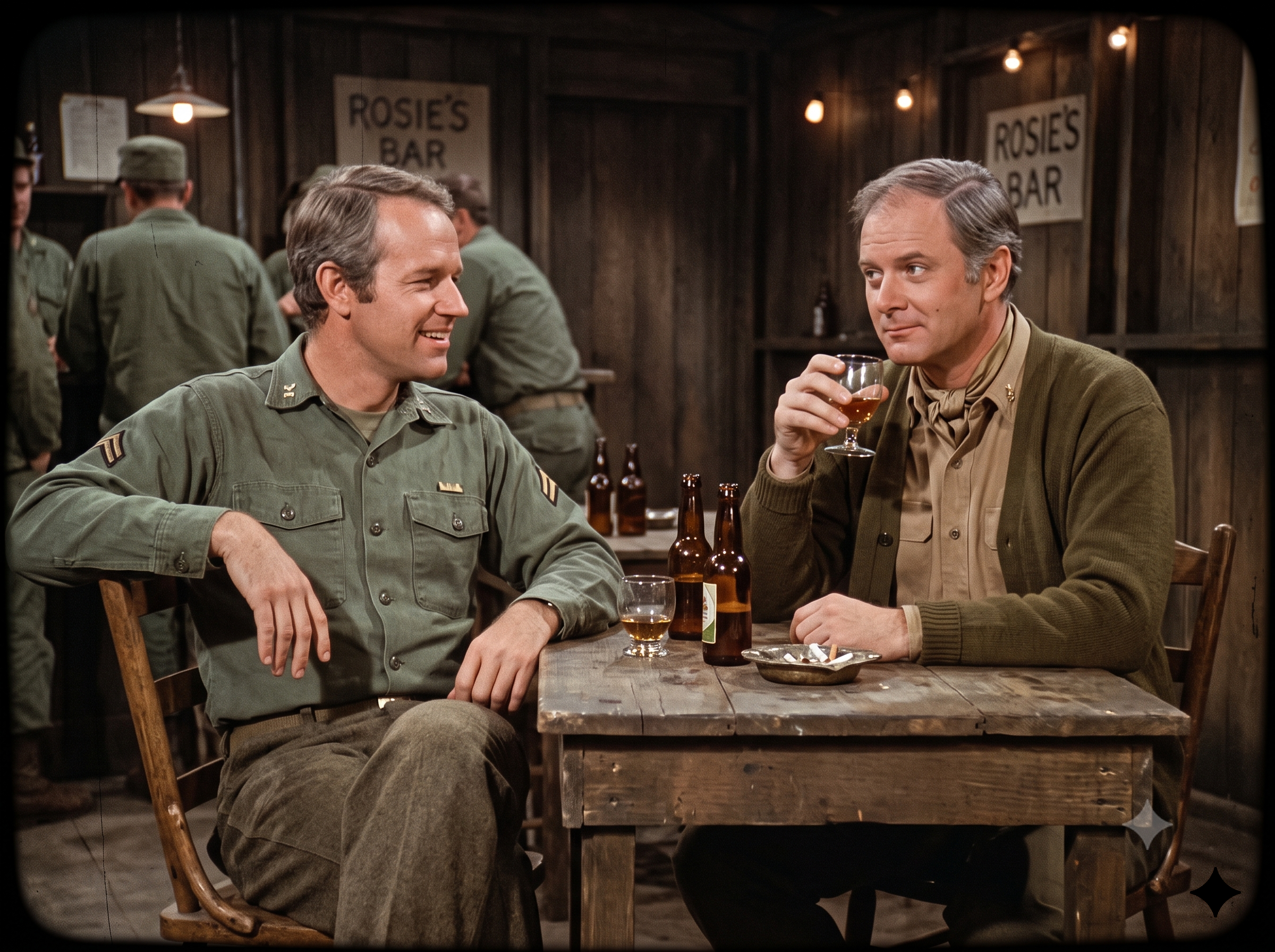
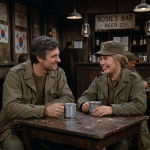
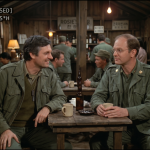
The air inside Rosie’s Bar was thick with the scent of stale beer, wood shavings, and the lingering, desperate hope of a thousand tired soldiers. Outside, the Korean night was pitch black, a silent contrast to the cacophony that had defined their afternoon in the OR. But in here, under the dim, buzzing bulbs, time didn’t move forward; it just held its breath.
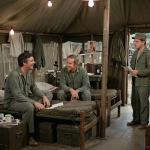
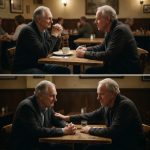
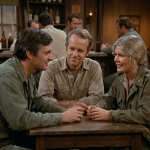
Hawkeye and B.J. sat at their usual scarred wooden table, a sanctuary carved out of the chaos. They were both physically present, leaning into the table with the casual, lived-in posture of men who had spent far too many nights pretending the war was a thousand miles away.
B.J. was nursing his drink, his eyes fixed on the small glass with a look of profound contemplation. He looked less like a surgeon and more like a man trying to read his entire future in the golden amber of cheap whiskey.
Hawkeye, for once, wasn’t firing off a string of sarcastic barbs. He watched B.J. with an expression of quiet, piercing concern. The usual manic energy that fueled him was absent, replaced by a weary stillness that felt heavier than any amount of battlefield trauma.
“You know, Beej,” Hawkeye said, his voice barely rising above the low hum of the room, “if you stare at that glass any harder, it’s going to start feeling self-conscious and confess its sins.”
B.J. looked up, a small, sad smile tugging at the corners of his mouth. He didn’t offer a witty comeback. Instead, he let out a long, shuddering breath that seemed to deflate his entire frame.
“I’m just thinking about Peg, Hawk,” B.J. murmured. “And Erin. I had a letter today. She’s starting to walk, and I’m sitting here in a tent in the middle of nowhere, smelling like antiseptic and regret.”
The humor died in the air between them, replaced by the crushing reality of distance. Hawkeye reached out, his fingers brushing the edge of the table as if to bridge the gap. He knew that look. He knew the specific, hollow ache of missing a home that felt like a fading dream.
“I know,” Hawkeye said, his voice dropping to a register of genuine, unadorned empathy. “I know.”
Suddenly, the quiet was shattered by the rhythmic, heavy thud of boots at the entrance. The tavern door swung open, and the cold draft that rushed in brought with it a sudden, jarring shift in the atmosphere. It wasn’t the usual banter of the regulars; it was something sharper, something urgent that made both men freeze in their seats.
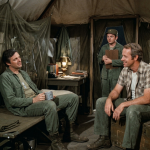
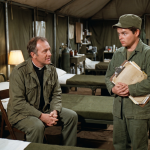
It was Colonel Potter, standing in the doorway with his hat pulled low and a shadow of deep fatigue etched into the lines around his eyes. He didn’t look like the commanding officer who stood tall during briefings; he looked like a man who had just carried the weight of the world across the compound and was looking for a place to set it down.
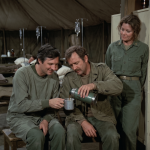
He walked toward them, his movements deliberate. Without a word, he pulled up a chair, signaled to Rosie for a refill, and looked at the two of them. He didn’t ask what was wrong; he didn’t need to. He knew the look of men who had reached the bottom of their reserves.
“Bad day, Colonel?” B.J. asked, his voice steadying as he shifted into the role of the listener.
Potter didn’t answer right away. He waited until Rosie slid the glass in front of him, then took a long, slow sip. The silence stretched, not uncomfortable, but deeply shared. It was the silence of a campfire on a freezing night—the kind of quiet that lets you know you aren’t shivering alone.
“I’ve spent the better part of three hours writing letters to families,” Potter said finally, his voice like gravel and warm velvet. “It never gets easier. You’d think by now, the ink would be dry before I even put pen to paper. But it never is.”
He looked at Hawkeye, then at B.J. The tension that had tightened in the room moments ago began to soften, transmuted by the simple, profound act of being together.
“I was feeling sorry for myself,” B.J. admitted, his voice barely a whisper. “Thinking about what I’m missing.”
Potter reached out and patted the table, his hand heavy and reassuring. “We’re all missing something, son. That’s the tax we pay for being human in a place that tries its level best to strip that away from us. But the fact that it hurts? That means you’re still keeping your end of the bargain.”
Hawkeye leaned back, a faint, genuine smile returning to his face. “Leave it to the Colonel to make a philosophy lesson out of a stiff drink.”
“Shut up, Pierce,” Potter said, but there was no bite in it. There was only a gentle, tired warmth.
They sat there for a long time. They didn’t talk about the war. They didn’t talk about the wounded, or the weather, or the politics of the brass. They talked about the taste of a good apple, the way a porch swing sounds on a summer evening in Missouri, and the ridiculous things they’d do once they were finally—finally—home.
For an hour, the war was just a ghost pressed against the windowpanes, unable to get in. They were just three men, bound by the strange, unbreakable thread of service, holding onto each other in the dark.
As the night wore on and the lights flickered, the exhaustion began to feel less like a burden and more like a shared blanket. There was a profound, bittersweet comfort in the realization that while they were a long way from everything they loved, they were exactly where they needed to be: with the people who understood the silence as well as the noise.
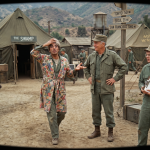
Eventually, they rose to leave. There were no grand declarations, just a few nods and the clink of glasses as they drained the last of the whiskey. They walked out into the cool, biting air of the camp, stepping back into the shadow of the tents, but the weight they carried felt, for the moment, just a little lighter.
In the heart of the 4077th, the greatest medicine was often found in the quiet moments between friends.