A Cup of Coffee in the Dark
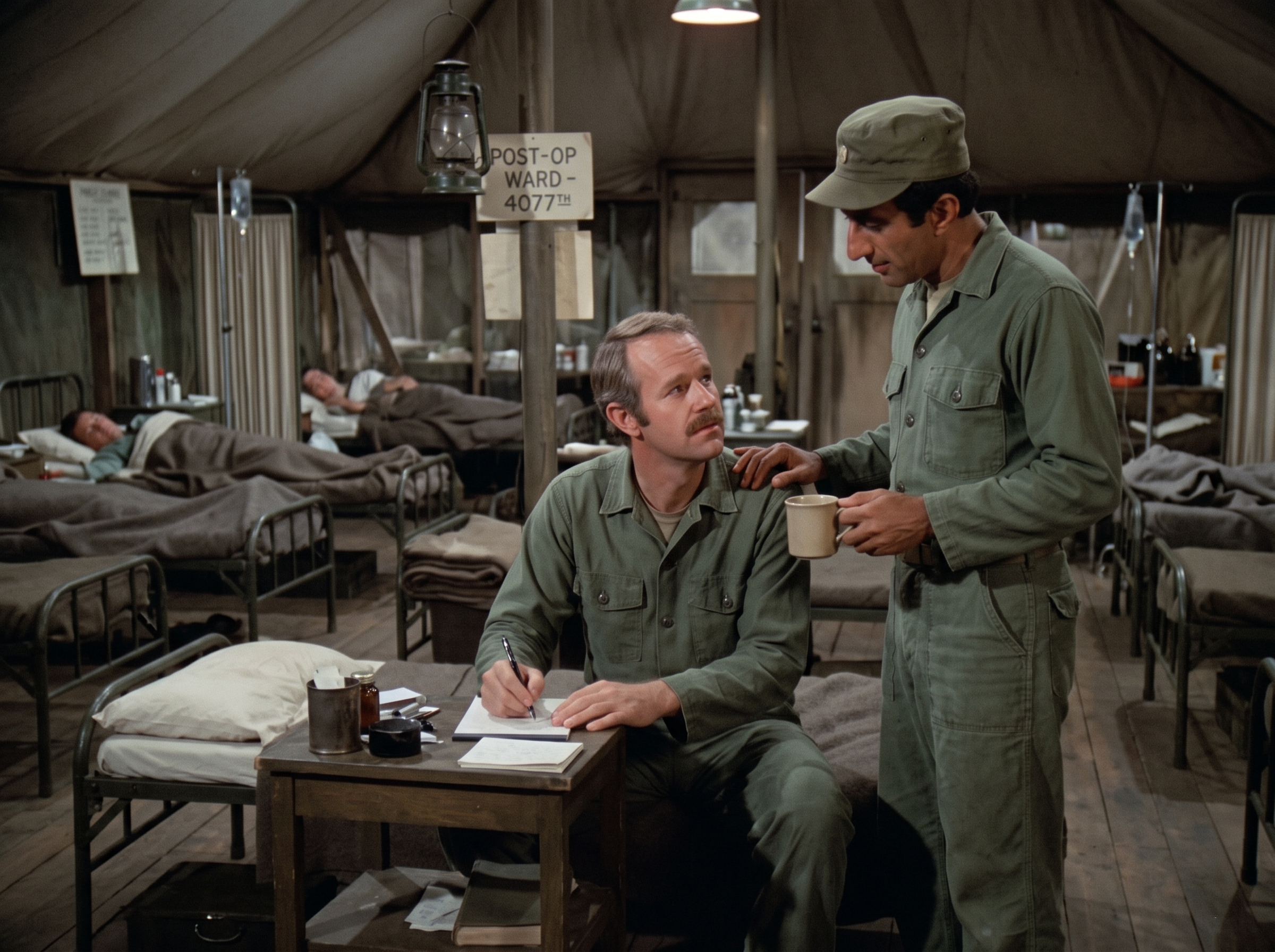
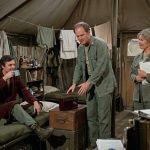
The silence that fell over the Post-Op ward after a marathon session in O.R. was a heavy, sacred thing. It was never truly silent, of course. It was filled with the rhythmic, raspy breathing of young men who had just barely cheated death. The hiss of a sterilizer down the hall and the distant crunch of boots on gravel were the only other sounds. To Captain B.J. Hunnicutt, this quiet canvas tent was the only sanctuary he had left in Korea.
He sat hunched in a squeaky metal folding chair beside a miraculously empty cot. The pale green canvas of the tent walls glowed softly in the dim, practical light. It was a humane, gentle lighting that washed over the rows of muted wool blankets and small wooden bedside tables. His shoulders were slumped forward, carrying the invisible, crushing weight of thirty straight hours over a bloody operating table.
In his lap sat a battered clipboard, a single sheet of pale blue stationery, and a pen. It was a simple setup, but right now, that fountain pen felt like it weighed fifty pounds. He was trying to write to Peg.
Usually, the words flowed like water. He would write about the absurdities of the 4077th, the terrible powdered eggs, or Hawkeye’s latest, brilliant crusade against military bureaucracy. He would write about his daughter, Erin, and the beautiful life waiting for him back in California. But tonight, the ink simply wouldn’t come.
The ache of homesickness was a physical, jagged pain in his chest, sharp and unyielding. He stared at the blank page, his eyes stinging with bone-deep exhaustion. He felt a profound, empathetic grief for the boys sleeping in the rows of cots around him, boys who were just as far from home as he was.
How could he explain this specific flavor of exhaustion to his wife? How could he bridge the ten thousand miles of mud and fear that separated this dim, canvas room from their sunny, safe kitchen in Mill Valley?
He couldn’t. The emotional isolation suddenly felt absolute, a dark tide rising up to pull him under. B.J. lowered his head, pressing the heels of his hands hard into his tired eyes. He felt the dangerous, creeping edge of a quiet breakdown taking hold in the dark.
Behind him, a shadow moved softly in the muted light. Corporal Maxwell Klinger stepped silently up to the edge of the cot.
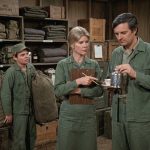
There was no feather boa tonight, no elaborate velvet gown, no oversized earrings or theatrical swagger. He wore simple, practical, lived-in olive drab fatigues, the uniform of a man who worked just as hard as the doctors to keep this place running. Klinger’s dark eyes were fixed on the hunched, defeated shoulders of the surgeon.
In Klinger’s hands was a battered tin mug, wisps of steam rising gently from the dark liquid inside. He saw his friend drowning in the middle of a crowded, sleeping room, feeling completely and utterly alone.
B.J. took a jagged, shaky breath, his hands trembling as his fingers gripped the edges of the blank letter. He was one second away from tearing the paper to pieces and giving up for the night.
“Rough night, Captain?” Klinger’s voice was barely a whisper, carrying softly beneath the low hum of the sleeping ward.
B.J. froze at the sudden sound. He slowly dragged his hands away from his face, taking a long moment to steady himself. He didn’t turn around right away. He just stared at the canvas wall, trying to quickly rebuild the grounded, unshakable facade he usually wore for the rest of the camp.
“Just trying to find the right words, Max,” B.J. said. His voice was raspy, thin, and drained of its usual warm humor. “Turns out, I’m fresh out of them.”
Klinger stepped closer, moving with a quiet dignity that he rarely showed when the sun was up and the colonels were watching. He didn’t offer a joke. He didn’t complain about section eight regulations, guard duty, or the injustices of the draft board.
Instead, he reached out and gently set the steaming tin mug on the small bedside table next to B.J.’s elbow.
“It’s not much,” Klinger said softly. “But I managed to scrounge up some real coffee. Not that motor oil the mess tent serves. The real, honest-to-goodness stuff.”
B.J. looked at the dented mug, then slowly turned his head to look over his shoulder at the corporal. The pale, warm light caught Klinger’s face, revealing a remarkably tender, observant expression.
There was no act right now. The Toledo street hustler and the eccentric corporal were gone. This was just one tired man looking out for another in the middle of a war.
“Thank you,” B.J. murmured, wrapping his cold, stiff fingers around the warm tin. The heat seeped into his skin, a small, tangible comfort in a place completely devoid of it.
Klinger didn’t leave. He stood quietly behind the folding chair, acting as a silent, supportive presence in the dimly lit ward. He looked out over the rows of cots, his eyes soft with a shared understanding.
“I used to try and write my mother every single day when I first got here,” Klinger said, his voice keeping perfect time with the soft breathing of the wounded soldiers. “I’d try to explain what it was like. The smell of the mud, the crazy officers, the sound of the choppers.”
He paused, a small, wistful smile touching the corners of his mouth, bringing a fleeting warmth to his tired features.
“But I realized pretty quick that it just made her cry,” Klinger continued. “And it made me feel worse. I was trying to pack the whole ugly war into a tiny envelope, and it just didn’t fit.”
B.J. took a slow sip of the coffee. It was strong, piping hot, and tasted wonderfully like civilization.
“So, what did you do?” B.J. asked quietly, looking down at his own blank piece of paper.
“I stopped writing about the war,” Klinger said simply. “I started writing about Toledo. I’d ask about Tony’s butcher shop, or if the Mud Hens were winning. I realized she didn’t need to understand Korea, Captain. She just needed to know I was still me.”
B.J. let the quiet words wash over him. The defensive walls he had built up over the last thirty hours finally began to drop.
“I don’t even know what to tell Peg anymore,” B.J. confessed, his voice thick with emotion. “I feel like a ghost out here sometimes, Max. Like I’m slowly forgetting what our front porch looks like, or what Erin’s laugh sounds like.”
Klinger rested a hand lightly on the back of B.J.’s metal chair. It was a grounding touch, steady and reassuring.
“You’re not a ghost, Captain Hunnicutt. You’re the guy who just put Private Hodges back together.” Klinger nodded respectfully toward a young, heavily bandaged boy sleeping peacefully two cots down. “You’re the guy who remembers everyone’s birthday. You’re the one who keeps Hawkeye from flying off the handle.”
The corporal’s voice was deeply sincere, offering the kind of profound truth that only came out at three in the morning.
“You just tell her that,” Klinger said softly. “Tell her you’re still the exact same guy she married. The rest is just geography.”
B.J. stared at Klinger, deeply moved by the profound, simple wisdom wrapped up in the corporal’s humble delivery. The crushing weight in B.J.’s chest didn’t vanish completely, but the suffocating pressure eased. The tent didn’t feel quite so cold anymore.
“Geography,” B.J. repeated, a tired but genuine smile finally touching his eyes. “I like that, Max. I really like that.”
Klinger gave a small, respectful nod, his own eyes shining with a quiet, shared resilience.
“Drink your coffee before it turns back into Korean mud, Captain,” Klinger whispered, a tiny hint of his usual spark returning to his voice.
With a final, warm glance, Klinger turned away. He began to make his quiet rounds through the ward, adjusting a muted blanket here, checking a clipboard there, watching over the boys.
B.J. watched him go, deeply grateful for the strange, beautiful, found family he had discovered in this miserable place. He took another long sip of the coffee. The rich aroma filled his senses, anchoring him firmly back to the present moment.
He picked up his fountain pen, the heavy weight gone from his fingers. The isolation had been chased away, replaced by the quiet, bittersweet camaraderie that kept them all alive.
B.J. touched the pen to the paper, and this time, the words came easily.
In a place built on mending broken bodies, it was often the quiet, everyday acts of friendship that kept their spirits whole.