That One Perfect Letter
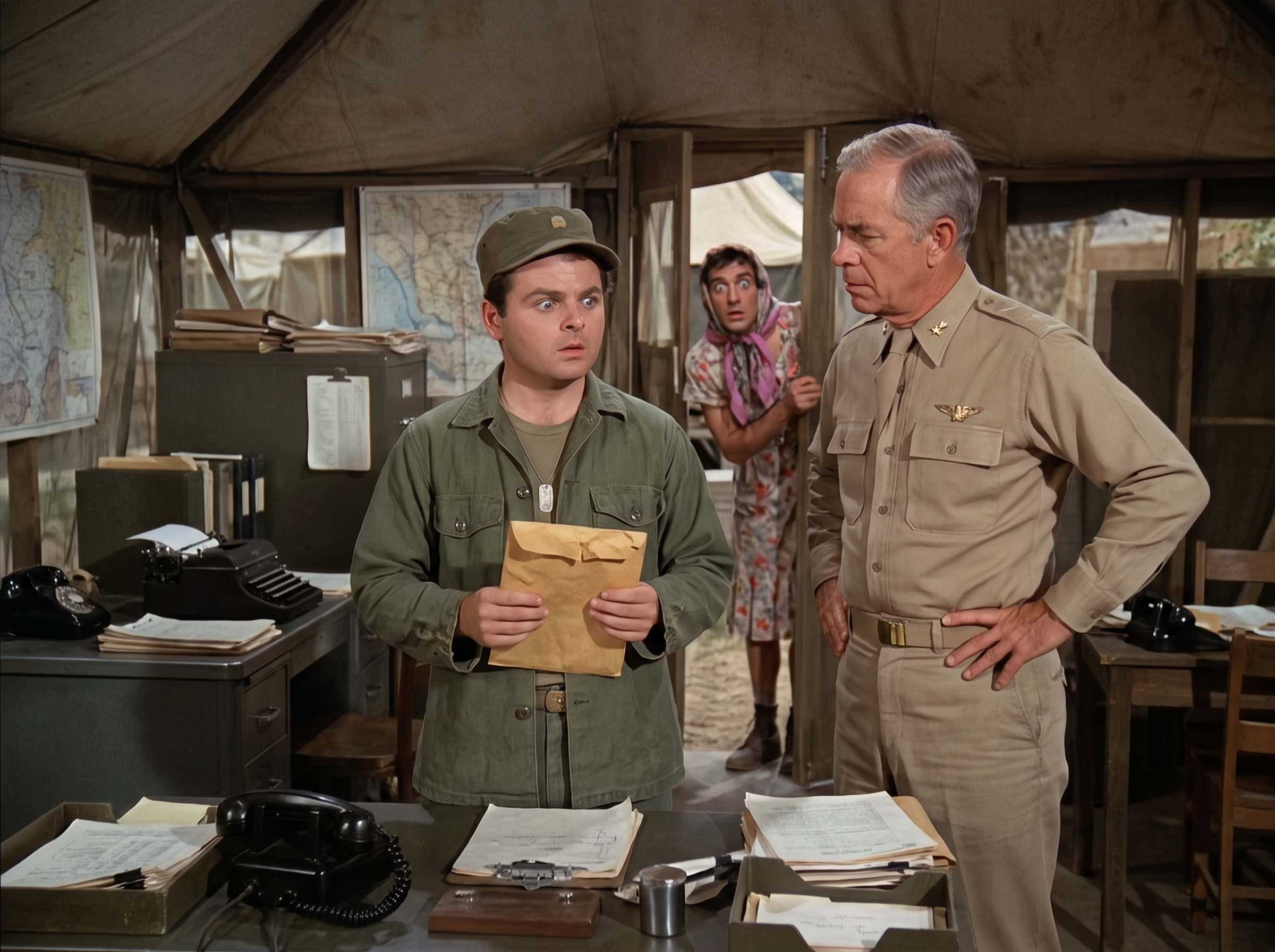
The air in the 4077th’s main office was typically thick with the smell of stale coffee, mimeograph ink, and impending doom. Today, however, it carried a distinct undertone of fresh baking, emanating from a small, battered package that had just arrived. It sat on Corporal Walter “Radar” O’Reilly’s meticulously organized desk, looking suspiciously cheerful amidst the stacks of requisitions and forms.
Colonel Potter stood with his hands on his hips, surveying the brown paper parcel as if it were a booby trap. His expression was a familiar blend of suspicion and hope, his eyebrows raised in a challenge to the world. “O’Reilly,” he barked, though not unkindly, “what on earth is that?”
Radar, his face a perfect picture of wide-eyed innocence and barely contained excitement, glanced nervously from the package to the Colonel. He’d been looking forward to this letter – this specific letter – for weeks. “It’s… it’s from my mother, Sir. A care package. For the whole camp, mostly.” He gestured vaguely at the rest of the mail piled high. “But there’s a special letter inside.”
Before the Colonel could press further, a colorful whirlwind swept into the doorway. Maxwell Klinger, clad in a stunningly inappropriate flowered dress and matching headscarf, stopped mid-stride. “Letter? For me? From Toledo?” He paused, taking in the scene. His large brown eyes widened as he spotted the brown envelope in Radar’s hand, contrasting sharply with his vibrant outfit.
Potter turned his stern gaze upon Klinger. “Klinger, what part of ‘Section 8’ is hard for you to understand? We are *all* in this war. Including your mother’s letters.”
Radar, still clutching the envelope, glanced between them. It wasn’t Klinger’s mail. It wasn’t the Colonel’s mail. It was *his* mail. His one perfect letter. A letter from Sparky, the supply sergeant over at I-Corps, whose letters were the highlight of his month.
He’d been waiting to open it when the office was empty. But then the O.R. had gotten busy, the wounded had arrived, and the office was never empty. Now he stood there, frozen, holding the letter that promised a glimmer of connection, a taste of home that wasn’t covered in mud.
“It’s not for you, Klinger,” Radar said, his voice unusually bold. “And it’s not official business, Colonel. It’s just… personal.”
The Colonel frowned. “Just personal? In a war zone? There’s no such thing as ‘just personal,’ O’Reilly.” He stepped closer, his gaze softening ever so slightly. “Now, are you going to open it or should I file it under ‘Top Secret: Soldier’s Privacy’?”
Radar took a deep breath, the crinkly brown envelope craning against his fingers. He didn’t want to open it in front of them, but the pressure was building. Klinger was peeking through the doorway, his theatrical expression a mixture of genuine curiosity and dramatic anticipation. The Colonel was waiting, a quiet strength radiating from him.
With a slow, deliberate motion, Radar tore the top of the envelope. He pulled out the single sheet of paper, the handwriting messy and rushed, yet unmistakably from Sparky. He read the first few lines silently. *Hey Walter! Hope this finds you sane, or at least as sane as anyone over there.*
Radar paused, a soft smile spreading across his face. He’d never heard Sparky use his actual name before. It was always “Kid” or “Radar.” “Walter” felt… different. It felt like home. Like someone who knew him beyond his uniform and his uncanny ability to anticipate requests.
He read on, his smile deepening, tears pricking the corners of his eyes. *Got those extra suture needles for your surgeons. Had to trade a whole crate of peaches, but it was worth it.*
Radar cleared his throat, reading aloud now, his voice slightly unsteady. “*My mom says to tell you the corn is high this year, and my sister got married. She says we’re proud of you, Walter. Everyone back home is.*”
The room fell silent. Klinger stood in the doorway, his dramatic posture deflated, a soft, human look in his eyes. He wasn’t thinking about a dress or a discharge. He was thinking about Toledo, about his own family, about the world they’d all left behind.
Colonel Potter’s stern face had melted, replaced by a quiet contemplation. He’d seen the exhaustion in Radar’s eyes, the weariness that crept in after long hours in the O.R., after dealing with the endless bureaucracy. He knew how much these moments mattered.
Radar folded the letter carefully, sliding it back into the envelope as if it were a precious heirloom. He looked up at the Colonel, his smile a beacon of genuine warmth. “Sparky’s mum says hello, Sir.”
The Colonel nodded, his voice low and fatherly. “Tell her we appreciate the thought, O’Reilly. And you tell Sparky to stop trading government property for peaches.”
He turned to Klinger, who was still standing in the doorway, now adjusting his headscarf. “And Klinger, if you’re not going to change into something more appropriate for work, at least make yourself useful. Hand out the rest of the mail before they all lose hope.”
As Klinger started to hand out the letters, a sense of belonging filled the room. It was a familiar feeling, this found family, this shared hardship. There was a quiet strength in their shared moments, their shared losses, and their shared letters from home. It was the heart of the 4077th, the reason they were able to keep going.
Radar sat back in his chair, the letter clutched in his hand, a sense of calm washing over him. It wasn’t just a letter. It was a connection to a world that still made sense, a reminder of who they were before the war, a whisper of hope for the future. And for a moment, in that dusty little office, the war felt a little bit farther away.
A reminder that home is sometimes just one perfect letter away.