The Quietest Sound in the 4077th
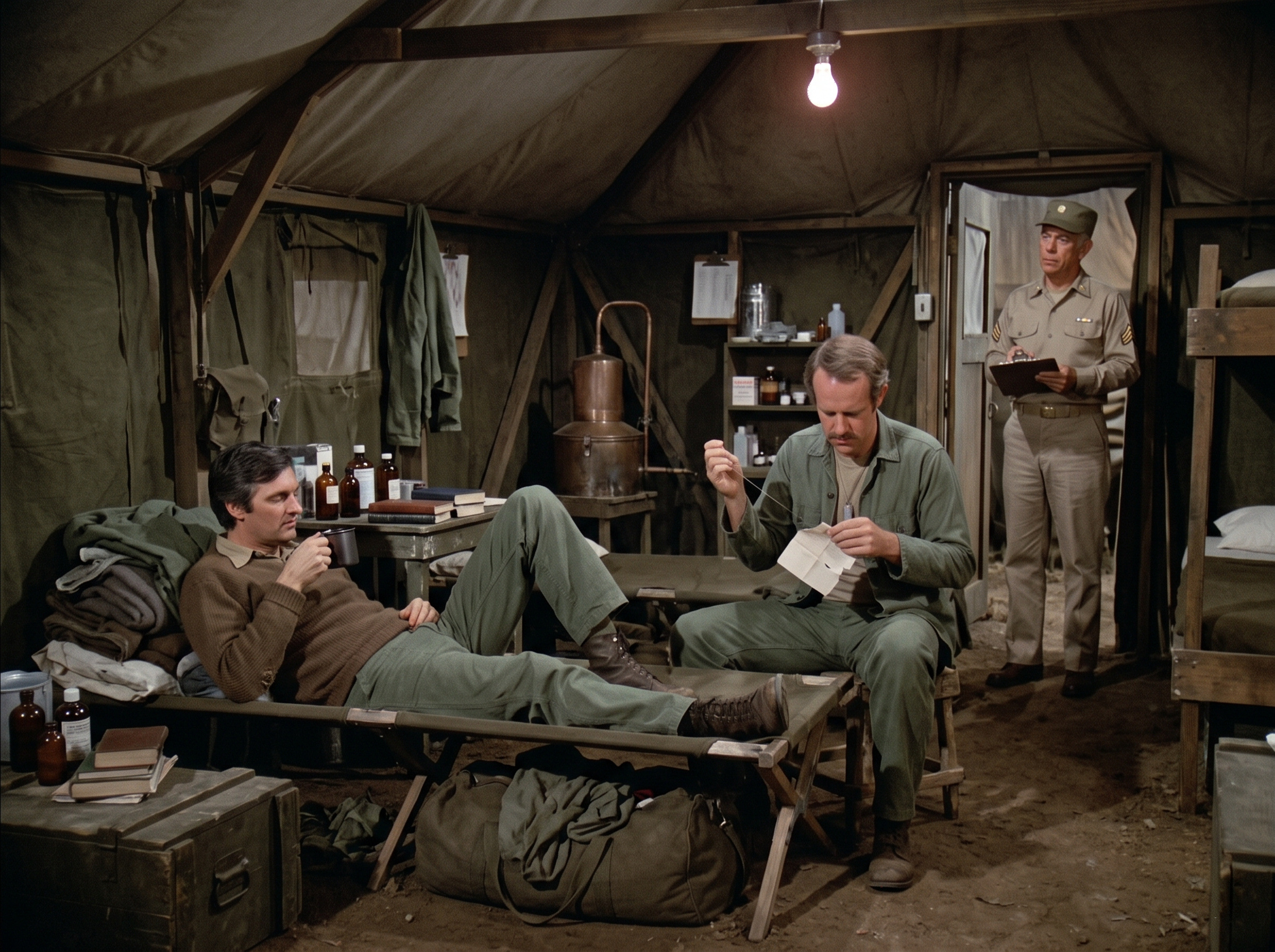
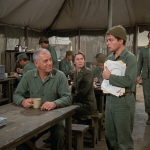
The mud outside was relentless, a sticky, grey constant that tried to seep into your soul just as surely as it seeped into your boots. But inside the tent, the air was different. It smelled of canvas, stale coffee, and the faint, medicinal tang of the work that was never truly finished.
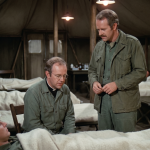
Hawkeye was sprawled on his cot, his body heavy with that bone-deep exhaustion that comes after a fourteen-hour shift in OR. He held a tin mug like it was a holy relic, his eyes unfocused as he stared at the single, stark lightbulb dangling overhead. It was a rare, fragile moment of stillness.
B.J. sat on the wooden crate opposite him, shoulders hunched, his attention entirely consumed by a small, crumpled piece of paper. He was carefully unraveling a length of thread, his brow furrowed in a concentration that looked almost surgical.
“You know, Beej,” Hawkeye murmured, his voice raspy, “if you’re trying to construct a tiny parachute for that letter, I hate to break it to you, but the wind resistance in this swamp is entirely theoretical.”
B.J. didn’t look up, but the corner of his mouth twitched into that familiar, lopsided smile. “It’s not a parachute, Hawk. It’s a delicate reconstruction project. Peg’s latest update arrived in… well, several pieces, courtesy of the mail bag being used as a soccer ball by the supply guys.”
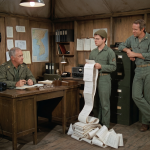
Just as Hawkeye opened his mouth to deliver a retort, the tent flap rustled. Sergeant Zale stepped inside, the metal clip of his clipboard snapping with a sound that felt entirely too loud in the quiet room.
He didn’t say a word, just stood there, waiting for someone to acknowledge the paperwork he was carrying. He looked tired too, his uniform crisp but his eyes signaling a weariness that matched their own.
The silence stretched, thick and heavy. B.J. looked up from his puzzle of paper, his expression shifting from amusement to a sudden, sharp vulnerability, the letter trembling just a fraction in his hands.
Hawkeye shifted, his legs tangling in the blankets, and the cynical mask he’d been wearing slipped for a second, revealing a raw, tired empathy. He knew that look on B.J.’s face; it was the look of a man trying to hang onto a tether that was being pulled just a little too tight.
“Zale,” Hawkeye said, his voice dropping the sarcasm, “if that’s more requisition forms for more nonexistent supplies, leave it on the table. We’re in the middle of a delicate assembly.”
Zale hesitated, his grip on the clipboard tightening. He looked at the two surgeons—men he usually dealt with through a haze of regulation—and seemed to notice, perhaps for the first time, how truly human they looked when they weren’t cracking jokes or shouting orders.
“It’s not, Captain,” Zale said, his voice unusually soft. He glanced down at the letter in B.J.’s hands, then back at them. “I just… I heard the mail was rough today. My sister in Cincinnati sent me a picture of my nephew, and the corner got chewed off in the sorting machine. It’s not the same thing, I know.”
B.J. looked at the torn edges of the paper, then back up at the Sergeant. “It’s exactly the same thing, Sergeant. It’s a piece of home that isn’t supposed to be broken.”
The tension in the tent didn’t vanish, but it transformed. It became something softer, something shared. Hawkeye sat up, placing his mug on the crate, and leaned over to peer at the letter. “Hand it here,” he said quietly. “I’ve got some medical tape that isn’t intended for skin, and B.J., your hands are shaking worse than mine. Let’s see if we can perform a little reconstructive surgery.”
For the next ten minutes, nobody spoke about the war, or the hospital, or the mud. There was only the sound of breathing, the occasional rustle of paper, and the gentle, careful work of two friends helping each other put a shattered piece of the world back together.
Zale stayed, just for a moment, an unexpected spectator to a scene of quiet grace. When they finally smoothed the letter flat, taping it together with surgical precision, B.J. let out a long, ragged breath. He looked at the paper, then at Hawkeye, and gave a small, genuine nod of gratitude.
Zale cleared his throat, placed his clipboard gently on a nearby trunk, and turned back toward the exit. He didn’t ask for a signature. He didn’t demand anything. He just left them to their peace, his own shoulders seeming a little less burdened as he stepped out into the twilight.
The tent was quiet again, the lightbulb swinging almost imperceptibly, casting long, gentle shadows across the dirt floor. It wasn’t home, and it wasn’t the life they were supposed to be living, but in that small space, surrounded by the ghosts of their own making, they were together.
Sometimes, the most important work in the 4077th wasn’t done on an operating table, but in the quiet spaces between the heartbeats of the war.