The Quietest Sound in the Swamp
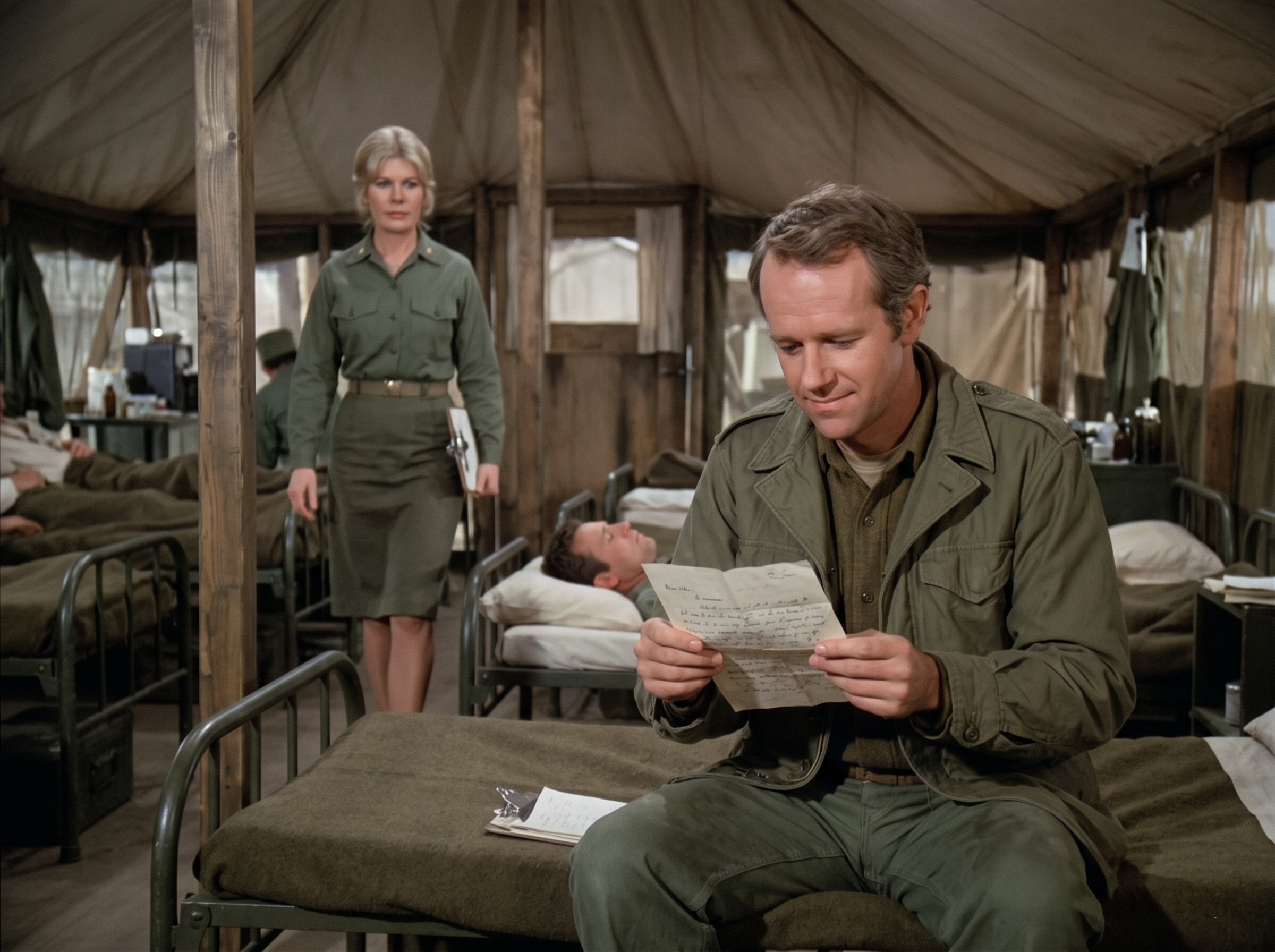
The letter arrived on a Tuesday, folded so many times the paper was soft as cloth, stained with the dust of a journey from thousands of miles away.
In the quiet haze of the post-op ward, the usual symphony of the 4077th—the distant hum of generators, the low murmur of tired surgeons, and the soft rasp of breathing—had momentarily faded into a lull.
B.J. Hunnicutt sat on the edge of a cot, his shoulders slumped with the kind of bone-deep weariness that no amount of coffee could scrub away.
But as his eyes tracked the ink on the page, the exhaustion seemed to lift, replaced by a slow, gentle smile that didn’t just touch his lips; it traveled all the way to his eyes.
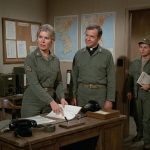
Across the room, Major Margaret Houlihan was making her rounds, her clipboard tucked firmly under her arm, her posture as rigid and impeccable as the day she arrived in Korea.
She paused, watching him for a heartbeat, her brow furrowing slightly as she noted the uncharacteristic stillness of the usually restless surgeon.
“That better be a letter from home, Hunnicutt,” she said, her voice sharp, though it lacked its usual edge. “And not some new prank you and Pierce are cooking up to drive the Colonel to an early grave.”
B.J. didn’t look up immediately, his thumb tracing the crease of the paper as if trying to hold onto the words a little longer.
“It’s not a prank, Major,” B.J. replied softly, his voice barely rising above the rustle of the tent canvas. “It’s Peg. She sent me a description of the first snowfall back home, and… well, she mentioned Erin finally figured out how to ride her bike without the training wheels.”
Margaret’s expression softened, the sharp line of her mouth faltering into something more vulnerable, something she usually kept locked behind the iron bars of her rank.
She took a step closer, drawn in by the rare, fragile piece of normalcy sitting in the center of their war-torn world.
“She’s growing up so fast,” Margaret murmured, the words escaping before she could filter them through her professional mask. “It’s hard to imagine, isn’t it? That time doesn’t just stop because we’re stuck here.”
B.J. looked up then, meeting her eyes, and the sheer weight of their shared displacement hung in the air between them—a silent, heavy truth that usually went unspoken.
“It’s the hardest part, Margaret,” he admitted, his smile fading into a look of profound, aching longing. “I’m terrified that when I finally get back, I’ll be a stranger in my own living room, looking at a life that moved on without me.”
The room went deathly quiet, the weight of his fear hitting Margaret like a physical blow, leaving them both suspended in the terrifying uncertainty of their tomorrow.
Margaret stood frozen, her clipboard feeling suddenly heavy, an anchor tethering her to a life that felt increasingly like a distant dream.
She looked at the men around her—the sleeping soldier in the next cot, the weary faces of the nurses, and B.J., who was holding onto that thin piece of paper as if it were the only thing keeping him from drifting away.
“You aren’t a stranger to them, B.J.,” she said finally, her voice steady, though she had to clear her throat to keep it from cracking. “My father, for all his medals and his talk of duty… he never understood that a man doesn’t just change because he’s seen the worst of it. He just… grows deeper.”
B.J. looked down at the letter again, his thumb smoothing out a wrinkle in the corner of the page.
“I hope you’re right,” he whispered. “Sometimes, when the shelling starts at night, I close my eyes and try to hear the sound of that bicycle on the driveway instead of the artillery. I just need to know the world is still turning.”
Margaret reached out, her hand hovering near his shoulder for a brief, awkward second before she pulled it back, regaining her composure.
“It is turning,” she said, nodding firmly. “And until you get back to it, you have a job to do here. Now, wipe that look off your face before Pierce comes in and starts making jokes about your love life.”
B.J. chuckled, a low, throaty sound that finally broke the tension in the room.
“You’re right, Major. God forbid I give Hawkeye any more ammunition.”
He carefully refolded the letter and tucked it into his breast pocket, patting it twice as if to ensure it was safe, right over his heart.
He stood up, his knees popping, and offered her a tired but genuine salute that was far less about rank and far more about a shared, secret understanding.
As Margaret turned to continue her rounds, she didn’t walk with her usual brisk, military precision; she moved with a slightly slower, more thoughtful gait.
The 4077th was a place where people were perpetually broken and patched back together, not just in the OR, but in the small, fleeting moments of grace they carved out for each other between the chaos.
Outside, the wind whipped against the canvas of the tent, and for a moment, it sounded just like the whisper of a breeze through the trees back home.
They were all thousands of miles from the lives they loved, but for a few minutes in that crowded, dim ward, they had managed to bring a little piece of that world into the light.
It was enough to keep them going for one more day, one more shift, one more letter.
In the heart of the 4077th, the bravest thing we did was remember who we were when we were home.