A Five-Star Meal at the Edge of the World
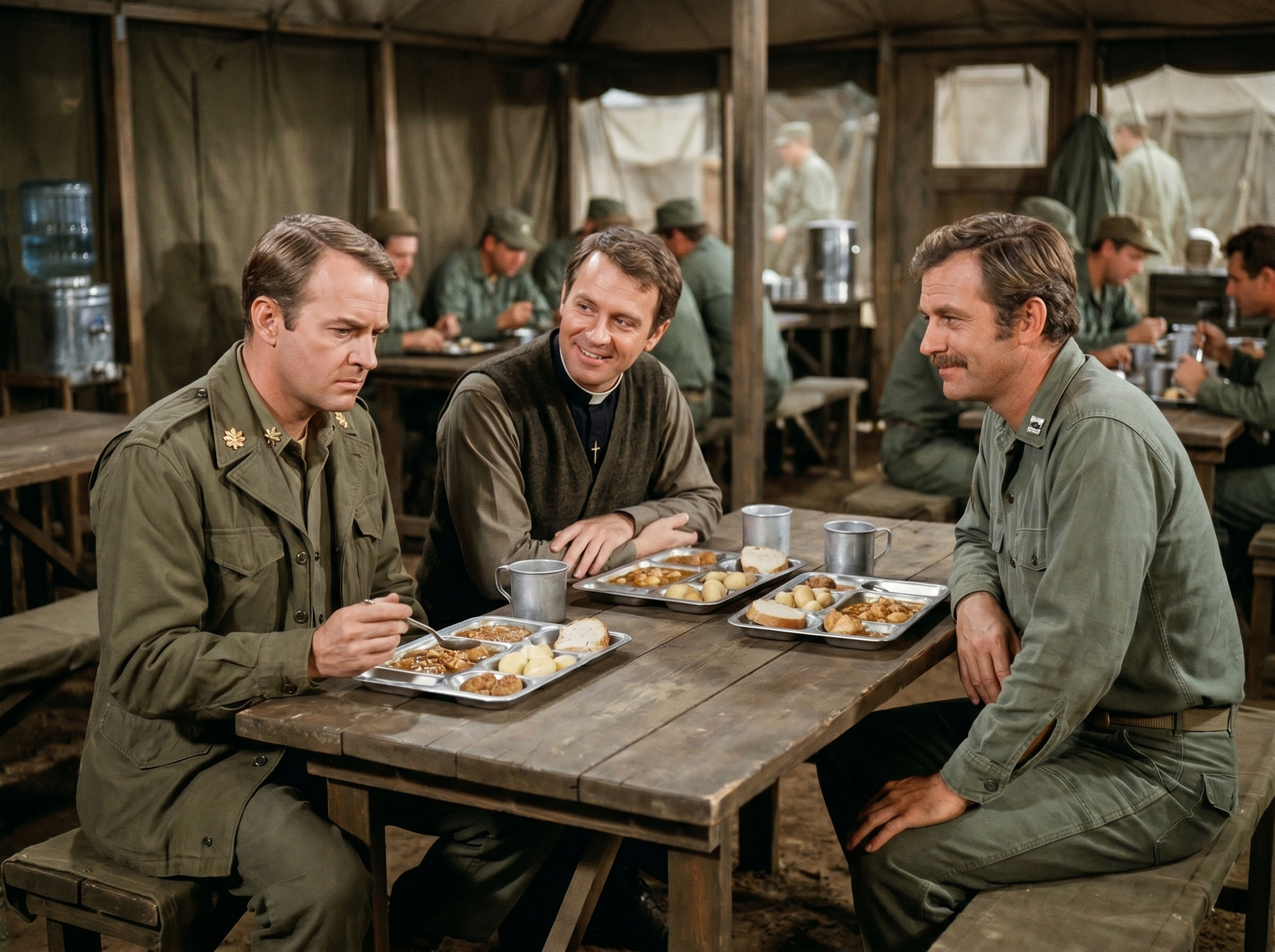
The Mess Tent in the middle of a war is no place for a gourmet, but sometimes, it is the exact place you find a tiny miracle. Or, at the very least, a cup of coffee that doesn’t entirely taste like mud.
It was late afternoon at the 4077th, and the heavy canvas walls of the tent seemed to exhale a collective breath of exhaustion. The camp was finally quiet after a grueling twenty-four-hour session in the operating room.
The air was thick with the scent of boiling water, old canvas, and whatever culinary tragedy Igor had managed to concoct for the afternoon meal.
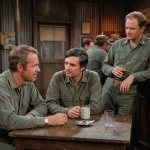
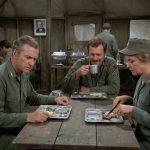
Sitting at one of the long, simple wooden tables, Major Charles Emerson Winchester III looked as though he had been asked to dine in a barn.
He sat rigidly, his posture perfectly upright despite the bone-deep fatigue that surely plagued him as much as anyone else. He was staring down at his dull metal food tray with a spectacularly raised eyebrow, his face a portrait of refined irritation.
Before him sat a lump of something brown, swimming in a shallow pool of something gray.
To his right, Father Francis Mulcahy leaned in close, his hands gently folded on the tabletop. The chaplain’s face was brightened by a gentle, soft smile of sincere, innocent optimism.
Across the table, B.J. Hunnicutt sat slouching just a little, his posture calm and relaxed. He was observing the interaction with a knowing smile of quiet irony, his hands wrapped around a battered tin mug, perfectly content to let the scene play out.
“I ask you,” Charles began, his voice dripping with aristocratic despair, “what crime against humanity must a man commit to be served this… this gelatinous insult to the culinary arts?”
Father Mulcahy tilted his head, his smile never wavering. “I believe, Major, that Igor mentioned it was a rustic beef stew. He said he added extra salt today, just for you.”
“Salt, Father, is a seasoning,” Charles replied, his voice tight with controlled outrage. “It is not a magical cure for whatever poor, wretched beast died a second death in this kitchen.”
B.J. took a slow sip of his coffee, his eyes crinkling at the corners. He didn’t say a word. He didn’t have to. The quiet amusement radiating from him was loud enough.
Charles gripped his fork as if it were a scalpel, but he didn’t lower it toward the food. Instead, he simply held it in the air, his shoulders suddenly dropping a fraction of an inch.
The refined irritation on his face slowly melted away, replaced by something much heavier. The shadows under his eyes seemed darker in the soft, even studio lighting of the tent.
The surgical session they had just finished had been brutal. Too many young men. Too much blood. Too much noise. And now, this. A metal tray in a canvas tent thousands of miles from home.
Charles slowly lowered the fork. He turned his head slightly to look at the priest, his aristocratic shield completely falling away.
“Tell me, Father,” Charles asked, his voice suddenly very quiet, trembling with a sudden, overwhelming exhaustion. “How do you do it?”
Mulcahy blinked, his smile softening into a look of tender concern. “Do what, Major?”
“Sit there. Smile,” Charles whispered, staring at the dull metal of his tray. “How do you look at this absolute wasteland of civilization, this endless conveyor belt of tragedy, and still manage to find a single shred of optimism?”
The clatter of the Mess Tent faded into the background. B.J. slowly lowered his coffee mug, his amused smile vanishing, replaced by a quiet, steady alertness as he watched the brilliant, arrogant surgeon suddenly unravel.
For a long moment, the only sound was the distant hum of a jeep engine out in the compound.
The heavy emotional weight of Charles’s question hung in the air between them. It was the kind of question they all asked themselves in the dark, but rarely spoke aloud in the light of day.
Father Mulcahy did not flinch. He didn’t reach for a Bible verse or offer a hollow religious platitude. He simply sat there, his hands still neatly folded on the rough wooden table.
The chaplain looked down at his own metal tray, at the same unidentifiable brown lump, and then looked back up at the major.
“I don’t smile at the wasteland, Charles,” Mulcahy said, his voice incredibly gentle, yet carrying a quiet, unshakeable strength.
Charles kept his eyes locked on the table, his jaw tight, fighting the sudden urge to retreat behind his walls of sarcasm. But he didn’t move. He listened.
“I know what we just saw in that operating room,” the priest continued softly. “I know how heavy your hands must feel right now. And I know this food is… well, it truly is a test of faith.”
A very small, faint noise came from B.J. across the table—a tiny huff of breath that was almost a laugh, easing the sharp tension in the air.
“But I smile,” Mulcahy said, leaning in just a fraction closer, “because when I look around this table, I don’t see the war. I see you.”
Charles finally lifted his head, his eyes meeting the chaplain’s.
“I see brilliant men who just spent twenty-four hours standing over broken boys, refusing to let them die,” Mulcahy said gently. “I see people who are exhausted, homesick, and entirely out of their element… yet who still sit together to share a terrible meal.”
The priest offered that same sincere, optimistic smile once more. “The food may be awful, Major. But the company… the company is quite miraculous. That is what I smile at.”
Across the table, B.J. leaned forward, resting his forearms on the table. His calm posture was reassuring, an anchor of steady friendship in the sea of olive drab.
“He’s got a point, Charles,” B.J. said, his voice warm and laced with that familiar, quiet irony. “You could be eating a perfectly cooked filet mignon in a beautiful dining room in Boston right now.”
Charles let out a long, slow sigh, his raised eyebrow finally returning, though the sharp edge of his irritation was entirely gone. “A thought that haunts my every waking moment, Hunnicutt.”
“Sure,” B.J. smiled warmly. “But if you were there, you’d be eating alone. Here, you get the distinct privilege of suffering with us. And let’s face it, we need your complaints to remind us what real food tastes like.”
The heavy, suffocating weight that had settled over Charles’s shoulders seemed to lift, just a little. The deep sadness in his eyes retreated, replaced by a quiet, grudging affection he would never openly admit to.
He looked at B.J., entirely unimpressed, but the corners of his mouth twitched.
“My dear Captain,” Charles said, his voice regaining a bit of its usual pompous rhythm. “My complaints are a public service. Without my refined palate to guide you, you heathens would happily graze on the canvas of this very tent.”
Mulcahy let out a joyous, quiet laugh, his hands unfolding as he picked up his own fork.
B.J. picked up his coffee mug again, his eyes meeting Charles’s across the table. The quiet irony was back in his smile, but beneath it was a profound, unspoken understanding. They were surviving. Together.
Charles looked back down at his metal tray. He stared at the mysterious brown lump for a few seconds more.
With a deep sigh of theatrical resignation, he picked up his fork.
“Very well,” Winchester muttered, cutting a tiny, precise piece of the food. “If I am to perish from Igor’s culinary assassination, let it be known that I did so in the company of a priest and a peasant.”
B.J. grinned into his coffee. Father Mulcahy beamed, eating his own terrible stew as if it were a Sunday roast.
The food tasted like salty cardboard. The tent was drafty. The war was still raging just beyond the hills.
But for a few quiet minutes in the faded brown and olive drab world of the 4077th, they weren’t entirely miserable. They were just three tired men, sharing an awkward lunch, keeping each other grounded in a world gone mad.
Sometimes, the only thing that gets you through the darkest days of a war is a terrible meal shared with beautiful friends.