WAR PROFITS OR STRATEGIC SURVIVAL? Canada’s Defence Pivot Ignites a Moral and Economic Fight
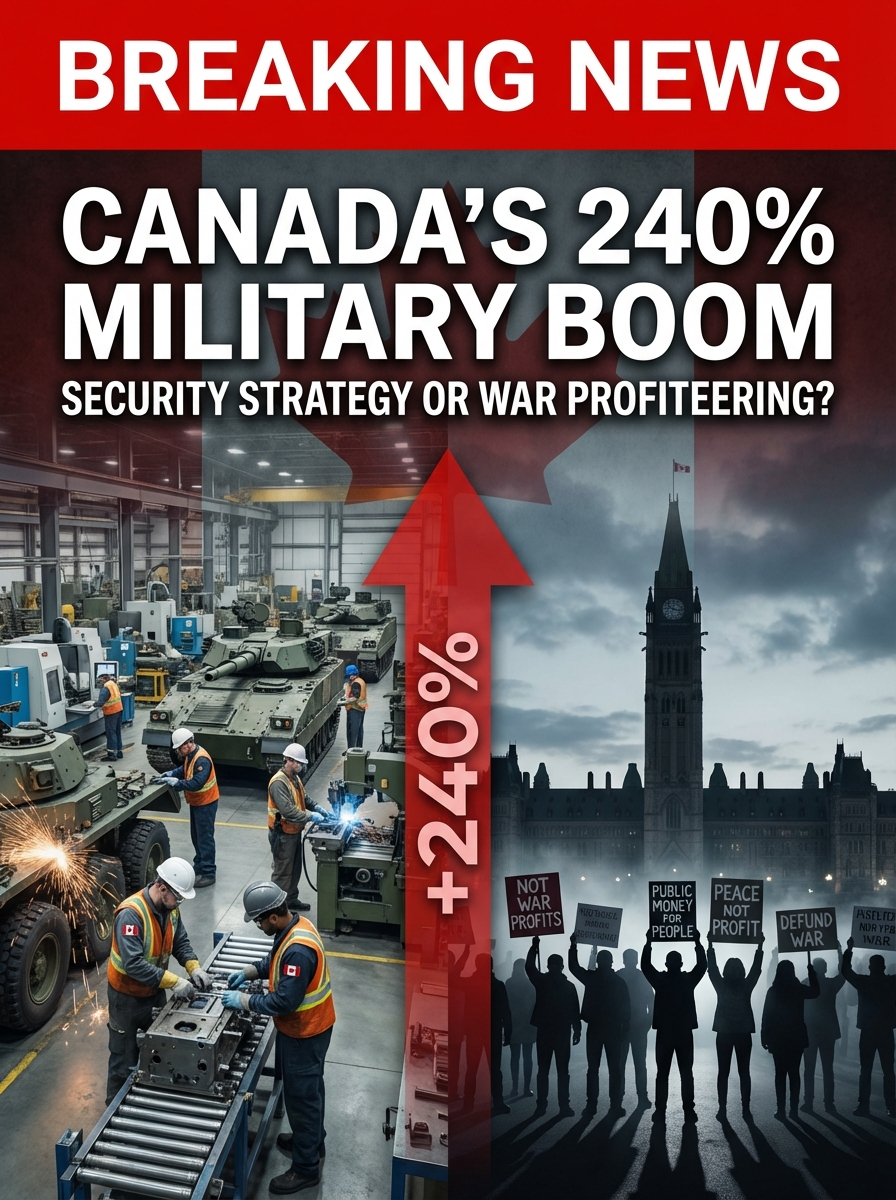
Canada is preparing one of the largest defence-industrial shifts in its modern history—and the numbers are fueling a fierce political backlash. Draft details reported by major outlets indicate Ottawa’s new strategy aims to push the share of military contracts awarded to Canadian firms from roughly 50% to 70%, while projecting domestic defence-industry revenues could rise by more than 240% over the coming decade.
Supporters in government frame the plan as economic sovereignty under pressure: tariffs, unstable trade ties, and geopolitical shocks have exposed Canada’s dependence on foreign suppliers. The same reporting says the package includes about C$6.6 billion, targets up to 125,000 jobs by 2035, and seeks to build domestic capacity across production, maintenance, and export channels.
But critics argue the strategy risks normalizing a military-led growth model—where public money, procurement guarantees, and industrial policy channel wealth toward a concentrated defence sector. The ethical question is increasingly explicit: should a country market insecurity as an engine of prosperity?
The timing makes the argument sharper. Canada has already committed to rising defence outlays and deeper integration with allied security initiatives, including Europe’s SAFE framework, which Ottawa says could expand markets for Canadian suppliers and attract outside defence investment.
Industry advocates counter that this is not “war profiteering” but overdue modernization: without scale at home, Canada cannot secure supply chains, replace aging equipment, or respond quickly in crisis. Government communications and advisory briefings in recent days also suggest Ottawa sees this as a long-term industrial rebuild, not a short-term spending burst.
The unresolved fault line is political, not technical. If the public accepts defence expansion as resilience policy, Ottawa may lock in a new industrial era. If not, the plan could become a symbol of distorted priorities in a cost-of-living decade. Either way, Canada’s “military boom” has crossed a threshold: it is now a national debate about what kind of economy the country wants to build—and what trade-offs it is willing to justify.